5 Ways Hi-Tech Retailers Are Secretly Screwing You
As we have recently pointed out, there are a million little ways retailers can screw you on what you buy. But maybe nowhere is this more common than in the world of high-tech gadgets, where the customers are always going to be a little more ignorant of what they're buying. So it opens up whole new realms of dickishness, like ...
Forcing You to Toss Perfectly Good (and Expensive) Printer Ink

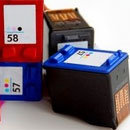
So, you're printing off your homework assignment/office report/ransom note/whatever, when your printer runs out of black ink. Well, time to drop (if you're lucky) $24 on a new cartridge.

We just buy a new printer whenever the old one runs dry.
If you ask one of the printer manufacturers why its ink costs more than fine wine, they'll tell you it's because a lot goes into those cartridges other than ink (though that doesn't answer why it can afford to include a cartridge with the printer, but not a USB cable). And the manufacturers are right -- a lot of the printing mechanism is right there in the cartridge.
Not to mention the kill switches they have to put into them to force you to throw them away before they're actually empty.

Let's hope this technique doesn't spread to the automotive industry.
Wait, What?
Yes, it turns out that many of the ink cartridges made by HP and Lexmark have switches in them that make the cartridges fail after a certain period of time, whether they're empty or not. This isn't just some crazy conspiracy theory, either. HP's senior "ink scientist" (yes, that's actually his real title), Nils Miller, admitted to this during an interview.

According to Miller, the reason for this is that most newer printers have "integrated plumbing" that could get clogged by "expired ink." If consumers want to avoid this, ahem, "feature," Miller suggests that they buy printers with an "integrated ink cartridge," as they don't have the kill switches. A little easier said than done, considering that HP doesn't list which printers do and don't have "integrated ink cartridges."
So why not just put the easily cloggable plumbing inside the cartridge? That way, instead of having to waste our money on temperamental cartridges, we could just toss the ones that get clogged. The printer companies decided they'd rather sacrifice our money so that they can "put more ink in the cartridge." More ink that you likely won't be able to use. This actually works out OK for an office, where they do tons of printing and will run out of ink long before it "expires." But the tens of millions of home users who aren't printing out lengthy manifestos every day are forced to toss countless perfectly good ink cartridges if we don't use them fast enough.

It Gets Worse ...
The natural thought is to say, "Well, screw them, then. I'll just refill my cartridge or get a generic one that won't suffer from this defect." Yeah, you can't do that, either. The supplies for printers (such as ink cartridges) make for 90 percent of their profit, and the printer companies aren't willing to let that go quite so easily. Those chips that the printer companies (including HP, Lexmark, Canon and Epson) install on their cartridges also limit the use of aftermarket cartridges.
HP disables certain features on aftermarket ink, while Lexmark blocks it outright. One remanufacturer, Static Control, attempted to make a cartridge that mimicked the use of the "smart chip" that Lexmark puts on its ink, and was subsequently sued by Lexmark for violating the Digital Millennium Copyright Act.

Premium Cables

The douchebaggery involved in the new high-definition formats is so expansive that we could write an entire book on it. What we're focusing on, however, is the cables themselves. Pop quiz: What is the difference between this Monster brand HDMI cable and this Ampac brand HDMI cable?
If you answered anything except "not a damn thing," you'd be wrong. There is no reason whatsoever for the Monster cable to cost $13 a foot while the Ampac cable costs $1.67 a foot.

It turns out the Monster cables are lubricated in rare pixie bile.
Wait, What?
"Now, hold on, Cracked," you're probably saying, "surely there has to be some reason that Monster brand cables cost almost 800 percent more than the $10 Walmart cables, right?"
That depends on who you ask. According to Monster, its cables cost more because they "require advanced design and construction and strict quality control standards." But the Canadian Broadcasting Corp.'s consumer affairs show Marketplace got a production engineer to test them out, and there was no difference at all. But, OK, that's Canada -- maybe that was metric picture quality or something. Well, no, Cnet has also given its endorsement for buying the cheap HDMI cables.

HDMI is a purely digital signal, so there is no degradation. The picture either works perfectly or it doesn't work at all. If you're getting any signal, you're getting 100 percent of the signal. If the guy at Best Buy tells you otherwise, he is lying right to your face and trying to rob you.
It Gets Worse ...
So, $90 is quite a bit to spend on an HDMI cable, especially when you can get them for $4, but it's still just a fraction of what the customer probably spent on his setup. So they're just skimming a little off the top, right? Enter AudioQuest, a company that makes HDMI cables that literally cost more than many TVs. Six feet of cable for $700. More than a hundred bucks a foot.

Enough for seven good massages or two great ones.
That's not a pricing glitch or a typo, either. AudioQuest has a price sheet on its website, and it's 40 pages of overpriced copper. Nowhere on the website does the company even address the fact that for what you pay for its cables, you could buy a 32-inch TV.
It does, on the other hand, have a link to a USB cable press release on its Facebook page with the comment, "Our new Indulgence USB cables may change your mind about 'just ones and zeros.' " This ignores the fact that USB transfers digital data, not analog audio or video, and quite literally is "just ones and zeros."

Same Product, Different Prices

Retailers have a problem in the Internet age: Clearly, it's cheaper to sell things online -- there's no store to build or maintain and no sales staff to pay. That's why online-only retailers such as Amazon or NewEgg can beat everyone else's prices.

That, and dark witchcraft.
But then you have chains such as Best Buy and Walmart that have online operations and physical stores. So that raises the question of how they can price their online goods at "online goods" prices to compete while still charging full price in the physical stores. That's a delicate operation when the website is so closely tied to the actual store -- on the site, you can find store locations and even find out how many of that item that store has on the shelf. It's not like they're set up as separate operations.
And, since many customers will do their price-comparison work online and then simply drive down the block to the store rather than wait for shipping, you wind up with a lot of annoyed people who find out upon arrival that the price advertised on the Web is not the same as what they're seeing on the shelf.
Clearly, the solution is to just openly lie to them.

Wait, What?
In 2007, Best Buy was caught, a number of times, using an internal website that looked virtually identical to the public-facing website ... with the difference being that it showed higher prices. So the real website, Bestbuy.com, would show an item as being on sale. The customer would drive to the store, where the item would be listed at the higher regular price on the shelf. When the customer mentioned the website price to the employee, the employee would prove them wrong by pulling up the fake website on their computer. Then they could say, "See? You're mistaken. Looks like the sale has ended."

Best Buy even confirmed the existence of these decoy pages, but it insisted that it had no intention of misleading customers. Maybe "misleading" isn't the right word for it, how about "deceiving," "misdirecting" or just flat out "lying"?
Best Buy was eventually sued by the Connecticut attorney general's office and finally settled in December 2010. That didn't stop the company from using the kiosks during the investigation, however.
Walmart has never been accused of using a fake website, but it does offer items online for less than in store. Keep in mind that this is a chain that offers to "price-match" any competitor's lowest price, but if a customer shows the company their own online advertised price, they won't "price-match" itself. One customer just said, fine, I'll order the item online for "in-store pickup" -- the item the store clearly had stocked on the shelf. He was told that he'd have to wait two weeks to pick it up.

It Gets Worse ...
As bad as that is, Amazon has to take the prize for douchiest price-discrepancy scheme. Back in 2000, it launched what it called a "price test." Amazon would analyze your previous purchases and start charging you what it thought you would be willing to pay, not what the item was actually priced at. Customers discovered that if they cleared their cookies, they'd often find the same item available for less than it was offered for when they were signed in.
After outrage from customers, Amazon apologized and said it would never do price tests again, presumably unless it could figure out a way to not get caught.
Warranties

Most people know by this point that "extended warranties" offered by retailers are often useless (Consumer Reports says to skip them). But they're not the shadiest thing that happens with gadget warranties, which are often designed to not cover the thing most likely to break.
Wait, What?
For instance, one of the more recent trends in digital photography is the waterproof camera which can be submerged up to 16 feet. Who wouldn't want to be able to take pictures of the sea life when on vacation?

For obvious reasons, most warranties for consumer electronics don't cover water damage, but surely they must make an exception for cameras advertised as waterproof, right? Actually, no. Olympus states in its manual that damage resulting from liquids is not covered under warranty (Page 75), and Fujifilm says that you shouldn't use its waterproof camera near water (Page 111).
This isn't just a case of reprinting a boilerplate warranty policy, either -- customers have actually had problems when trying to get their waterproof cameras fixed, because they were "water damaged."

Meanwhile, Consumerist tells of a man who lost the software that came with his HP printer and installed new HP software that HP recommended for the device to replace it. A bug in the software disabled the printer.
So he calls HP to get a fix for it, and HP says it will be happy to help ... as long as he pays for the support. His machine was out of warranty, so the company wouldn't help him with the HP printer problems caused by an HP software bug, unless he forked over extra cash for the privilege. How much money does HP make off of that kind of "bug"?

It Gets Worse ...
Not that we can go the whole entry without taking one last shot at extended warranties and service plans. A man named Ed went into a Best Buy looking to buy an iPad, when they were still hot and in short supply. He grabbed one of the few left, only to be told that another customer had already bought all of the remaining iPads over the phone. But Best Buy would be willing to sell it to him instead ... if he was willing to pay $129 to get the "Black Tie Protection Plan" with it.

We're impressed at the restraint Best Buy showed. The store could have made him buy a bunch of HDMI cables, too.
"Optimization"

We're not trying to pick on Best Buy here, we're really not. Maybe it's just that as a chain they focus almost entirely on electronics and electronics have a notoriously narrow profit margin, so all of the shady stuff is just them trying to stay afloat. That doesn't make you any less screwed when you run into this stuff, however.
So anyway, anyone who has bought a computer at Best Buy has likely been offered Geek Squad services, be it the extended warranty -- sorry, service plan -- the creation of backup media or the optimization. The idea is that the Geek Squad will go through your new computer and remove all the extra programs that come with it and install all of the Windows updates. For this service, Best Buy charges $40.

Overall, that doesn't seem so bad. While it's likely that the average Cracked reader could probably accomplish all of this on his own, it sounds like a good service for our mothers and grandmothers, one that will save us from having to go over and do tech support for them.
That is, until you're forced into it.
Wait, What?
The problem with the optimization service that Best Buy offers is that it takes time. Asking a customer who just paid $1,000 for a brand-new laptop to come back a few hours later for it runs the risk of pissing off said customer. To counteract this, Best Buy has decided to pre-optimize some of its stock, allowing it to sell items without any delay to customers. "But what if I don't want an optimized laptop?" you might ask. Well, dear reader, in that case, you are screwed.

Depending on where you go, Best Buy will give you three options: Pay the optimization fee, wait for Best Buy to remove the optimization or go elsewhere. If you have the misfortune of shopping at Staples, however, you have only two options: Pay the $80 or go home. Staples won't even undo the "set up."
And if you buy this pre-optimized laptop and decide you want to return it? Well, it's opened, so there's a very good chance that you'll be forced to pay the restocking fee for open merchandise, even if you haven't actually used it.
It Gets Worse ...
This optimization that they push on you? It doesn't even do anything. Consumer Reports tested three "optimized" laptops and compared them with nonoptimized ones, and found no improvement. One of the laptops actually fared worse, with a decrease of 32 percent in performance. Hell, you could let Grandma do it herself and get better results.
Even better, it's not just complicated laptops that get the optimization treatment. Buy a PS3 and Best Buy will offer to download the firmware update for the low, low price of $30. Keep in mind that installing this update involves pressing "X" on your controller and making sure not to turn the power off or blow a breaker. And the user has to learn how to do it eventually one way or the other -- Sony updates the firmware of the PS3 every few months or so.

"Quick! To the sky! Somewhere out there an ignorant housewife needs to be criminally overcharged for something her dog could handle!"
After that, Best Buy is also happy to come to your house and hook your PS3 into your TV for $130. For a modern TV, this process involves plugging one cable into one hole. An HDMI cable, which you hopefully did not pay $700 for.
Read more from Travis at http://travisharder.ca
The secrets don't stop here, learn more in our New York Times bestselling book.
Learn how else the consumer is being manipulated in 6 Subtle Ways You're Getting Screwed at the Grocery Store. Or find out how you're getting back at the help in 8 Customers Everyone Hates.
And stop by Linkstorm to discover how LOLcats has been ripping you off for years.
And don't forget to follow us on Facebook and Twitter to get sexy, sexy jokes sent straight to your news feed.
Do you have an idea in mind that would make a great article? Then sign up for our writers workshop! Do you possess expert skills in image creation and manipulation? Mediocre? Even rudimentary? Are you frightened by MS Paint and simply have a funny idea? You can create an infograpic and you could be on the front page of Cracked.com tomorrow!
