5 Surprisingly Easy Ways to Make Kids Smarter
There is an endless debate about why school kids in the Western world are falling behind everyone else. Some say it's a shameful lack of funding; others say kids these days are too lazy and too busy Twittering on their iPads about the Justin Biebers to learn calculus.
But there are actually things you can do to help kids learn that cost next to nothing. For instance, studies show that kids do better if you ...
Start the School Day Later (By Just One Hour)

Here's something every kid knows, and that parents have been ignoring since the beginning of time.
Sneak a quick peek around your office/classroom/rodeo clown school. Chances are you're going to see one co-worker yawning and rubbing her eyes, another guy pulling the droopy-lid zombie glare and one person who is as chipper and alert as a coked-up bunny rabbit. How do we know? Because two out of three adult Americans are walking around sleep-deprived, that's how. And we push our messed-up sleep patterns off on our kids.

And our emotional problems.
And for those kids, particularly teenagers, sleep deprivation can mean failure at school. Which is why schools that pushed their start time back are reporting remarkable improvements. One school in England reported that persistent absenteeism dropped by 27 percent, while a high school in Toronto, Canada, claimed that the 11th-grade math failure rate dropped from 45 percent to 17 percent. Not only that, but kids going to school later say that they're less depressed, and their parents claim that their kids are easier to deal with.

"He's still terrible at art, but at least the cat's alive in this one."
Why Does This Work?
Because of a hormonal switch in the natural body clock, teens are often not sleepy late at night, unlike most adults and small children, so they stay up late. But then we force them to be at school by 7:30 a.m. As a result, most teens are getting something like 6.9 hours of sleep rather than the nine hours they need. That two-hour difference may not sound like much, but it makes a HUGE difference in the classroom. As many as 20 percent of students end up falling asleep in class altogether.

And not because she was trading on the Chinese markets at 3 a.m., the little scamp.
And falling asleep in class isn't even the worst-case scenario. Remember how chronic sleep deprivation can lead to a host of ailments in adults? Now put those symptoms on an already hormonally screwed up teenage body and see how well things work out for you. (They don't.) Which is probably why schools that have taken the initiative of pushing back their school day for teens are reporting such high success rates. One district even saved $700,000 a year by making the change, since the new schedule actually required fewer buses. Who would have thought that giving in to teenager laziness would actually result in good news all around?

Not us, because we just don't understand.
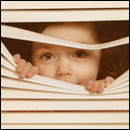
Open the Blinds on the Windows

Hey, we hate the hippies as much as the next guy, but even we have to admit when they got something right. This time we're not talking about Vietnam, environmental responsibility or how much of a hassle bathing is, but the importance of sunshine.

Not Sunshine, who tries to sell you shrooms at the farmers' market. "Sunshine" as in "daylight."
Because if there was one thing that hippies loved, it was sunshine. So much so that they made the phrase "Let the Sunshine In" the chorus of their hippiest of hippie songs -- "Aquarius." Little did those granolas know that doing exactly what they prescribed would result in students scoring 25 percent higher on standardized tests and that kids with the largest classroom windows would be found to progress 15 percent faster in math and 23 percent faster in reading than those with smaller windows. In other words, for some marginal students, the difference between passing and failing could be as simple as opening up the blinds.

Children aren't actually short -- it just seems that way because of the rickets.
Why Does This Work?
Daylight, it turns out, isn't just important for photosynthesis and warmth and making Earth habitable. It also elevates our moods, helps eyesight and suppresses melatonin, the chemical that affects our sleep patterns. In other words, students who do their learning in the daylight are happier, able to see more and less sleepy.

"I feel more conscious now that I'm not walking into things."
The problem for today's students is that back in the '70s, architects were pressured to design windowless classrooms, partially to keep costs down, and partially because administrators and engineers got it into their heads that windows were a distraction to students. As if the trees and cars outside the school doors would suddenly erupt in can-can chorus lines to keep the school kids from paying attention to algebra. So, for students getting their education in 30-year-old buildings designed by window-haters, that's the bad news. For everyone else, "daylighting" has been the wave of the school-building future for several years now.

Or, "putting some freaking windows in."
Give Every Teacher a Microphone

It almost sounds too simple: Studies show that if you give every teacher a lapel mike, a transmitter and a couple of speakers, it can make all the difference in the world for the kids' ability to absorb what they're saying. That is, if the American Speech-Language-Hearing Association is to be believed (assuming it's not just a front for Big Microphone). The association has been keeping track of some of the 160,000 classrooms using sounds systems, and the results are impressive. In one New Jersey school district, for example, the number of first-grade students scoring at grade level jumped from 59 percent in September to 89 percent in May, with the only difference in classroom instruction being an added sound field system.

Soiled underwear incidents went up 300 percent.
Students also reported an increase in the incidences of teachers saying, "Is this mike on? But seriously ..." before repeating jokes they heard on Leno the night before, but that really had nothing to do with the study. There has also probably been some middle-age beat boxing here and there.

"One, one two, two two, two ... WHY ISN'T ANYONE WRITING THIS DOWN? MATHS!"
Why Does This Work?
It's not as simple as "kids can hear them better." Though that's part of it.
Just like their misplaced sense of entitlement, children's auditory systems are not mature until they reach 13 to 15 years of age. A speaker in an auditory-based learning environment (such as an escape rocket carrying a superhuman baby to Earth or a typical school classroom) is going to have to not only compete with a hosts of background noises, like AC units, shuffling chairs, gabby talkers and armpit farts, but also make herself understood to kids whose little ears aren't even fully functional yet. And for those of you who've never tried to make yourself heard over 25 5-year-olds, six hours a day, five days a week, it's exhausting.

Three seconds later, their eardrums ruptured.
According to teachers who have tried microphones, the sound systems prevented vocal fatigue, throat infections and overall stress for both teachers and students. And most teachers didn't want to give their sound systems up once they got them. Even more importantly, classes with mics reported fewer absences than in previous years, probably due to the less-stressful classroom environment.
Or the sick rhymes the teacher couldn't resist spitting into the mic. One or the other.
Make Kids Think Positive

This one is strange, yet there are multiple experiments that show it works: Writing a huge letter "A" at the top of their papers before doing an assignment makes kids score better. Conversely, writing the letter "F" causes students to perform worse.

"This was 'ucking aw'ul. But don't be too disheartened!"
In one study, over a hundred students were instructed to write one of the following letters at the top of their tests: "A," "J" or "F." Those who wrote the letter "A" at the top of their tests did better than those who wrote the letter "F." Those who wrote the letter "J" (used as a neutral letter without inherent meaning to grades) scored in between the two. Even though students had no idea what the experiment was about -- they just thought their tests were randomly lettered -- just the act of writing those letters on their papers programmed them to succeed or fail. And not just once, but in three different experiments.
Why Does This Work?
In the same way that seeing a picture of the late Patrick Swayze programs us to have the time of our lives, seeing an "A" primes young brains for success. According to researchers, "Exposure to the letter 'A' made the students non-consciously approach the task with the aim to succeed, while exposure to letter 'F' made the students non-consciously want to avoid failure."

Exposure to the letter "B" resulted in a conscious effort to do better, and also wild flailing.
Obviously, the broader point isn't just to make the kids scrawl "A"s on everything; it's that confidence and a positive outlook seem to play a huge role in kids' ability to do their best work. And also, that kids' mushy little brains are not difficult to prime in this direction. Researchers suggested that teachers decorate their classroom with "A+" posters and other symbols of achievement. We suggest playing that speech from Braveheart before every test. Whatever works.

"And if you don't do well, I'm positive I'll behead each and every one of you."
Take Kids on a Walk Before Giving a Test

As if anyone needed more incentive to get kids exercising. We've got children walking around with corn syrup flowing through their veins and big fat Jell-O blobs where their bellies should be. We could tell you that getting kids to exercise will result in Hitler coming back to life and you'd probably go for it, just to get these walking marshmallows moving around a little bit.

In which case we could drain their fat and use it in explosives against Hitler.
Even for chronically unfit kids, just a little bit of exercise does a world of good. It turns out that students who take a 20-minute walk prior to taking a test get higher scores and have a 5 to 10 percent improvement in cognition.
Why Does This Work?
A single bout of exercise doesn't just justify your wearing of spandex and muscle shirts, it also makes the executive-function part of your brain work better. And that's important, because "executive function" isn't the part of your brain that makes you create PowerPoints and call meetings, it's the part that controls your attention span, how well you strategize and how you manage your time. Which are all pretty important things to have when you're taking a test. Or taking an anything.

Even taking an aspirin after the initial heart attack.
And all it takes is a 20-minute walk to make it work better. But if you really want to help kids, you can take them on a walk every damn day, because fit children don't just have a social and body edge over their overweight classmates, they also have bigger hippocampi, which is the part of the brain that is responsible for memory.
And, just to remind you, doing this costs the school nothing.

Unlike new windows. Wait, did you forget that already? Get some exercise, fatty.
And see how we're destroying our children in 5 Horrific Ways Bad Parents Turn Their Kids Into Good Money and 7 Things 'Good Parents' Do (That Screw Up Kids For Life).
Agents of Cracked is up for a Telly Award! If you love DOB and Swaim as much as the staggering amount of nude fan pics they receive says you do, then vote for them here and here.
