5 Ancient Acts of War That Changed the Face of the Earth
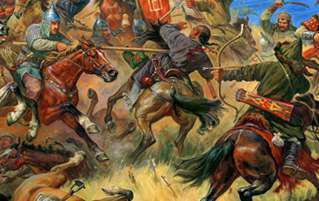
Nothing motivates people like war. That's how the Great Wall of China got built--they were protecting themselves against enemies who lived to the north.
But that wall is hardly the only time we've changed the face of the planet in the name of winning a war. Some of the ass kickings unleashed with ancient empires on the line were so mind-boggling, the Earth still hasn't recovered.
Alexander the Great Turns an Island Into a Peninsula
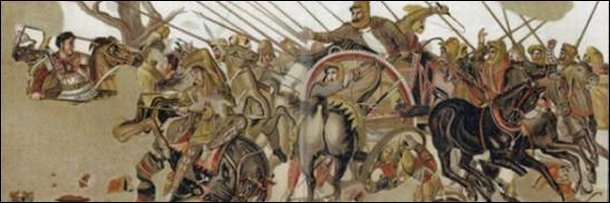
You need a lot of impressive things on your resume to earn a title like "The Great," but Alexander the Great's most awesome accomplishment has to be when he conquered the unconquerable city of Tyre.
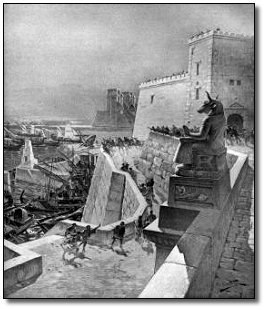
Minas Tirith can suck it.
Located off the Mediterranean coast of present-day Lebanon, Tyre was pretty much an ancient Phoenician Azkaban Prison. The city was an island whose walls extended directly into the water, which meant that even if Alexander had a navy with him (which he didn't), his entire army would splash as helplessly against Tyre's defenses as piss off a flagpole.
Alexander's solution to this dilemma: Simply change the map forever by making the island not be an island any more.
It sounds like something that would only work in a cartoon, since it would require them to spontaneously construct a kilometer-long land bridge to link Tyre back up with Eurasia, by hand. They did it anyway.
Slowly, and while being pelted with arrows and bombarded by Tyre's navy, Alexander's men built their new land mass, one stone at a time.
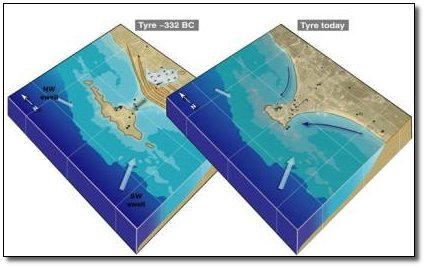
It's still there.
Once the new land mass was in place, he was able to wheel his siege towers right up to the fortress. Ships belonging to his allies eventually came to help out, possibly because they heard what they thought was a ridiculous rumor and wanted to come see if it was true.
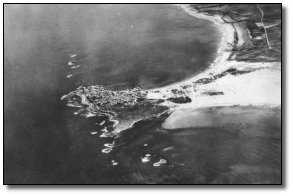
With Tyre now checkmated, Alexander personally led the final charge against the city from the top of his tallest siege-tower. The city fell to Alexander, and with it its status as an island. You might be asking the obvious question, which is why he didn't have his men keep throwing down rocks until they'd formed a huge "ALEXANDER WAS HERE" in the Mediterranean sea--and of course the answer is that he could not have known that aerial photography would one day be invented.
Legio X Fretensis Ramps It Up
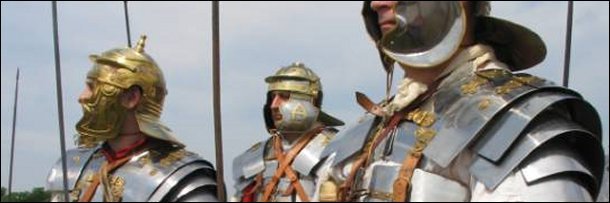
During the final battle of the epic-sounding First Jewish-Roman War of the first Century, the Roman legion Legio X Fretensis laid siege to a massive end boss in southern Israel called Masada. It was pretty much the Judean equivalent to Helm's Deep, except instead of being situated in the ass-crack of a mountain, Masada was located on top of one. It was basically the most awesome game of King of the Mountain in history, and Team Israel was off to a solid head-start.
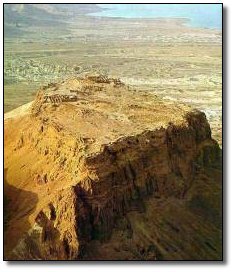
However, the Romans knew the fortress had a fatal flaw: It was situated on Earth, and with the exception for Germany and Scotland, there was nothing on Earth that Legio X Fretensis could not conquer.
All they had to do was fix the whole "higher ground" thing. Taking a page from Alexander the Great's "ideas so ridiculous they have to work" playbook, they went to work on a gigantic ramp.
Like this, but in the desert and surrounded by corpses.
It sounds like a ridiculously simple albeit labor-intensive solution, but try selling it to the legionaries getting pelted with rocks and human waste the whole time. Although they were subjected to a barrage of unholy hell from above, teamwork eventually won the day for Legio X Fretensis. The ramp freaking worked.
But there is one more twist in this tale. Once this Rocky-esque army of Italians finally finished their incredibly tedious earth-moving job and were ready to start the cool part of the battle, they found there was no enemy to fight.
In a turn of events that had to be both creepy and incredibly infuriating to the people who had to build part of a fucking mountain to get there, they found the entire city had committed suicide, thus bringing the siege, the battle and the entire First Jewish-Roman War to an abrupt end.
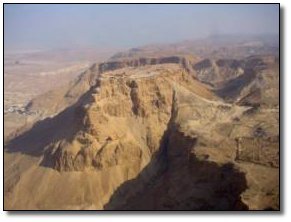
Rome 1: Earth 0.
The Mongols Erase Baghdad
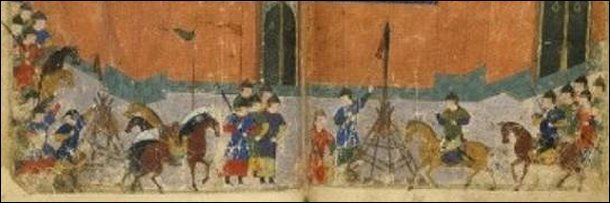
We have previously mentioned how one heart attack stopped the Mongols from taking over the Western world. If you would like to know what that would have looked like, let's take a look at what happened to Baghdad.
The city of Baghdad was once a pretty big deal. Like, the biggest deal on the planet for at least 500 years. This is because it was situated at the crossroads of three continents; an intellectual cantina for most of the planet's merchants, smugglers and wookiee co-pilots. It was home to some of history's oldest buildings and civilizations dating back to Babylon. Naturally, this all sounded really "Chinese" to the Mongols, which is why the Mongols resolved to destroy it. (The Mongols really didn't like the Chinese.)
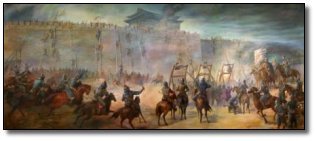
Under the command of Genghis Khan's grandson Hulagu, the Mongols went to war with the Persians and the first stop was Baghdad. They captured the city in less than two weeks, looted its mosques and massacred anywhere between 100,000 and 1,000,000 civilians.
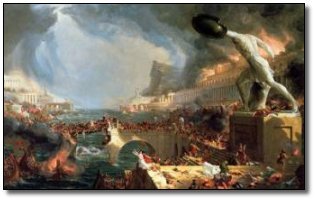
Tragic, yes, but it does make for excellent paintings.
Sounds like a dime-a-dozen Mongolian conquest, right? Well, this was just the pregame, since Hulagu Khan didn't schlep all the way to a city like Baghdad just to kill people.
All of its prized schools and libraries like the Grand Library of Baghdad? The contents dumped into the Tigris until the river ran black. Its magnificent works of architecture, some of them taking generations to build? Leveled. Its prized irrigation system, the breadbasket of Mesopotamia for thousands of years? Filled in.
What used to be fertile farmland dried up and turned to desert. The city sat as an abandoned ruin for centuries. Baghdad wasn't just destroyed. The Mongols hit the reset button on everything that made it possible.
To get a sense of the sheer scale of the destruction, realize that to this day, Baghdad has yet to recover these losses from--checking our calendar--760 years ago.
>The Dutch Put Themselves on an Island
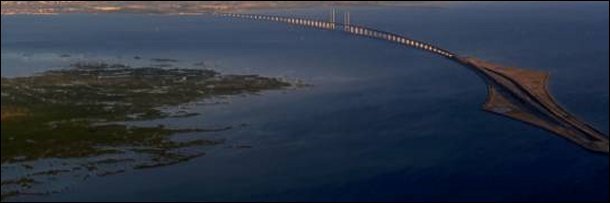
Remember that little maneuver Alexander pulled during the Siege of Tyre? Well, picture a severe case of the exact opposite: Someone turning an entire country into an island at the drop of a hat.
There was a time in history that the Dutch were this close to being the most powerful country on the planet today. The only thing standing between the Dutch and Imperial British-level world dominance was the sorry fact that they were stuck on the European continent with a load of bad neighbors. Suffering from severe island-envy, the Dutch were desperate to get the hell off of the landmass, and their solution to this dilemma was the Dutch Water Line.
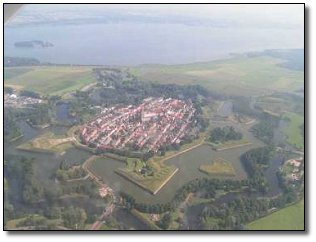
"That thing's operational!"
The Dutch Water Line was the brainchild of stadtholder Maurice of Nassau, who was a pretty important guy even though his job looked like a typo. The idea was to use Holland's natural water-bodies and low sea level to deliberately inundate the country, creating a natural sea-barrier whenever it was needed.
Nassau's successor put the people to work with shovels and pickaxes and by god, before long they had put Holland on a freaking island surrounded by shallow water. Then they planted a generous garden of mines, barbed wire and even animal traps that disappeared underwater once the floodgates were opened.
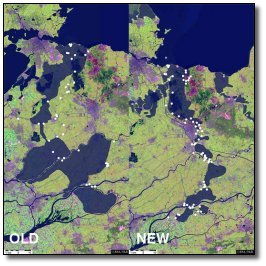
The Dutch Deflector Shield.
It worked, too. The Dutch won the Franco-Dutch War specifically because their little superweapon successfully stopped the armies of Louis XIV, thus forcing them to go home to their non-superweapon state, thumbs planted firmly up their own asses.
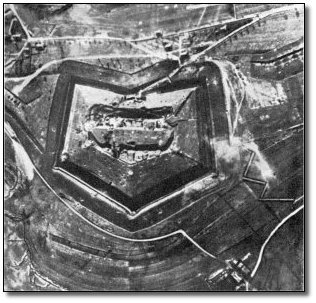
The French finished their own super-weapon just in time for the Germans to blow it up.
The Mongols Weaponize the Bubonic Plague (Killing Half of Europe)
If there is one thing movies and real-time strategy games have taught us about warfare, it's that superweapons are pretty much the Konami code of combat. The Americans had the A-Bomb, the good guys in Red Alert had the Chronosphere and the Karen in Burma had a John Rambo so pumped with HGH he sweat steroids and crapped jawbones.
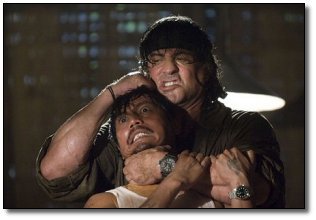
Up, up, down, down, left, right, left...
With that said, you can really tell a lot about a people by their superweapons, and when it came to the Mongols, it's safe to say they didn't pull any punches. Hell, even their conventional weapons were pretty damn sick. For example, when they finally won their long war with the Jin, the roads of Beijing were "greasy from human fat," and the air was saturated with a poisonous fume like Mordor.
During the Siege of Caffa in 1346, the Mongol armies of the Golden Horde unleashed a weapon of war utterly unmatched in terms of its consequence: Yersinia pestis. You might know it better as the bubonic plague. Or, by its much cooler name: Black Death.
The disease had been enjoying a nice retirement in Middle of Nowhere, Central Asia, until the advancing Mongols had to mess up the migration routes of small rodents. By the time the Horde reached the city of Caffa situated in the Black Sea, their own soldiers were already dropping dead from the illness.
But of course that wasn't their fault. Their people picked up some microbes as they were stomping across the countryside. It's not like they intentionally spread the dis-
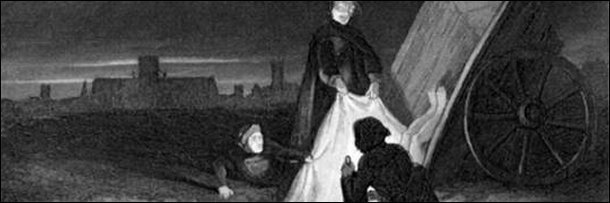
Oh wait. They did. When they saw how effectively the disease took out their own people, they reportedly started loading their diseased corpses into catapults and launching them over the walls of their enemies.
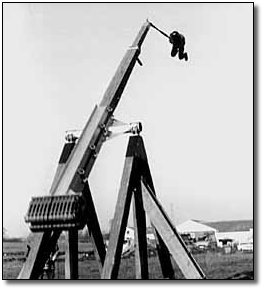
The enemy in this case, the city of Caffa, was a major shipping port serving the entire region. People fleeing the invasion and raining corpses jumped in their boats and sailed off in every direction. By the time they drifted back to their ports throughout Europe with news from Caffa, their boats were true ghost-ships with Y. pestis patients literally bursting "like pinatas."
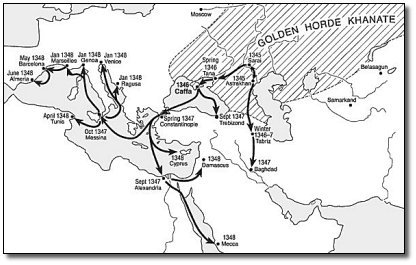
The world's population at the time the Mongols started flinging infected corpses was around 450 million. By the time the Black Death got through with them a few decades later, it was as low as 350 million. Their little biological weapon campaign killed one out of every four or five people on planet Earth, utterly changing the face of human civilization and creating the modern world as we know it.
Take a moment to reflect on that. In a way, everything you see around you is indirectly the result of one particular group of assholes.
Do you have something funny to say about a random topic? You could be on the front page of Cracked.com tomorrow. Go here and find out how to create a Topic Page.
Discover more ways the world has been changed, in 6 Disastrous Ways Pop Culture Influences The Real World and 6 Random Coincidences That Created The Modern World.
And stop by our Top Picks (Updated 4.14.2010) to see how Cracked has changed the face of the Internet (for the worse).
And don't forget to follow us on Facebook and Twitter to get dick jokes sent straight to your news feed.
