5 Reasons The Internet Could Die At Any Moment

The Internet was originally invented to be a communication network that could survive a nuclear war. Ironically, the monster that grew from that idea known as the World Wide Web is actually very, very fragile. They didn't anticipate what the Internet would become--because they weren't fucking insane--and as a result, the whole operation now sits on a rather shaky foundation.
The Internet is a Series of Cables, and Cables Can be Cut

The Catastrophe:
Considering how much people freak out when a single big site goes down (everyone remember the Great Gmail Outage of '09?) it's clear that most of us think of the Internet in general as pretty much invincible. If an asteroid smashed into the Earth tomorrow, millions of us would immediately pull out our phones to try to get Twitter updates from the affected area.

"It must be pretty bad. Ashton Kutcher hasn't tweeted in days."
But the truth is, the Internet travels from continent to continent by way of a network of trans-oceanic cables, each thousands of miles long and only as thick around as a thumb. If enough of these high-pressure porn hoses were compromised, international Internet communication could collapse entirely.
Since these cables are the backbone of a huge portion of the global economy, they must be pretty well protected, right? Guards in armored diving suits, badass nuclear submarines inexplicably captained by Scotsmen, Kraken...

We're pretty sure AT&T has at least one of these at their disposal.
Actually...
As it turns out, the cables aren't protected at all.
And it's not like they're impervious to damage either. The largest of them, hilariously named "SEA-ME-WE-3" was severed by a 7.1 magnitude earthquake, and in December of 2008 a boat anchor sliced it and three other cables in half. The disaster cut communications capacity between Europe, the Middle East and India by around 75 percent.
Hundreds of millions of people spent weeks without reliable (or, in some cases, any) Internet access. Because of an anchor.

Nukes are hard to come by, but we're pretty sure Al-Qaeda can scrounge up one of these.
Though, some skeptics point out that the idea of three separate cables being cut "accidentally" by anchors within a few days of each other is a little far-fetched. They've proposed terrorists, Israel, drunken fishermen and the Pentagon as possible alternate causes.
So What Can We Do?
Nothing. Remember the SEA-ME-WE 3 cable we told you about? It's more than twenty-thousand goddamn miles long. Look at this map of all the undersea cables. There's no way you could police all of that, not even with a thousand Krakens AND Bill Murray in a scuba suit.
You'd need at least two.
On the plus side, it's not exactly hard to repair a damaged cable. These things get busted up all the time, which is why the telecoms that own them have repair boats on stand-by. That means everything should be fine unless some bad guys think up a way to really fuck them up.
"OH SHIT THEY'VE TRAINED THE SHARKS."
Hordes of Zombie Robots Will Kill Us All
The Catastrophe:
You may not have heard of Leo Kuvayev, but you've gotten a shitload of emails from him.
He's one of the most influential men in the spam industry. He has headed up several of the world's largest spam networks and is one of the people most responsible for the way spammers operate today. Despite being wanted in several countries, Kuvayev remains free (and fabulously wealthy) to this day. He lives in exile in either Tahiti or Finland.

The face of a billion displaced Ethiopian princes.
While breaking Leo's kneecaps with a baseball bat would be both morally justified and incredibly cathartic, you may want to keep your righteous anger in check. It's generally a bad idea to fuck with supervillains. Leo is believed to be the man in charge of the Storm Botnet, a massive network of hijacked drone computers that may number in the tens of millions. If he wanted to, he could turn that vast robot army on you.
But hey, what's the worse a few million zombified computers can do? They might be able to blast you off of the web for a few days, but there's no way a botnet could cause lasting harm to the whole Internet. Right?
Actually...
To give you a sense of scale, Storm is estimated by some to be responsible for a whopping 20 percent of the spam on the Internet. That measures out to billions of messages every single day, including tens of millions of emails laden with viruses that create more bots. Some experts estimate that the botnet is powerful enough to muscle entire goddamn countries off of the Internet.
While Storm is the first botnet to attain this kind of power, it won't be the last. The Storm botnet grew from the Storm Worm, which was spread through a series of spam messages with provocative titles like, "230 dead as storm batters Europe" and "Chinese missile shot down USA aircraft." People across the world (but mainly in the U.S.) saw what they thought was an important news story in their inbox, opened the email and were immediately infected with the worm.
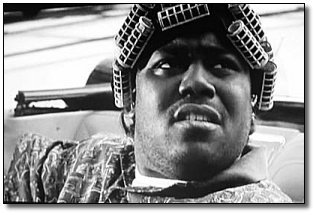
And just wait until he unleashes Big Worm.
This testical-shrivellingly terrifying video tracks the exponential spread of the botnet. Imagine what someone with grander designs than life as a spam kingpin could do with that sort of power. Entire nations and corporate networks could be brought to their knees, world communication and trade would be disrupted. The Internet as we know it would be rendered almost uninhabitable.
So What Can We Do?
Conventional cyber-warfare tactics are useless against the botnet. As soon as a computer is infected, the worm lobotomizes and re-programs any existing anti-virus software, rendering it harmless. The botnet also has active defenses, and has gone on the offensive and D-DOSed several major anti-spam sites into oblivion. Back in February of 2007, the botnet even attacked the 13 "root" servers that make up the backbone of the Internet's infrastructure. Two of them were severely damaged.
Operating at only 10 to 20 percent capacity, the Storm Botnet has national security experts and anti-spam crusaders pissing themselves in terror. To put things in less technical terms: Leo Kuvayev is tooling around the Internet in an M1 Abrams tank, and the authorities are trying to stop him with sticks and stones and harsh language.
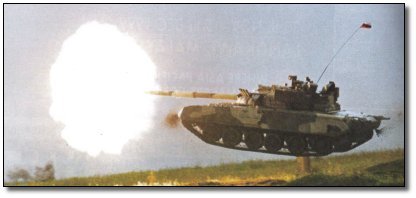
Quit it you big meanie!
The only real defense against a threat like the Storm Botnet is knowledge. All we need is for the entire Internet-using public to become tech-savvy, intelligent and careful about what they click on. Shouldn't be a problem.
Someone Impersonates the Ferryman.

The Catastrophe:
Imagine the Internet is a river. In order to get to your destination (website) you need to pay (with a URL) the ferryman (a DNS server) so he can paddle you to your destination (John Mayer/Hulk Hogan slash fiction websites).
Your body is a wonderland.
Now imagine brigands (hackers) ambush the ferryman before he can get to you. They hand him his infant daughter's severed ear, wrapped in a stained white cloth. They tell him to paddle his next fare to bandit island (spyware-riddled websites) if he ever wants to see his beautiful family again.

Thankfully, the Geneva Convention doesn't apply to metaphors.
Of course, this being the futuristic year of 2010, such crude hijackings can't actually happen on any kind of large scale, right?
Actually...
Back in 2007, Microsoft discovered a massive vulnerability in their DNS servers that could allow them to be hijacked by a hacker. Then, in 2008, the DNS Survey revealed that as many as one in four public DNS servers were highly vulnerable to attack. Programmers and security experts set frantically to work in order to correct the issue. They got a handle on things just in time for another gigantic goddamn problem to pop up.
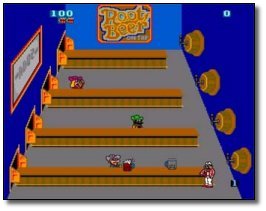
It's like a game of Root Beer Tapper, but with the entire Internet at stake.
The Internet doubles in size every five years or so. This insane growth has led a massive expansion in the number of DNS servers. More traffic means more ferrymen. The thing is, the Internet's real, chief weakness is that it was built by people. Many of those people were diligent, careful workers, but most of them were just like the rest of us; lazy, irresponsible and frequently intoxicated. Millions of these new servers were set up without any security whatsoever. They allow open access to anyone with the know-how to hijack them. This is actually even scarier than it sounds.
In addition to controlling where our browser takes us when we hit "enter," the DNS servers are what direct your email. With control of the DNS server it passes through, an intruder could stop and redirect your email, or riddle it with viruses and then send it on its way.

That inspirational poem Grandma forwarded to you may have more viruses than Bret Michaels's hot tub.
This isn't theoretical. These vulnerabilities exist now, just waiting for malicious assholes to take advantage of. It could happen tomorrow, or next week, or right n-
So What Can We Do?
The safety of the Internet at large rests in the flabby hands of a brave, thankless few and they've been busy getting patches out to cover this particular flaw. But that was a Band-Aid solution and the permanent fix appears to have problems of its own.
This is the point where understanding the issue requires several years of education in exactly how DNS servers work. So we'd like to pause here to express wonder that the Internet works at all.
The Internet is Main Street, U.S.A., and Wal-Mart Just Moved In
The Catastrophe:
As many of us were reminded when GeoCities closed last year, the Internet has changed. As much as we would like to think of the Internet as forever being an untamed free-for-all where any nutjob can stake out a domain and reach a million people, the truth is we're getting more tamed by the day.

The safe word is "hotmail."
Still, it's hard to imagine a future Internet that lacks all of this mind-blowing variety (that is, millions of pages created by crazy people). After all, you can't stop people from being insane. And ultimately, information wants to be free! Right?
...Right?
Actually...
What we're seeing now is a variation of the strip-mall effect as seen in countless small towns in the U.S.
If you don't remember learning about the strip-mall effect in high school economics, basically big-box retailers run small Mom and Pop stores out of town by offering lower prices than the independent outlets can possibly match. Instead of the "Main Street, U.S.A." full of independent Mom and Pop niche stores, we have a ton of strip-malls filled with Wal-Mart stores and other chains.
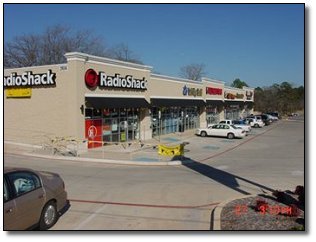
'MERICA.
This ultimately changed the way people shop. No one was going to walk from Laura's Bakery to Smith and Sons Light Bulbs to Barney's Pantstravaganza when they could get all of their shopping done with one trip to Wal-Mart. So not only were the old stores run out of business, but it became pointless to ever open a new one. The flow of shopper traffic had forever been diverted.
The same thing is happening on the Internet, with sites like Facebook taking up the role of big-box retailers. For instance, in order to make themselves more attractive to advertisers, Facebook put together an initiative called Facebook Connect. It allows users to sign into Hulu, Digg and more with the same ID they use to log into Facebook.
By linking their user accounts together, all of these websites have managed to create a "closed" environment, a one-stop Internet mall that provides them with an endless feedback loop of traffic. Sort of like a circle of snakes, all eating each other's poop. This works out great for the giant, well-funded websites already in on the party, but not-so-great for the "lone guy in his bedroom with a vision" sites that made the Web great in the first place.
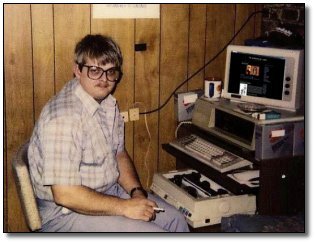
Facebook now has 300 million users. For a lot of those people, Facebook is the Internet, and they're happy to do all of their information shopping there. A great and terrifying illustration came when this blog mentioned Facebook logins in an update. When (presumably old) people Googled "Facebook Login," the blog showed up in their results, bombarding them with thousands of people saying "IS THIS FACEBOOK WHY DOES IT LOOK DIFFERENT HELP I JUST WANT TO LOG IN."

"Connection lost."
And it's not just about traffic. All of the detailed information Facebook can provide to advertisers about your life (and they know everything at this point) means they can make advertisers an offer they can't refuse. The fear is that soon all those indie sites trying to make enough money to stay alive outside of the Facebook Mall will find the going harder than it already is.
This isn't Facebook's fault, it's not like they're using sweatshop labor or sticking a gun to competitors' heads. They're offering a comfortable path for people who find the Internet scary and confusing. If they hadn't done it, somebody else would have.
So What Can We Do?
It's the same answer as to the question we've been asking since the 80s about Wal-Mart: We will bitch about it loudly, and five minutes later enjoy the convenience the new, clean, corporate web offers us.
Losing Net Neutrality (Or Keeping It)

The Catastrophe:
There are two sides to every story, and while everybody wants to paint the Net Neutrality debate as being a Braveheart-style battle of freedom-lovers versus corporate monarchs, there is more to it than that.

"FFFRREEEEE POOOORRRRNNN!"
If you're not familiar with the subject, basically right now we have net neutrality. ISPs are essentially dumb pipes and they don't know or care if that data you just downloaded was in the form of historical documents from local university libraries, or an encyclopedic collection of Brazilian fecal fetish pornography. The Internet today is the wonderful, endlessly fascinating place it is in large part due to the fact that it's been free and open its entire life.
ISP's want to change that, mainly because different applications use massively different resources. There's no comparing the stress that downloading HD movies puts on their network versus, say, reading a Cracked article's worth of text. So they want to change their infrastructure and how they bill you for it.

Cracked subscription cost: A "fat wad o' cash."
The problem is this also would let them slap on all sorts of controls they never could before, such as blocking competing websites, or signing exclusive deals for content. After all, Comcast both provides Internet access to millions and owns NBC, so taking away net neutrality could let them block competing networks and that could turn ugly fast. It's thus no surprise that a variety of semi-respected sources, including the chief of the FCC, are standing up for net neutrality.
Phew! The Chairman of the FCC! We're safe, right?
Actually...
The carriers continue to push against net neutrality. Its future is hardly secure, as mobile carriers AND ISPs have ample motivation. Google, patron saint of the "free information" movement, has even dipped its toes in anti-neutrality waters. They approached "major cable and phone companies" with a proposal to give Google content a "fast lane" of its own.
Cause, you know. Google needs the exposure.
Major corporations and political entities getting bandwidth preference over small, independent sites and individuals is exactly what net neutrality advocates fear the most.
So What Can We Do?
Well, this is where it gets complicated.
The ISPs aren't just being greedy here. Bandwidth costs a lot of fucking money and usage is growing at a retarded rate. For instance, most of the video game consoles now offer HD movie and TV show streaming, and soon they may give up physical media completely to stream all of the games you buy directly to the system (because it would kill off the used games market that they claim is eating all of their profits). Everybody is quickly replacing their faucets with fire hoses.

Just look at that bandwidth.
If net neutrality stays and the ISP's can't offer multiple tiers of service, then they say they will have to use an even more annoying solution: putting an end to unlimited plans completely and making you pay for every gigabyte of that Bittorrent download of every single episode of The Simpsons. And you won't be able to simply switch ISPs unless you find one run by some eccentric billionaire who feels like giving away his money for the good of the people.

Don't be a dick, Branson.
The problem is that what we want out of this situation--cheap, infinitely scalable bandwidth--is the one outcome we can't have. And while the other threats on this list can maybe be avoided, this is one that will end in the Internet being less free, you paying a lot more or a combination of both.
So enjoy what you have while you can, for these are The Good Old Days.
Do you have something funny to say about a random topic? You could be on the front page of Cracked.com tomorrow. Go here and find out how to create a Topic Page.
For more ways technology and science will doom us all, check out 5 Scientific Reasons a Zombie Apocalypse Could Actually Happen and The 5 Scientific Experiments Most Likely to End the World.
And stop by our Top Picks (Updated 3.12.2010) because you might as well get your boob quota in before the whole operation is shut down.
And don't forget to follow us on Facebook and Twitter to get dick jokes sent straight to your news feed.
