6 Civil War Myths Everyone Believes (That Are Total B.S.)
Ever since the election of Barack Obama, some politicians have thrown around talk about secession from the Union -- aka, launching a sequel to the Civil War. But even before that, one got the sense that the war was a wound that never healed -- America has seen endless controversy over groups who still insist on rallying around the Confederate flag, for instance.
We might be going out on a limb here, but we're guessing that most of our readers aren't hardcore Civil War historians. And since VH-1 discontinued their I Love the ... series before they got around to the 1860s, a lot of us are walking around with Civil War misinformation firmly wired in our brains. Now is as good a time as ever to clear up some of those myths. Such as ...

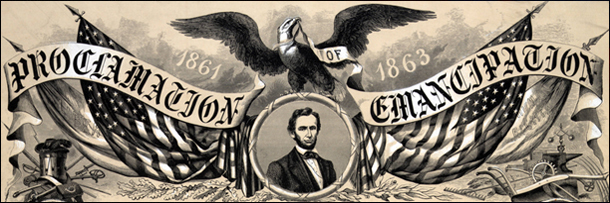
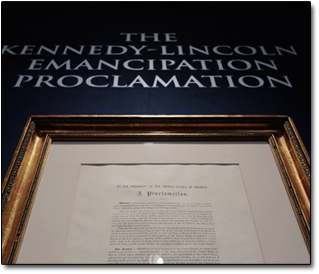
It only makes sense that we'd think of the Emancipation Proclamation as the law that freed the slaves; "emancipation" is right there in the title. It's like calling something the "Patriot Act" and then not legislating that everyone wear American flags capes, festoon their cars with airbrushed bald eagles and sing that Lee Greenwood song at dinner every night. Of course the Emancipation Proclamation freed the slaves. What else would it do?
Getty
"The right to vote? Don't push it, guys."
Why it's Bullshit:
It freed some of them. Thanks to a loophole, about a million individuals were still legally slaves after the EP (there were about four million slaves in captivity at the time; it declared three million of them free). The loophole was that the proclamation only applied to states and territories "in rebellion against the United States." In short, if you were a slave in Delaware, Kentucky or even the recently-captured Confederate territories of New Orleans or Tennessee ... sorry, but your freedom-princess was in another castle.
Getty
"You got an emancipation proclamation! Collect four pieces total. More documents mean more freedom!"
Why did Lincoln only go half-way? Because as far as political waffling goes, the Emancipation Proclamation was Lincoln's masterpiece. Yes, Lincoln personally detested slavery, but abolition was still a touchy subject on account of four border states remaining loyal to the Union while still being hardcore slave states. There was also the matter of turning the war into a crusade to end slavery, which frankly was not the kind of thing your average Northerner would gladly have his head exploded over.

Getty
Other touchy subjects include socialized health care, evolution and sweeping generalizations.
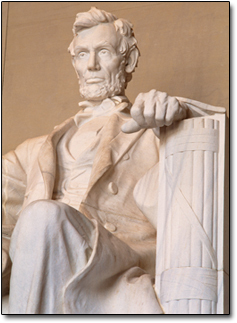
In Lincoln's own words, "I would do it if I were not afraid that half the officers would fling down their arms and three more states would rise."
Getty
Lincoln: Just wanted to get home from the office early and have a bit of a sit down, really.
If this sounds out of character for the side that was trying to rescue Africans from bondage, we have to address another myth ...

Ask a Southern Civil War enthusiast what the Civil War was really about, and he will probably give you one answer: States' rights. Ask anybody else and they'll probably give you another answer: Slavery. And if you think we're diving into that shitstorm here and now, you're mistaken. But it does reveal something about how most of us perceive the Civil War -- that the North was on the right side of history because they understood the fundamental truth that all men, no matter what color, were created equal.

Getty
"As long as they don't rub it in our faces and take all our jobs."
Why it's Bullshit:
The North was so prejudice that white people acutally discriminated against other white people. So you can bet that life was not a bowl of cherries for nonwhites. And for blacks, the 19th century was nothing but a bowl of crap, no matter where you lived.

Getty
And we can bet this is not the milk of human kindness.
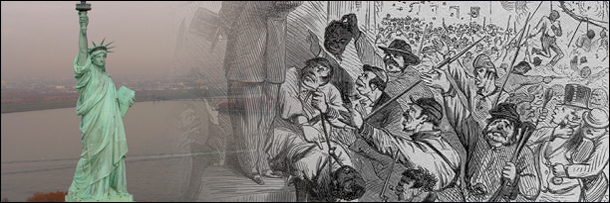
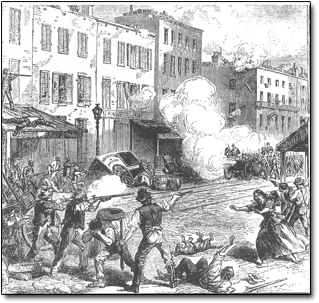
True, the North had a larger number of abolitionists and progressives, but they also had blatantly racist laws preventing free black people from actually getting rights as citizens. And also, lynch mobs. Which was why it was the North, not the South, that hosted the country's most violent race riot in history. What started out as a protest against the Union's draft policy, ended as a full-on assault on any African-Americans unfortunate enough to exist and get caught.
Via Wikipedia
Back in those days, freed blacks were exempt from the draft, probably so they could put more time into putting out their racially motivated house fires. This exemption didn't sit well with poor whites who couldn't afford the $300 to buy their way out of the draft -- and by "didn't sit well" we mean "infuriated to the point of a frenzied rage." By the end of the four-day riot, at least 11 blacks were lynched throughout Manhattan, hundreds more were assaulted and a children's orphanage was burned to the ground. It took no less than 4,000 federal troops fresh from Gettysburg to subdue the insurrection. New York City's black residents were so terrorized by the riots that by 1865, the black population plunged to the lowest it had been in 45 years.

Getty
"Sunny, south-facing house in a friendly suburb. Nonsmoking tenants preferred, who don't mind the occasional burning cross in the front garden."
And if you're thinking the Draft Riots were one little blip in an otherwise happy and racially harmonic region, try again. Town Line, New York, successfully seceded from the Union altogether during the war and were not readmitted to the nation until ... no joke, 1946.

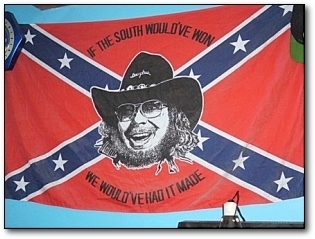
While the U.S. is likely to continue debating the display of the Confederate flag on everything from mudflaps to prom dresses ...
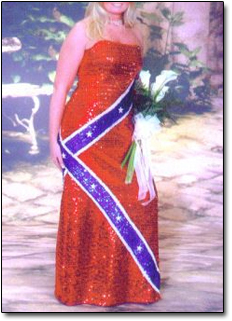
... it is reassuring to know that your average Connecticut Yankee and Confederate apologist can still agree on one thing: what the Confederate flag looked like.
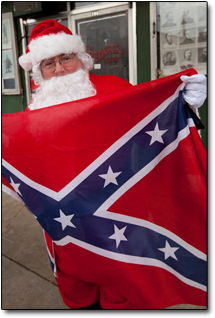
Getty
It is now most often used by white bearded supremacists.
Why it's Bullshit:
The first Confederate flag was the "Stars and Bars" flag, which served as their official standard until 1863. It originally showed seven stars (and later 13) despite the fact that there were only 11 states in the Confederacy. These last two stars represented Kentucky and Missouri, states the South really wanted to secede but never got around to it. In short, these states were imaginary.
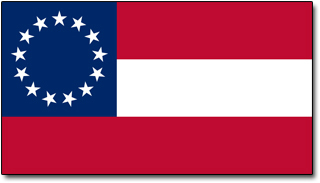
Via Wikipedia
The "Stars and Bars" flag, also known as "Ol' Futility."
However, this flag ended up looking too much like the American flag on the battlefield, and by 1862 Confederates were already grumbling for a new flag that was as "unlike as possible to the Stars and Stripes of the United States." Their solution was a second design that incorporated the square "Battle Flag" of the Army of Northern Virginia onto a brilliant white sheet that would have made any white supremacist proud. However, in yet another fine example of Southern ingenuity, this "Stainless Banner" looked a lot like a flag of surrender. After two more years, it was dumped for being "too white" even by a slave-owning society's standards.
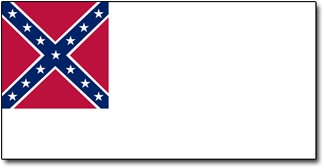
Via Wikipedia
"Ol' Irony."
On March 4, 1865, with the war nearly over, the Confederate Congress decided "whatever" and adopted a third and final flag: "the Blood Stained Banner." It was the same as the previous design except with a vertical red bar so that it would not be confused with the actual flags of surrender the Confederates would start flying one month later. According to your most die-hard imaginary Confederate armies today, this third flag "is still the official flag of the Confederacy."
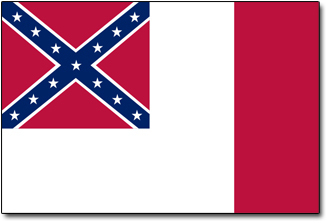
Via Wikipedia
"Ol' Running out of Ideas."
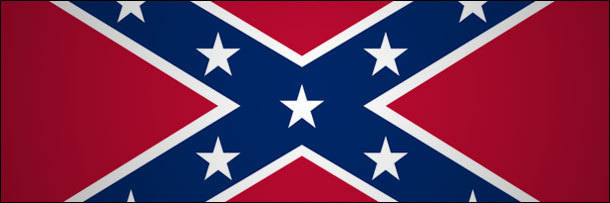
Now, we know what you're thinking: What the hell is that "Confederate flag" everyone keeps fighting over today? It's a dark blue variant of the Second Confederate Navy Jack. Although occasionally used on the battlefield as just one of countless regimental colors, this particular version enjoyed renewed popularity after its use by several "Rebel Companies" in the Pacific during WWII. Now completely misunderstood throughout the country today, this flag endures as a powerful symbol to how little the South should be trusted with their own Civil War history.


Via 


Regarding the claim that the Civil War was about states' rights, I have three words: Fugitive Slave Act. The slave-owning states had been happy to support an overweening federal government when it suited their purpose, and that purpose was the perpetuation of slavery. No amount of attempted revisionism can change that.
ReplyBy logic used in #2, the Vietcong never stood a chance against the American forces.
Reply Hide All See All 4 RepliesI don't think the two wars compare very well. The weaponry is completely different
...They didn't :p the lost at nearly every turn.
No he's completely right. The North Vietnamese won a political war in Vietnam rarely winning an engagement, but they still achieved their political objective through war which is technically what its all about. The South would have 'won' the war had they just gotten the north to leave them alone. They were just looking to be independent not conquer the whole country. The Union actually would've left them alone had the war lasted longer, but Robert E. Lee got called the ace of spades and his southern honor caused him to lead a series of these most retarded attacks ever losing the war, If the confederates would have just camped out defending, letting the Union charge up hills. The northerners (who didnt really care) would've let them go.
Princezilla is correct. By 1968, the Viet Cong was operating only in the Mekong Delta, with the fighting in the rest of the RVN being done by the North Vietnamese army (officially, the People Army's of Viet Nam, PAVN). After the Tet Offensive, the Viet Cong ceased to exist except on paper, with VC units being manned by North Vietnamese personnel.
EditYou forgot the myth that was relentless promulgated throughout the post-Reconstruction era all the way until the 1960s: That the war "wasn't about slavery". You are correct that that wasn't the North's motivation. Lincoln just wanted to preserve the Union by any means necessary.
ReplyBut the South made it 100% explicit in every single one of the Articles of Secession why each state was seceding and in each case it was to preserve the "God given right" to own their fellow human beings.
Something important to note, because it gets lost in the controversy, is that the "Rebel Flag" isn't despised because of anything to do with History, the Confederacy, or the Rebels. The reason it's disrespectful and bad to display it is because someone else fucked it up for the rest of the south.
ReplySpecifically, because the KKK rode under that banner in their Heyday. So whatever other symbolism that the flag has for people, those certain folks messed it up for you. Sort of like Hitler and the Chaplin Mustache. Or the Nazi Party and any number of Roman Imperial symbolisms that they adopted.
Or Nazi's and the swastika? It's a form of sankrit meaning health, wealth and wisdom.
Alright, let's settle the score once and for all. Civil War round two. Let's see if you Yankees can take us a second time.
Reply Hide All See All 3 RepliesAre we still going to line up and run across fields in this fight? If so, I call holding a machine gun and not running!
Let see how many Southerners would actually fight along side us Yankees in the south.
"You Yankees" + all the non-hick Southerners, and European forces if necessary. To paraphrase the Daleks, it wouldn't be warfare, it'd be pest control. Betcha talk it up a storm in the redneck bars though Cletus. That's all it'll ever be Bubba.
there are alot of conflicting articles on this site
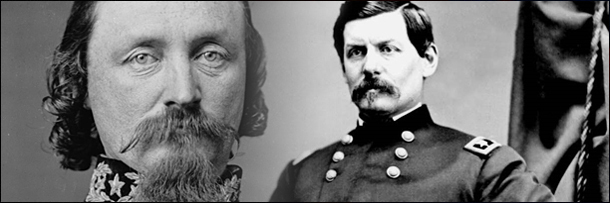
Replywell, I am going to have to disagree with you on a few things, and not from some half baked opinion from watching the history channel... First on your use of George B. McClellan, sure he was a poor general as far as actual fighting (but great in training), but he was used at the beginning of the war, and was removed. This war was very long, and simply citing him as a poor General in the beginning of the war does not account for the amazing feats Mead, Grant, and Sherman, whom used advance military tactics including trench warfare (which was not old school at all). As far as having better weapons, I personally had a conversation with Dr. Christopher Stowe, who is not only a specialist in Meade, but also trains Major Generals in the US army in battlefield tactics, he basically said that advancements of guns, compared to confederate guns was only a small bit better. Further, the ability of the Union to have such advancements was in insufficient supply for their troops....basically meaning that there was not a lot of "advanced" weaponry available to Union troops. On using Pickets charge as an example, I wonder if you ever visited the site...My civil war professor Dr. Heidi Weber, could not emphasize enough "Terrain, Terrain, Terrain" If one walks Pickets charge, they can clearly see what she meant. The Union had better terrain, and a soldier fighting on the confederate side could not see the union soldier, neither could Lee, or Picket ( I did a staff ride there, and could very much see what they were speaking of) This battle was not won because of better weaponry, nor poo, or better Generals, it was all about terrain. Devils den, and the like had nothing to do with better weaponry, the confederates were like fish in the barrel.
Reply Hide All See All 3 RepliesYou failed to mention "old fuss, and feathers" Winfield F Scott's anaconda plan, how his plan (which was not textbook) in the very beginning was snubbed because they feared it would take too long ,and politically/ society wanted an end to the war sooner, rather than later... and yet was finally carried out in the end anyway. It was due to his plan, and the carrying out of it mainly by Sherman, where the Union truly gained the upper hand. To say the south never had a chance, is to basically negate the first few years of this war....if they never had a chance this war would have ended soon, and the Union would have been on the top from the beginning....but they were not...not at all! Further, it is not normally said that the civil war was the bloodiest war ever fought....it is said that the civil war was the bloodiest war ever fought "on US soil" there is a big difference there....so I am sure you goggled, but that is not the common saying....you use of "meatball surgery" is correct, more died from infection, than battle....but this still was bloody...you fail to mention battles like Antheitem , and Chickamauga
Lastly, (and I totally will accept correction if I am wrong) it was the south that had a somewhat buyout policy from the draft, leaving rich men able to stay away from battle, if they could get a poor man to fight for him the Union had no such buyout (if I am wrong feel free to tell me, this is the one thing im not 100% sure of) I have studied this war, looked to those that have Doctorates in dealing with this war, and find some half baked information
I find your statements to be half correct, and others fairly wrong. I have met with the most scholarly in the field, and have toured battle sites for my own understanding. I understand this is not specifically a history site, but really...you can do better
it is this exact situation I believe the phrase "tl;dr" was invented for
Paragraphs are your friend.
Sorry bro, but Mead was a dunce, McClellan was a dunce, and Grant was simply the only man smart enough to use the massive advantage the north had, He was the best commanding general the Union had simply because he was the only one that used the north's massive advantage and just kept charging the confederacy. Although i do agree that number one is mostly wrong because there were some darn good generals: Grant( I never said he was bad), Longstreet, Lee (till he turned retarded), Sherman, Hood. Though there was the fair share of dumb ones.
Thanks for mentionning the fact the Emancipation Proclomation did exactly squat. If you think about it, the South had ceded from the Union and elected their own president so technically Lincoln had no authority to free any slaves in the Confederate states- which is just what he did. It drives me crazy that people still believe that he 'freed' the slaves. I had a fantastic American History teacher in 10th grade who told it like it was.
Reply Hide All See All 3 RepliesThe proclamation did actually cause many Southern slaves to run to the North to join the fight, it wasn't entirely useless. Though it didn't really "free" them as the article states, there was still plenty of discrimination.
To say that the EP did squat is asinine. The EP was a brilliant stratagem from Lincoln in a great many ways. First of all, it kept the slave states still with the Union happy and right there, where he wanted them. Secondly, it made slavery into an issue of the war, causing any foreign powers to be wary of supporting the south (which Britain had been doing to some extent in the form of supplies) and ensured that no one would interfere.
Where it failed was to entice slave states that had seceded into rejoining the Union. While Lincoln hoped for this, I don't think he ever really expected that to be the case.
He actually had full constitutional authority to free the slaves in areas that were in rebellion, and the southern states were in rebellion. Secession had always been considered de facto illegal, since the states had joined a federal union, which would be pointless if you could just leave. The Confederacy was never recognized as anything apart from a group of states in rebellion, and their defeat cemented secession's status as illegal.
In reality, the reason the EP did nothing was because it released slaves that were in rebel-held areas, so it was kinda hard to enforce.
"Medicine in the 19th century was so medieval it might as well have walked around in a tunic and leggings while strumming a lute."
ReplyMan, I've become a huge fan of Jacopo's phrasing. Well done!
Still don't get why rednecks embrace the whole "Confederate" flag thing... it's like getting a tattoo of the 2008 Lion's Team Photo on your penis.... "Yeah, I embrace losing!"
ReplyIf it was not for the carpet baggers and the North taking advantage of the Souths poor state after the war, (Yes some Southerns partook in this as well) then the South would not have been in should bad straights. The South was broken both physically and emotionally during reconstruction. The phrase "The South shall Rise again" was used not so much as a Militarly manner and more in a Emotional/Economical/Political manner. They used the Battle Flag as a symbol of their Battle Cry.
"the North taking advantage of the Souths poor state after the war, (Yes some Southerns partook in this as well)"
So basically everyone, as is normal.
It wasn't the bloodiest war in American history, but it was the one that cost us the most casualties. So yeah, either way, the most people died.
ReplyExcept that they might have died anyway
Samwich: well no, because the problems that already existed in the mid-19th century were exacerbated by having large numbers of troops living in close proximity in less than sanitary conditions. Even today, disease will tear through an institution with lots of people packed together such as schools, prisons and barracks. So if there hadn't been a war on, the disease wouldn't have had as much chance to spread as they did.
The South was never going to try to truly "defeat" the North, but it wasn't necessary: all they had to do to "win" the war was to wear down the enemy until a war-weary Union public finally just said, f**k it, let 'em go - and that VERY easily could have happened.
Reply Hide All See All 4 Repliesbasically the same concept as to what we did in the american revolution.
That wouldn't have solved anything. They were right next to each other. Think Korea. Though they aren't officially fighting they are constantly skirmishing/ready for all-out war. It'd be the same following the Civil War, only the South could never maintain the military required to match the North's and gurantee their independence. They may have won temporary independence, but it would never last.
And they were close to that goal, Ten-pint. Union General George McClellan almost dethroned Lincoln in the Presidential election because a good portion of the people wanted peace with the south.
Still, the conflict as we know it would've been "over". If what you suggest had happened - and I think you're probably right - history would recall this as the "First Civil War", and the eventual Union reconquest in the 1880s would've been the "Second Civil War".
I just had to scroll down to the comment section to see how many know-it-alls just couldn't resist the opportunity to share their knowledge with us.
ReplyThen you, snubbing your nose at such know-it-allism, couldn't help but comment yourself. I also couldn't help myself snubbing my nose at such a philistine as yourself.
I remember in seventh grade history, to illustrate the advantage the North had over the South, our teacher split us into two groups. One of us was the North and one was the South. (I got put on the South's side.) Then he asked us all trivia questions in turn. If you got a question wrong, you were "dead". He also told us that the last team standing would get bonus points on the upcoming test. Then, after about half of the people were out, he suddenly said that all the North people could stand up again and were back in the game. He did this like three times. I remember being so frustrated because I was one of the last Southerners standing and the whole freaking North team was still up. He said that was what it was like for the South because the North had a larger population and more reinforcements.
ReplyRead Mike Scrugg's "The "Un-Civil" War...it is all the artilces that he wrote for the Asheville N.C. newspaper, about what he had learned from his grandfather who actually fought in the War between the States and what he looked up and contains the Source list of the books his information came from. It explains the real reason behind the Confederate Flag. The real reason for the EP- it was a war time ploy... as far as the states rights, look up the Morrill Tariff, about how much the "northern" states were going to tax the southern states and how, and many other reasons why. The U.S. is full of propoganda. we will never learn to correct our 'historical'' mistakes for our future if we dont know the truth and keep being taught the "United States has a halo" version. Please keep researching... looking forward to the new and revised 'Civil War Myths Everyone Believes ( that are Total B.S.)..
ReplyWhat I get from you post is that it was all about state's rights and thats just not true. Both sides recognized that preventing slavery from expanding would ultimately lead to its demise. With the election of Lincoln it became apparent to everyone that the slave states would no longer be able to expand as they didn't have the influence in Congress to continue to do so. You're right that the North was less concerned about ending slavery then they were about preserving the union, but the whole reason the South wanted to secede was slavery. If you look up the constitutions of the CSA they all directly mention preserving slavery. Slavery was central to the states right issue, so to say it wasn't relevant is wrong. If you go to an individual level then obviously not everyone was fighting for slavery, but as far as the Confederate leaders were concerned it was about slavery.
That garbage "magazine/book" is nothin but flat out klan propaganda. I know because i live here and ive convinced a couple of the very few places that carry it to get rid of it. They had no idea what it actually was. It's utter bullshit and the only place i can think of that still sells it is a truck stop run by a sociopathic moron who once tried to rip his customers off to the tune of 2 bucks a gallon when the gas supply was shut down for a couple days.
I know of hardly any historian or mildly well-informed student who believes most of the things on this list. Except one thing that the author completely blows - the question of casualties. Per capita, it was the bloodiest war in history. It's like this - entire populations of young men in small towns were wiped out in one battle. That did not happen in any other war.
Reply Hide All See All 6 RepliesAs to the rest, nobody I've ever talked to has thought that any of the CW generals were brilliant, except for Lee who also made his share of mistakes. Very few credible historians have ever felt that the CW could have been won by the South - in fact, the whole operation was an attempt to create a stalemate and get the Union to tire of the war, have Lincoln lose power, and then negotiate with a sympathetic successor. Of course the Emancipation Proclamation only freed slaves in rebel states, everyone learns the questionable nature of that the same day it's mentioned in class. And the North was abolitionist, not anti-racist - not by a long shot. That's also common knowledge.
So basically, practically this whole list is codswallop, to use a polite word for "bullshit."
Thank you for informing me of this. It's something I really needed. Maybe, what the author is getting at, is that the common person. Not an educated historian or history buff - thinks these things are true.
But thanks anyway...dick.
When he says it wasn't the bloodiest, he means that the most people didn't die *in battle*, as in got shot or wounded or whatever.
It did have the most casualties in American history, but most of those were due to infection and disease, and not actual deaths on the battlefield.
Although I'm sure, since it was the first modern war fought in history, there were quite a few people killed in battle. I'm not trying to be morbid, just saying.
@PiratePat. Yes, being right makes you a dick. Epic logic. Enjoy that janitorial position of yours... Dick
646,392 dead in the Civil War.
1,076,245 Americans dead in WW2
How the f**k are you arguing about this?
Apparently youre evil and thus to be silenced because you.. spoke the truth. How dare you
Actually 758956, about 500,000 Americans died in WWII. Your number is actually more like the number of British troops killed in WWI (when the Empire is included).
Saying the South couldn't win the so-called Civil War is like saying that North Vietnam couldn't win the Vietnam War. Also, get that half-nigger Obongo's dick out of your mouth, and death to all who insult George Lucas and his work. f**k you very much.
Reply Hide All See All 10 RepliesWow, what an asshole.
Vietnam? Oh sure, shitloads of Soviet and Chinese funds and equipment shoved up the ass. We all know the confederacy had an equivalent of that during the american civil war.
Theres a difference between shipping trrops half way around the world and marching them a few miles south.
The south couldn't win that war. It just plain was not going to happen. I'm sorry that upsets your slow, inbred, racist, in-denial mindset, but, it's fact. Get over it.
obongo?? are racists even trying anymore, or are they getting as lazy as the people they persecute supposedly are.
What's an Obongo? Is that what the kids are calling their bongs these days?
I just want to know where George Lucas fits into this, was there another George Lucas that I am unaware of?
please for the love of god, do not be from the south....as an intelligent southern man, i can't take it much more.
How do they censor circumference but not n*gger? (I censored it myself, I hate that word.)
NVM, apparently their censors are off.
I'm not quite on board with #2. I think it demonstrates that the South couldn't have conquered the north, but they didn't have to. All they had to do was successfully defend themselves from attack, outlast and survive. The only reason you have battles like Gettysburg is because Lee believed that by winning a few battles in the north (which he didn't) he could take the fight out of them, but it wasn't necessary. It wasn't win or lose, in other words, it was win, lose or stalemate and a stalemate was all the South was hoping for. When you consider that then it really wasn't Grant who won the Civil War for the North but Sherman, who demonstrated that the South could not defend itself in the slightest and would not be able to outlast the north.
Reply Hide All See All 4 RepliesNah they would lost eventually anyway, economically if not militarily, wage slavery was better than real slavery as people felt free so worked harder.
You're talking about something different, though, Aluman. If the South fought to a stalemate then probably within a few decades slavery would have evaporated, like you suggest. That would not, however, mean that the South would suddenly have rejoined the north. More likely they would have remained their own, independent nation. So again, we come back to the South didn't need to win, they just needed to not lose.
The South could have won by *not starting the war* in the first place. There was NOTHING in the Constitution that said that states couldn't up and leave. (You just couldn't make a new state in the middle of an established state.) But once the Confederacy troops fired on Fort Sumter, then it went from 'states leaving' to 'being attacked by a hostile power'.
Now, whether along the lines there would have been a war *anyway*, as North and South competed to spread westward, is a different matter.
The South would never have been able to leave the Union without violence. Even if they didn't take military action the government would have occupied the South and enforced federal rule.
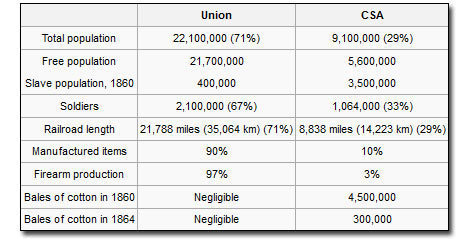
The stats in number two are accurate, but make a list of stats for the 13 colonies vs. Great Britain. According to your logic the Continental Army should never have won that war. Never. Or make a list for North Vietnam vs. United States. Wars are not always won by the stronger side. In fact, the US Navy, the same Navy that is supposed to be a great advantage to the US almost lost the war by almost starting one with Great Britain. The South lost the war because, when it came to strategy, they f*****g sucked. Lincoln is the reason the North won the war, not their industrial might or numbers.
ReplyOne could make argument that the Continental Army didn't win the war, France won it, orrr Great Britian lost it. Also there is a huge difference in bringing man power to bear across an ocean and across an imaginary line.
The Civil War was also the first of a different kind of war, one where manufacturing mattered as much as pure troop numbers. The North partially won the war as they could sustain it, and the south couldn't.
The author's point is that they couldn't WIN the war. That wasn't the point. The point was to outlast them.
And yeah, the Continental Army didn't really *win* the war. Much as I hate to detract from our accomplishments as Americans, America wasn't as important to the British as a colony as, say, India. Plus, they had other problems. I'm sure if their hearts had been in it, we would have lost. They lost that last battle and just gave up and left.
There are factors you left off from number two. In your chart the only edge you gave to the south was in its cotton. The south had much better military leadership than the north, and they had more trained officers. Yes, the North had Adams's great grandson, but just remember how many presidents and high level government leaders had been from Virginia and Tennessee. President Tyler, for what it was worth, joined the CSA, their government wasn't a ragtag group of people who didn't know how government worked. Finally, I do believe that if Judah P. Benjamin's ideas were better utilized he could have gotten European intervention, and would have been able to have them overlook the slaves.
Reply Hide All See All 5 RepliesI really am glad though that you left out the issues of what Lincoln believed, that he was racist himself, and the like. Too many Southerners and contrarians cling to this idea, but the basis for those claims are simply Lincoln's rhetoric which were attempts to offer various solutions that would appease the various constituents in the war.
1. More West Point graduates fought for the North than the South.
2. Europe wouldn't intervene without a really good reason. Remember every time that Europe stepped towards the US up until then, it wound up with a bloody nose. There was no indication this would be different, especially as Britain hadn't fought a war in over a decade, while the US had battle hardened troops, and couldn't bring down the ironclads of the Union.
Aluman, that's actually not true (point 2.) They didn't end up with a bloody nose over fighting the colonies. The were fighting us and the French, and the French had sugar, which was a valuable commodity at the time (since they couldn't harvest it from sugar beets and such like we can now).
The nations of Europe would not have intervened, because they had their own trouble going down. The Crimean War had ended in 1856, the Anglo-Persian War in 1857 (Britain and Persia), France invaded Indochina (yup, Vietnam) in 1861, winning that in 1862. Britain had the Second Ashanti War and the Bhutan War, and the Third War of Italian Independence kicked off in 1862, though things really didn't start heating up till 1866. Spain saw the Chincha Islands War in 1864 (in which they were the aggressor).
Short version, Europe had its own messes to deal with.
Well beyond that point made about Europe having their own problems-the south apparently really Counted on britains intervention and they WERE making the south a battleship (mid 19th century battleship) that would have been untouchable by the union navy. Even ironclads couldn't take it on, idk what they were going to make that was that powerful but in my research it was speculated that the south could have shelled union coastal cities at will with it. the union found out and made it quite clear they'd take the delivery of said ship as an act of war and the british backed down for reasons I'm about to go into...
More to the original point-the south was exporting so much cotton to britain that they expected them to support the south, as much of britains business was textiles (the industrial revolution made textiles much more lucrative). However, what they didnt factor was that for a little more, the British could just bring the cotton in from Egypt, which was British owned at the time (or something to that effect, I've never been too clear on it). On top of that, the north supplied Britain with a great deal of corn. The UK doesn't have the arable land to feed themselves and they didn't back then, either. So a war with the union would be far more costly than respecting the blockade of the south.
Furthermore, the emancipation proclamation (called a ploy by another commenter, which is a gross over simplification) was put out to accomplish two things, to give the slaves in the still rebeling states a reason to revolt or at least slow their work or do whatever to hinder the south, and to give themselves the moral high ground in the international community. I believe at the point it was delivered, Britain was seriously considering giving said battleship to the confederacy and intervening on their behalf, if for nothing else than to stick it to the US. Now, the would be need to get food from elsewhere and the notion that war with the union would appear to be supporting slavery was too much. They didn't think the populace would care too much for it.
That's what I learned from teaching my AP US history seminar on the civil war
"[the CSA's] government wasn't a ragtag group of people who didn't know how government worked."
Yeah... the CSA's was the ragtag group of idiots that couldn't get anything done. They had to first create an entire confederate system from scratch and union leftovers, and then they all started arguing among themselves, except the fact that there were no parties to direct that arguing meant that every single congressman had his own view, which lead to everyone arguing with everybody and nothing getting done. Meanwhile, on the Union side the entire operation was being run by a lawyer who had a congressional majority (the Republican Party) he could coordinate with to achieve his goals.