The 5 Most Wildly Illegal Court Rulings in Movie History
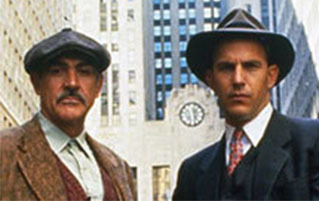
Everyone loves a good courtroom scene. We get lots of dramatic speeches and over-acting and Jack Nicholson reminding us that we can in no way handle the truth. But more than that, these scenes ultimately lead to Lady Justice being served. The bad guys go to jail.
Unfortunately, much of the time justice gets served only because a screenwriter twisted the law beyond recognition.
The Untouchables
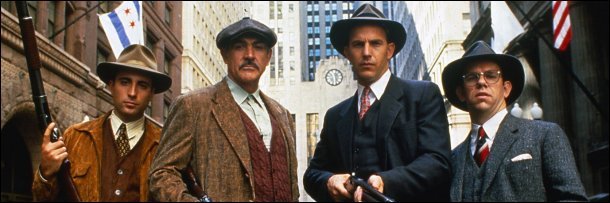
The Crime: Murder, Assault, Bootlegging, basically being a Mob Boss and Tax Evasion
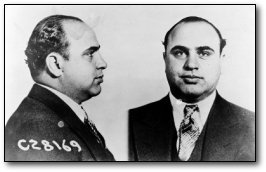
Also, jaywalking.
The Ruling: Guilty Because Your Lawyer Says So
Kevin Costner's Eliot Ness is determined to break the stranglehold that Al Capone has on Prohibition-era Chicago. He assembles an elite team of "untouchable" (i.e. not actually corrupt) cops, and after a couple dozen people are killed, they arrest Capone for the capital crime of tax evasion, which today can get you made secretary of the treasury. But anyway.
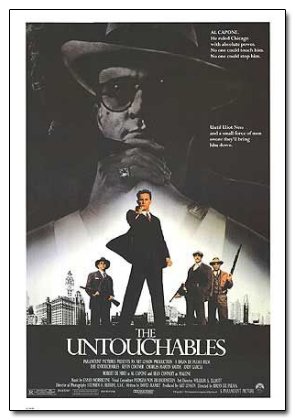
Look, Kevin Costner!
The Trial:
When Ness discovers mid-trial that the jury has been bribed, he confronts the judge, who is also in Capone's pocket, and threatens to expose him if he doesn't do something. Instead of declaring a mistrial, the judge switches the entire jury with the jury from the trial next door, after the trial has already begun.
In a moment of panic, Capone's lawyer changes the plea to guilty, and the courtroom erupts as though all crime has just been wiped off the face of the Earth.

Hooray! We're safe forever!
The Law:
Ever had to go in for jury duty? And the lengthy selection process? All that stuff happens for a reason. Juries are specially selected to avoid a conflict in the case being tried -- hell, Capone's second cousin could have been in the jury next door for all they knew. That's why a judge doesn't have the power to place a jury that the lawyers haven't selected or interviewed, let alone do so mid-trial.
But this point becomes moot minutes later, when, seeing that the evidence is stacked against them, Capone's lawyer switches his plea to guilty. The court erupts, cheering, while Capone punches out his lawyer and is then seen in the background being led off to jail screaming, "Is this justice?"
Well, no, actually.
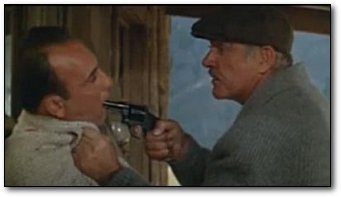
This is Sean Connery.
The whole point of the scene seems to be that Capone's lawyer switches sides and pulls the rug out from under Capone. But in real life, a court can't accept a plea without a defendant's verbal consent, no matter what the lawyer suddenly announces.
"Oh, and that DUI I got charged with last week? He's pleading guilty to that, too."
The lawyer works for the accused, after all. Which means that instead of the court celebrating like they had all just won the lottery when they hear the guilty plea, Capone actually could have just fired his lawyer, had him killed (not necessarily in that order) and then stuck with his not-guilty plea and bribed the next jury, too.
Primal Fear
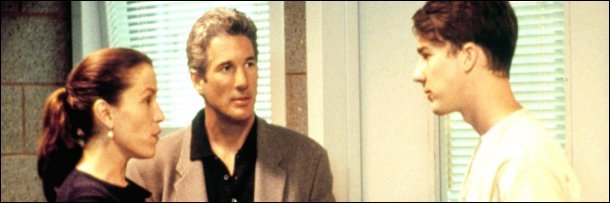
The Crime: Murder
The Ruling: Not Guilty by Reason of Awesome Acting Abilities
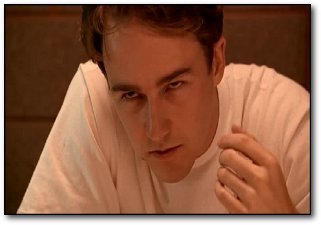
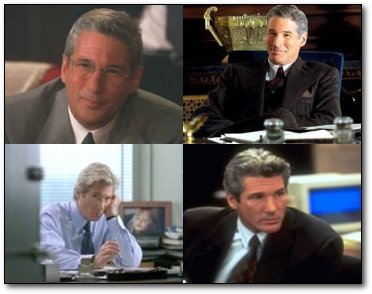
In Primal Fear, Edward Norton viciously murders a priest, stabbing him 78 times and cutting off his fingers, and then runs away covered in his blood. Richard Gere is a Chicago defense attorney who goes apeshit over the awesomeness of this and takes Norton's case. They submit a plea of not guilty, but while investigating the case, Gere finds out that Norton totally did it, but he also appears to have multiple personalities, so he should be all set to go with an insanity plea.
Pleading insanity is the duct tape of legal defenses.
The only problem is that he isn't allowed to change the plea in the middle of the trial, which means his crazy, guilty client is going to be found just plain guilty, without the added fun and lenient sentencing that comes with the crazy part.
The Trial:
The only solution Gere can come up with is putting Norton, who is soft-spoken with a polite stutter, on the stand in his own defense. When the tough-talking female prosecutor lays into Norton about murdering the priest, his alternate violent personality comes out and Norton attacks her, proving he's crazy.
After Norton is arrested yet again, the judge calls both lawyers to her chambers to discuss the case. After Gere assures her that Norton is actually crazy, she decides to dismiss the jury, declare it a bench trial, find Norton not guilty by reason of insanity and remand him to a mental institution to decide how long he'll be committed. And then comes the twist ending ...

*SPOILER ALERT*
... In the final scene it is revealed that Norton was faking the whole time: There was no alternate personality and he is simply the world's greatest actor. The cold-blooded serial killer is his true personality, and the soft-spoken stutterer was all an act.
The best part is he can't be tried for the same murder twice (that'd be double jeopardy), so once he checks out clear at the mental institution, he'll be back on the street. Gere is both mortified by this and insanely jealous of Norton's acting ability since, unlike himself, Norton clearly has enough range to play characters who aren't lawyers.
The Law:
Psychology can be an inexact science, sure. But still they tend to, you know, actually have experts test people before declaring them insane. Instead of subjecting Norton to testing by any kind of court-appointed psychiatrist and waiting for a report from an actual expert, the judge just decides that "yeah, he seems pretty crazy" and sends him off to the loony bin with no questions asked.
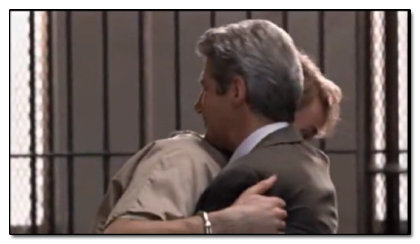
Hugs all around!
And keep in mind, we as an audience have been seeing Norton's split personality emerge slowly throughout the film, and we know that he switches from mild-mannered kid to crazed sociopath. But the judge sees only one violent outburst in a courtroom from a defendant who is on trial for a vicious, bloody murder. Which is kind of what you'd expect to see.
And yet within moments, she has him declared not guilty by reason of insanity, partly because Gere assures her that Norton is indeed insane.
"Who in his right mind would do this? Not guilty!"
There was no reason for the judge not to wait for him to be tested to make her decision, just in case the guy's attorney might have been lying or even mistaken, since he's a lawyer, not a psychiatrist. Or she even could have declared a mistrial and allowed him to be tried again with an insanity plea to begin with, but apparently she's very busy, as she is seen going home immediately after making her decision. She doesn't have time for shit like this!
A Time to Kill
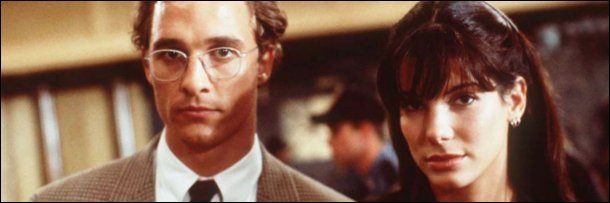
The Crime: Double Homicide
The Ruling: Not Guilty Because It's Really Sad
Samuel L. Jackson's daughter is raped and beaten by two white guys who are almost immediately arrested. Samuel L. Jackson doesn't trust any form of justice that he doesn't get to dish out personally and is worried the men won't be found guilty. Instead of waiting to find out whether that's true, Samuel L. Jackson shoots them both dead right in the courthouse, because he's Samuel L. fucking Jackson.
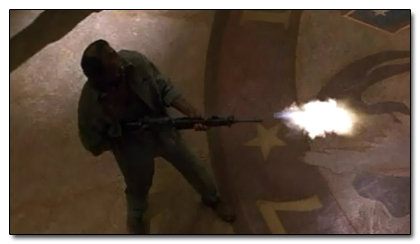
And he does it with an M16. Reason for this: See above.
The Trial:
Knowing he's going to be tried by a white jury, Jackson hires the whitest guy he can find to defend him -- Matthew McConaughey.
He actually only wanted to hire McConaughey's abs, but apparently they're a package deal.
McConaughey enters a plea of not guilty due to "temporary insanity" and proceeds to not back this up in any way. In his closing argument, McConaughey doesn't even pretend to believe that Jackson was insane at the time, legally or temporarily.
In fact, in his entire eight-minute closing argument he uses the word "insane" exactly zero times. Instead he urges the jury to see the crime from Jackson's point of view, to imagine that it was a white girl who had been attacked, and to imagine what they would do if it had been their daughter. Because as we all know, rape is OK unless the victim is from your same race.
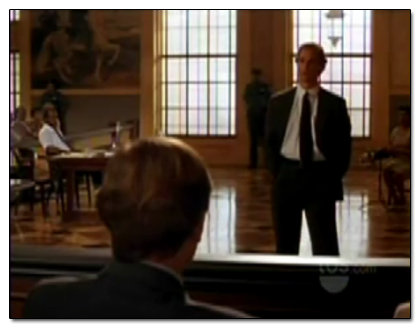
McConaughey: OK with racial discrimination.
The Law:
Jackson is found not guilty by reason of temporary insanity, which is a pretty big slap in the face to the justice system. First of all, no one truly believes he was insane -- he even sat in the courthouse all night with a loaded weapon, waiting for the guys, which proves pre-planning and a lot of patience.
In fact, McConaughey basically admits in his closing argument that Jackson did it, and asks the jury to find him not guilty anyway. A jury, however, is instructed to convict based on evidence alone. They are not there to decide whether he should have done it or what punishment he will face; they are there to decide whether he did do it or not. And he obviously did.
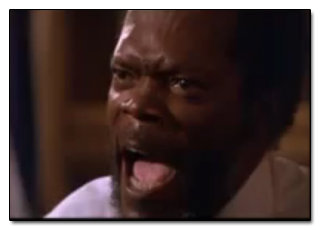
That is not the beard of an innocent man.
What makes it worse is that when Jackson killed the two rapists, he also accidentally shot a deputy who was escorting the two men -- the guy even needs his leg amputated. But hey, maybe he wasn't using that leg.
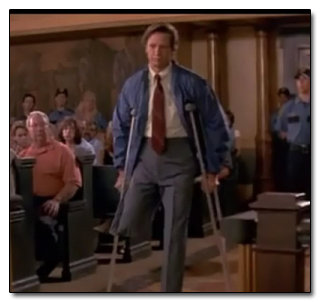
"No, it's cool. I mean, I was standing there, in your way, doing my job. And you're Samuel L. fucking Jackson."
So Jackson is accused of three separate charges: two murder charges and attempted murder of the deputy. Even though they're allowed to find him guilty of just the attempted murder, the jury absolves him of being responsible for shooting the deputy, too. Hey, how was Jackson to know that firing that M-16 in a crowded room would have consequences other than the ones he intended.
Basically, the court just rules that revenge is OK as long as racial grievance is involved. Doesn't that mean the deputy should have gotten to shoot Jackson in the leg too, or at least punched him in the face? You know, for justice.
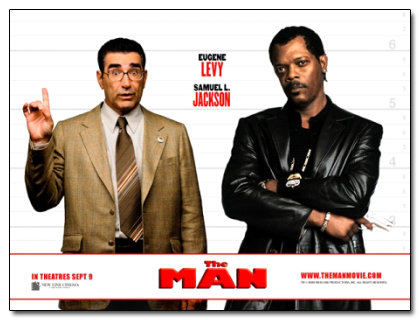
And for making The Man.
12 Angry Men
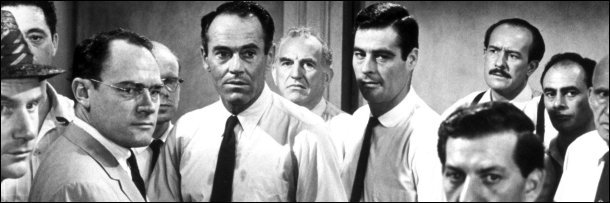
The Crime: Murder
The Ruling: Not Guilty by Reason of Independent Investigation by the Jury.
This is the classic courtroom movie, based on an equally famous play. 12 Angry Men follows the deliberation of a jury on a case we never get to see in the courtroom -- we spend the whole story with the members of the jury. The case they're examining involves a young man accused of killing his father.

"Take the Xbox and see what happens, fucker."
At the start, 11 of the 12 men are convinced the defendant is guilty, but Juror No. 8 is a stubborn bastard who's determined to get this murderer off the hook. He questions every piece of evidence that the prosecution brought forward and even buys a knife similar to the murder weapon to prove to the other jurors that it was not as unique as the prosecution led them to believe.
Slowly he sways each juror, one by one, into the territory of reasonable doubt by making ridiculous claims such as "that witness had glasses indents on her nose, so she probably wasn't wearing her glasses and didn't see anything." He makes a similar claim about an old man who heard the crime happening and as a group they conclude that the old man probably didn't hear anything and made it up to feel important for once in his life.
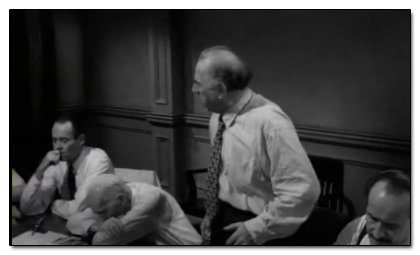
Justice, brought to you by Ensure.
In the end, after piecing together some radical assumptions about the witnesses and evidence presented, they find the defendant not guilty by reason of not wanting to argue with Juror No. 8 anymore.
The Law:
The guy should have been kicked off the jury the moment he went out and bought the knife. By law, juries are not allowed to conduct their own investigations, and if the other jurors had just reported Juror No. 8 for that, he'd have been replaced by an alternate. Yes, it's cool for characters in a movie to take the law into their own hands. In real life, you like to leave tasks like that to the people who have years of training and law enforcement experience.
Also Batman.
But that aside, Juror No. 8's whole line of reasoning is wrong at almost every step. According to the law, it's the jury's job to determine the veracity of the evidence presented, as is -- not to question and interpret the evidence any way they choose and make wild assumptions about witnesses. For instance, you don't just dismiss blood evidence as "probably planted or some shit" unless you are presented with evidence that it has been planted. Likewise, you can't just hand-wave away jury testimony based on, "Her eyes are probably bad."
It's kind of important that people stick to their roles in the criminal justice system. It's the lawyers' job to pick apart witness testimony and find any inconsistencies, just as it's the cops' job to hunt down evidence, and it's the prosecutor's job to present it. Once a juror decides to start doing all of that stuff himself, it's probably time to find a new juror.
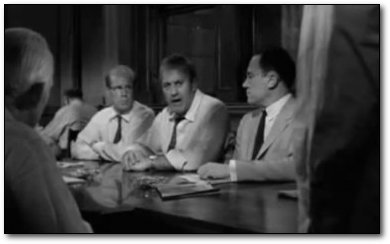
Maybe one who isn't white, male and over 40?
Miracle on 34th Street
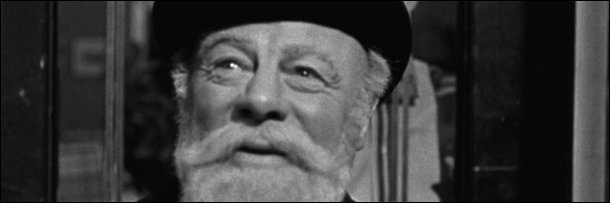
The Crime: Assault, Insanity
The Ruling: Sane and Santa Claus
When the original guy who Macy's department store hired to play Santa shows up drunk for the Christmas parade, Macy's hires a guy conveniently named Kris Kringle to be the new Santa and he proves to be the baddest-ass Santa who ever had a child on his knee.
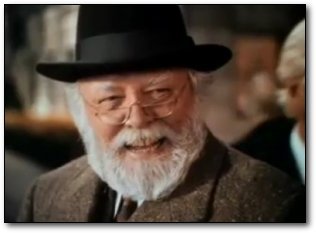
This man eats tinsel and craps candy canes.
People love the new Santa, and the store's business is booming, which shouldn't be that surprising considering they run a department store and it's Christmastime, but OK, the guy in the Santa suit could be helping. The only problem is Kris thinks that he's the real Santa Claus, and the manager wants to fire him because she's worried he's delusional and might hurt someone.
To make everyone feel better, Mr. Macy has Kris sent to a psychiatrist to prove he's not crazy. Unfortunately, jolly old St. Nick ends up putting the smack down on his psychiatrist and hits him on the head with his cane. The manager only just barely refrains from shouting, "I told you so!" before Kris is carted off to jail.
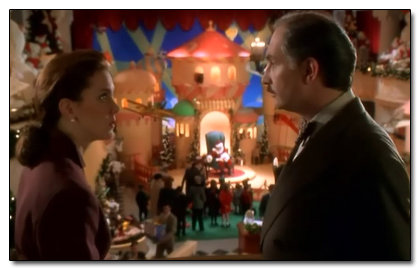
"Don't you dare say it! Every time I hire crazy, homeless strangers without references or credentials, you throw it in my face! Like it's my fault!"
The Trial:
Kris' trial is actually a hearing to prove that he's not crazy and shouldn't be permanently committed to a mental institution. He decides to go with the defense that he's not crazy because he's actually Santa Claus. He backs up this claim with absolutely no evidence except for the fact that a lot of people, including the prosecutor's son, think he looks an awful lot like Santa Claus.
Somehow this overwhelming evidence isn't enough for the judge, though, and just as he's about to rule that Kris is batshit insane, the U.S. Postal Service shows up and delivers 50,000 letters addressed to Santa Claus.
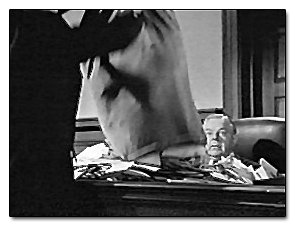
The judge rules that since one guy at the post office wanted to clear out the dead letter basket and drop all these letters off here, then Kris must be Santa. That's the 1947 version. In the 1994, version the judge is similarly about to declare Kris headed for the loony bin when a little girl comes up to give him a Christmas card. It's got a $1 bill inside with "In God We Trust" circled. Ignoring the fact that this kid is obviously trying to bribe him to get Santa off the hook, the judge decides that since America can believe in an entity like God, then "Santa Claus does exist, and he exists in the person of Kris Kringle!"
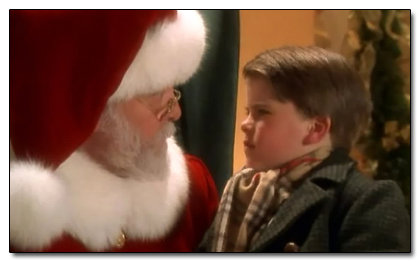
"All right, you're legally Santa, so where's my air rifle?"
The Law:
We don't want to come off like dicks here. After all, what's to stop a judge from letting a kindly old man off the hook at Christmas? No harm done. What kind of a stodgy bastard could possibly have a problem with that?
Us. Stop and think about the implications of this. The judge basically gave this one guy the power to lay claim to every Christmas card, decoration and jingle that bears his name or likeness and claim a royalty for its use.
He's shaving his beard, he's buying a flight, he's getting laid in Hawaii tonight ...
And what does this mean for Kris Kringle on a day-to-day basis -- is he now legally sanctioned to break into people's homes once a year to leave them stuff? Will there be ramifications if he doesn't leave a present for every kid who writes him a letter? Oh, and about those letters. Considering the basis upon which the judge made his ruling, this old man now gets all of the tens of millions of letters kids send to Santa every year.
Also, one year this old man is going to die. Try explaining that one to your kids, parents!

That's an even more crashing end to a childhood than finding a dead clown in the ditch out back.
And let's not forget that it also opens up the door for all kinds of whack jobs to announce they're fictional people as well. Hey lady, is that a bag of bloody human teeth you got there underneath your tutu? Don't worry, you're not crazy, you're legally the Tooth Fairy -- we've got a piece of mail here declaring it so. There's precedent for it!
For more movies we went ahead and ruined for you, check out 7 Movies Based on a True Story (That Are Complete Bullshit) and 7 Bullshit Police Myths Everyone Believes (Thanks to Movies).
And stop by Linkstorm because the Internet has destroyed even more beloved fiction of yours.
And don't forget to follow us on Facebook and Twitter to get sexy, sexy jokes sent straight to your news feed.
Do you have an idea in mind that would make a great article? Then sign up for our writers workshop! Do you possess expert skills in image creation and manipulation? Mediocre? Even rudimentary? Are you frightened by MS Paint and simply have a funny idea? You can create an infograpic and you could be on the front page of Cracked.com tomorrow!
