9 Ridiculous Cooking Myths You Probably Believe
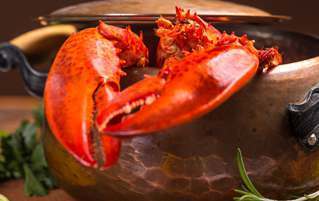
We don't expect all of our readers to know everything about cooking. At least some of our readers probably aren't expert chefs (though, yes, we assume that most are). It's OK if everyone doesn't know how to properly prepare a blowfish, or how to pair the right wine with the right dinner. You're not a master chef by any means, but you still know a few basic food truths, right?
Well guess what: You're wrong about those, too.
Bread Gets Stale Because It Loses Its Moisture

The sandwich is, without question, the best thing ever discovered by man (suck it, penicillin!), and bread is the most dedicated soldier in the sandwich's army. Bread makes it possible for loose meats and stray condiments to transcend their differences, to come together and celebrate their tastiness in an organized and mutually beneficial fashion. It brings order to your fridge; without the bread's stern but fair confines, what would keep your deli meats in line? Or your peanut butter and jelly? You'd have to just eat a spoonful of peanut butter and then desperately chase it with a shot of jelly. You'd be pounding fistfuls of various meats into your maw and chugging Grey Poupon just to feel something. Bread fixes all that and keeps your food safe and easily transportable. It's like an edible envelope that mails food letters straight to your mouth.

That's why coming home to a loaf of stale bread is absolutely the single worst thing in life (suck it, AIDS!). You've got your meats, your cheeses, your oils and vinegars, but the bread is hard and brittle and utterly incapable of inspiring order in anything. It's dry. You must not have sealed the bag, or maybe you left the bread out on the counter in the sun, thereby robbing it of all of its sweet, precious moisture. Surely that's what happened, right?
The Reality:
Wrong. When your loaf becomes stale, it's not because it's dried out; the opposite is actually true. When bread gets too much moisture, the starches in the bread start to crystallize, making the bread tough and crumbly. Maybe you know some people who store bread in their refrigerator to prevent it from going stale. Those people are not your friends. Low temperatures actually help to speed up the crystallization process, like baguette Viagra.

Lobsters Scream When Boiled

OK, you can't make a sandwich because all of your bread is stale, so you've decided to make a nice lobster (often called "the sandwich of the sea") instead. There are so many ways to cook a lobster, but because you're still furious that the universe robbed you of your bread, you need to take your anger out on something. You've been told your whole life that lobsters scream when you boil them, so that's what you'll do. You need to boil a small sea creature alive just to hear it scream. That's you. (In this hypothetical, you are a sociopath.)

The Reality:
Except it isn't screaming. That sound you hear is actually steam escaping the lobster's shell. When you toss a lobster into a pot of boiling water, steam builds up in the recesses of its shell and it has nowhere to go but out, much like a tea kettle. A delicious, expensive tea kettle.
Not only is it not screaming, your lobster isn't even all that pissed off at you, because its nervous system isn't very complex, so it's feeling little to no pain. So now you can't get a sandwich AND you can't even satisfy yourself with the tortured screams of a defenseless creature. What a sad day for you (you lunatic).

Searing Meat Seals in Moisture

Sometimes you just have to take a look at your life and say, "Steak, steak steak steak, steak, it's time for steak, steak steak, it's steak time." You've got a big steak and an even bigger appetite. But you don't want to just broil the steak or eat it raw. That sonofabitching steak has been marinating for 48 hours; you need to preserve those juices, you want to be able to jab a straw into that steak and drink those juices straight up. And how do you do that? Well, because you're cultured, you know that searing is the best way to preserve juices, a tip you learned in one of Auguste Escoffier's cookbooks. Escoffier was one of the most famous chefs of all time (once called "the king of chefs and the chef of kings"), and he swore by searing. His cookbook is still used today, but not as a cookbook -- as a damned textbook in the school of cooking. He must know a thing or two, so if he says searing preserves juices, you are going to fire up the grill and slap the meat right down on it as hard as you motherfucking can. Those juices will be yours.

Or maybe you can't cook at all. Maybe you went out to a restaurant to have someone else sear something for you, a nice tuna or swordfish, or perhaps some seared chicken nuggets, if the restaurant is particularly fancy. You don't care what you eat, as long as it's juicy, and that means you need some searing going on.
The Reality:
Not by a long shot. Searing meat doesn't do a goddamn thing to keep juices inside. When you sear your steak, you're actually creating a tougher crust on the outside of the cut, which just makes the inside seem juicier by comparison. That great chef Auguste Escoffier whose work is still used as a reference today? He's not just wrong, he's dead wrong. (Also? Dead.)

Meanwhile, the totally alive renowned chef and food scientist (?) Alton Brown did an experiment testing the myth, and he found that searing meat causes it to lose more moisture than meat that hasn't been seared. So the next time you want your steak to be juicy, don't get rough with it. Show it some love and cook it ever so gently.

Alcohol Completely Evaporates When Cooked in Food

Penne with vodka sauce. Chicken Marsala. Rum cake. They're all delicious and they're all made even more exciting thanks to their loose associations with alcohol. Sure, you'll never get drunk while eating something that has vodka sauce on it, because all of the actual alcohol gets cooked off, but you still appreciate that, at some point, alcohol was involved, even though it's gone now.

It is gone, right? Surely the alcohol has been cooked off or evaporated away or ... something. We need an answer on this, people, we let children eat penne with vodka. We're not feeding our children alcohol noodles, are we?
The Reality:
Yep! Depending on the method of cooking, the heat and the time the food is left sitting, up to 85 percent of the alcohol can remain. Even if the alcohol is put into boiling water, it can still retain its intoxicating qualities. For alcohol to completely cook out of food, it needs to be cooked for upward of three hours. Go ahead and look online and through every cookbook available; you will not find a single recipe for vodka sauce, Marsala wine sauce or rum cake that suggests you cook for three freaking hours. Unless you cook your beer-battered onion rings for three cool hours, you'll be ever so slightly on your way to a nice buzz.

If you want an alcohol-free pasta dinner for 7 o'clock, that's totally fine. Just make sure you start cooking at 4.
Cooking in a Microwave Destroys Nutrients

You're hungry as all hell, but still a little bit hungover from last night's penne, so you're just not feeling up to cooking. You decide that you're going to pop some leftovers into the microwave. After you press the "Start" button, you remember something you've heard a million times: Cooking your food in a microwave destroys all the precious nutrients that that food has. So, now you're going to lose all the vitamins and minerals in your leftover lobster sandwich and pizza rolls thanks to that goddamn nuclear box, right?

The Reality:
Wrong. Cooking in a microwave doesn't start a war on nutrients any more than cooking on the stovetop or in your oven does. In fact, microwave cooking helps to preserve nutrients more than other methods of cooking.
Because microwave cooking often consists of less heat and shorter cooking times than more conventional cooking methods, it actually does the least amount of damage when it comes to nutrients.

So, while cooking in your microwave probably won't cook everything in the way that you want it, it will keep those Hot Pockets nice and, uh ... healthy.
Pork Needs to Be Well Done

Bacon is the oxygen of the food world. It's amazing, you can't get enough of it and anyone too stupid to love it deserves to die anyway. You love bacon, and all of its delicious, porky cousins. But you'd better make sure that pork is well done, right? You've got to fire up the grill and get that pig cooking. Anything less than well done and you'll get worms all up in your colon and stomach, and eventually your brain and your thoughts (probably).

That's why restaurants prepare pork chops the way they want, without even giving you any options. You can tell a waiter how rare you want a cheeseburger, but if you order pork chops, they're not going to let you decide if you want them rare or medium, because any choice that isn't "well done" just means "full of worms."
The Reality:
Full of bullshit, is more like it. Due to a fear of trichinosis (a parasitic disease caused by eating raw or undercooked pork), people have, for years, made sure that they don't eat pork unless it's been cooked to a well-done state. By the way, that fear was completely legit, because trichinosis is a worm that slithers menacingly around in an animal's (or some lucky human's) digestive system. After that, it burrows its way into the flesh and the muscles. In other words, it's a terrifying hellbeast.

The thing is, that fear was legit many, many years ago. Today, due to modern pork processing standards, cases of trichinosis in the U.S. have been reduced to about 11 each year, and most of those cases weren't even from pork -- they were from the consumption of wild game. You could go to a restaurant and order pork chops medium rare and eat them and totally not die. You wouldn't just be safe from worms, you'd be entering some brand new pork territory, as most people have only ever had pork after it's been thoroughly cooked, thus robbing it of all its flavor. Imagine it. Juicy, warm, moist pork chops sitting on your plate, melting in your mouth, and no worms to be found for miles and miles.

Putting Oil In Pasta Water Keeps the Pasta from Sticking

We've neglected a big portion of our audience so far. We've covered the people who like to cook and the people who like to go out to eat. But what about those who can't cook lobster and steak and who can't go to restaurants because they're too poor, or they can't stop farting or whatever? What about them?

Well don't worry, because this entry's about pasta. Anyone can make pasta. Boil some water, throw some pasta in and, unless you want the pasta to stick together and get all blobby and horrible, you add a little oil to keep everything separate. That's all it takes. You get out the vegetable oil and generously get that pasta all lubed up. It is the only cooking trick you have ever learned.
The Reality:
And it's wrong. As long as we're talking about "facts" that you know, here's an actual fact: Water and oil don't mix. They just straight up hate each other.

Here's a cool thing about pasta you may not know: The different pasta shapes are not meaningless. There isn't a shady organization of pasta designers trying to trick people into buying arbitrarily shaped pastas for no reason. Different pasta shapes serve different functions. Some are good for soups and broths. Angel hair is better for thinner, delicate sauces, and spaghetti is better for thicker sauces. Fusilli (the twisty kind) is good with any sauce, but cavatelli (the little hot dog bun kind) is best with thick, chunky sauces. Hundreds of years ago, ancient pasta architects used science and alchemy to come up with the noodle designs that were most conducive to catching and storing different sauces, because they want you, the eater, to have the best experience possible.
You know what happens when you add oil to pasta water? The pasta, regardless of the shape, will be so slippery that it will no longer absorb your sauce. After all of the work that those diligent pasta magicians went through, you ruin all of it by pouring oil all over your pasta, and it won't even keep the pasta from sticking together. Selfish. That's what you are.

Cooking Vegetables Makes Them Less Nutritious

By this point in the article, you're probably just fed up with cooking in general. You don't even know what to believe anymore, so you've decided that you're just not going to cook from now on. Raw food, all day. Why? It's healthy. You've been enveloping yourself in all of this information and one thing really stands out: Cooking vegetables causes their enzymes to die. You'd get more nutrients if you printed out this article and ate it, a thing we in no way are suggesting you do, even though we think it'd be really funny to see you try.

It makes sense, when you think about it (the vegetable-cooking thing). The enzymes in the vegetables die off when they're heated, which is common sense that anyone can understand, because everything dies when you heat it up too much. So, the cooked vegetables must be less nutritious than raw ones, right?

Might as well switch those out with some Cheetos.
The Reality:
Nope. It turns out that when you eat raw vegetables, even though their enzymes are intact, they dissolve and get washed away in your digestive acids. Just like a body in a vat of hydrofluoric acid. And the thing is, the enzymes in plants are what helps them grow; they're not needed by humans because we have digestive enzymes of our own, rendering plant enzymes pretty useless.
So the next time you think that your vegetables aren't nutritious when they're cooked, just think of Walt from Breaking Bad as he's dissolving a body in acid. It'll help to curb your appetite, too.

Salt Is Salt

You have a ravenous craving for cookies that can only be described as "monsteresque," and you don't have any Oreos or Chips Ahoy kicking around in your cabinet, so you decide that you're going to take a step back in time and make them from scratch. You really want these cookies.

You've got all the right ingredients, except you have table salt when the recipe calls for kosher salt. What are you, a Rockefeller? You're not in the business of having a variety of salts lying around your house like some big fancy chef guy. Salt is salt. You get out a big mixing bowl and mix everything together, and then you lay them on a cookie sheet and stick them in the oven. Even though you used table salt, they'll turn out fine, right? Salt is salt, right? Maybe kosher salt is more flavorful, or maybe sea salt is slightly better for you, but salt is still salt, right? They all serve the same salt-like purposes, right?
The Reality:
We wouldn't include it in this article if it wasn't a lie.

Because table salt is much finer than kosher salt or sea salt, using it in recipes that call for the latter two can absolutely ruin a dish. Bitter and not at all like the real thing. When you use table salt in place of sea salt or kosher salt, you're going to wind up with oversalted, briny food every time.
Next time, spend the extra few bucks and pick up kosher salt if the recipe calls for it. Or just screw the whole thing and spend that money on cookies instead. Do something and do it fast because, if you're anything like us, this article made you absolutely starving.

You'd better hope the chef is smarter than you.
For more myths you undoubtedly believed, check out 6 Ridiculous History Myths (You Probably Think Are True) and Your Mom Lied: 5 Common Body Myths Debunked.
Don't forget to follow us on Facebook and Twitter to get sexy, sexy jokes sent straight to your news feed.
And to further expand your noggin, check out Cracked's De-Textbook: The Stuff You Didn't Know About the Stuff You Thought You Knew.


