7 Brilliant Movie Lawyers (Who Suck at Their Job)
We never said being a lawyer was going to be easy (because it's really not). We also never said it was going to be cool or interesting, either, but do you know who did? Hollywood. And even though we've been cool with Hollywood's lies before (the crappiest Indiana Jones movie is still a hundred times more exciting than the most interesting real-life archaeologist), when it comes to making movies about lawyers, Hollywood's goofs are so inexcusable that we wonder if anyone even bothered to Google "lawyer," "law" or "real life" before starting their screenplay ...
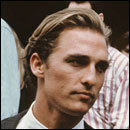
Matthew McConaughey -- A Time to Kill

In A Time to Kill, Samuel L. Jackson is on trial for murdering the two racist white men who raped and beat his 10-year-old daughter in rural Mississippi. Jackson hires hot-shot lawyer Matthew McConaughey to defend him in court and, while Jackson did kill those dudes, Matt's plan is to argue "not guilty" on the grounds of temporary insanity. Whether he has a case or not is irrelevant, because the real problem is that this movie is set in rural, racist Mississippi, and getting a fair trial in a town full of active participants in the KKK is fairly difficult (and even non-clansmen were still, like, casual racists). Despite all of that racism, McConaughey beats rival lawyer Kevin Spacey and convinces the jury of Jackson's innocence with a heart-wrenching closing statement. Boom: Lawyered.
We've already discussed how idiotically illegal that heart-wrenching statement is in the film, but in terms of courtroom procedure, that's really up to Kevin Spacey to object to it, and he's not portrayed as anything more than a slime ball trying to up his street cred. McConaughey, on the other hand, is supposed to be a pretty sharp lawyer, even though he seems so ... Matthew McConaughey-esque.

"I think I know just what this courtroom needs: a little more law!"
Early on, McConaughey realizes that with the deep-rooted racist sentiment in Mississippi, there's no way in hell a black man will get a fair trial, even if that black man is Samuel L. Jackson. Not wanting to "pull a Finch," he wisely submits a motion to change the venue of the trial, which the judge, who is being pressured by the KKK, summarily denies. Distraught about this, Matt mopes for a while before Sandra Bullock (his spunky, ambitious legal assistant) points out that the judge overlooked a legal precedent in the change of venue motion. Armed with this new information, McConaughey resubmits his motion ... and has it denied again.

"Damnit. I thought I had all the law. He just lawyered the pants off of me."
Objection!
Now, the first time the judge denied McConaughey's request to move the trial (without checking the legal precedents), it was a screw-up on the part of the judge. When a judge fails to consider all the evidence in a legal motion, this is called a "reversible error" (which, in legalese, means the judge done crapped him the bed something fierce). Bad enough, in fact, for the whole show to be declared a mistrial, meaning the defendant gets a brand-spanking-new trial. McConaughey has two options: 1) tell the judge that he made a mistake and give him a chance to correct it or 2) don't tell the judge; keep the information a secret and hold onto it. McConaughey chose option 1. He informed the judge of the screw-up and gave the judge a new opportunity to review the information. And he still got rejected.
Here's what McConaughey should have done: nothing. When you see a judge has committed a reversible error, you shut the hell up. That's the ace you hold up your sleeve, the one you don't play until the last minute. McConaughey should have kept quiet about the reversible error until after the trial, because a judge making a reversible error is grounds for a mistrial. Let's say Samuel L. Jackson lost the trial -- that's when McConaughey should play the "reversible error" card and get a brand new judge, jury and trial. Holding onto a reversible error is like having a mulligan, or a Get-Out-of-Death-Penalty-Free card. He could have just waited for the outcome of the trial and then said, "Nah, I don't like that. Do over."

"Only this time, we all wear party hats."
Instead, McConaughey helpfully pointed out the error in the early stages, giving the judge an opportunity to fix it, which also eliminates the possibility of a mistrial and puts Samuel in the express lane for death row.
We love being the ones to say this: For the sake of this movie (and maybe all movies, actually), Matthew McConaughey should always just shut the hell up.
Al Pacino -- And Justice for All

When we see an obviously guilty criminal being defended, we wonder why the defense attorneys don't just roll over on their client and get his ass thrown in prison. We're sure some lawyers fantasize about jumping up and declaring their douchebag client guilty. But that's us. We make dick jokes for the Internet, we'd be terrible at lawyering. Please don't ever ask us to represent you in court.
In And Justice for All, Al Pacino's character, evidently channeling Cracked.com's Spirit of Crappy Lawyerdom, decides to screw over his own client. After spending the entire movie having his idealistic views of law crushed, he is forced to defend his arch nemesis, a judge accused of rape, played by John Forsythe. While initially believing him innocent, he soon discovers Forsythe is paying people off to give him a false alibi. During his opening statement, Pacino suddenly snaps and declares that his client is guilty before famously accusing the whole damn system of being out of order. The final scene shows him sitting outside the courthouse, having kamikazed his legal career. But at least he's got a clear conscience and he's ensured Forsythe will go to jail.
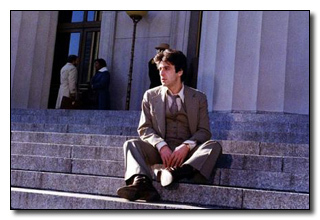
"Now, to pay the rent with ethics."
Objection!
Actually, all he did was ensure Forsythe a competent defense. By refusing to represent his client, Pacino commits a breach of contract and is guilty of legal malpractice, which means the current proceedings would be declared a mistrial. Forsythe would get a whole new trial with a new attorney, probably one who doesn't share Pacino's moral hang-ups. Pacino's outburst would be inadmissible in the retrial and have no impact whatsoever.

"Also, you're all fat! So suck it!"
But, still, Pacino didn't want to represent a lying scumbag, so he didn't really have much of a choice, right? Wrong. If Pacino knew that Forsythe was guilty outright and was planning to submit false evidence, the American Bar Association rules state that Pacino is completely within his rights to notify the presiding judge. Pacino can go to the judge and say, "Hey, I know we're about to start this trial but, real quick, I just wanted you to know that my client arranged for a bunch of witnesses to lie for him. Right to your face. Everything they say is, and I want to be clear here, definitely not true. Anyway, have a good trial!" The judge in question, who is shown earlier to be somewhat fond of Pacino, could declare the false testimony inadmissible. Then even if Forsythe fires Pacino as his attorney, the fake alibis would still be inadmissible, since firing your attorney does not get you a retrial, nor would any judge grant a retrial simply because an attorney prevented his client from committing perjury.
Instead, Pacino loses his mind, goes for the grand effect and gets himself in deep legal trouble while ensuring that Forsythe almost certainly gets acquitted. What a weird move. Al Pacino normally seems so level-headed and reasonable.
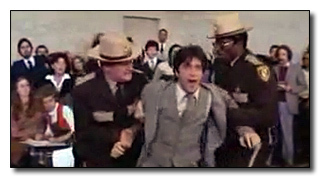
This is actually just him ordering lunch.
Tommy Lee Jones -- Double Jeopardy

In Double Jeopardy, Ashley Judd is wrongly convicted of murdering her husband to death. Later, we find out that the husband actually faked his death, just so he could abscond with Judd's son, her best friend and his own insurance money. While in prison, one of the inmates (claiming to be a lawyer) says that if Judd can get out of prison, she can murder her husband with no consequences because the legal doctrine of "double jeopardy" says a person can't be tried for the same crime twice. Judd immediately sets out to do just this, because who better to take legal advice from than convicted felons?

"You can also kill an extra person if you want."
Judd gets paroled and manages to track down the duplicitous bastard in New Orleans, with Tommy Lee Jones hot on her heels (when is he not chasing down fugitives?). Tommy, Ashley and the douche ex-husband all end up together, where Tommy (a professor of law) confirms that Ashley is totally within her rights to pump his two-timing guts full of lead, right before she does, with no ramifications.
Objection!
This is an easy one. Even we thought the whole "double jeopardy" defense was suspect, and we're not very bright at all.

"Free murder? Thanks, the Law!"
Maybe Tommy has been retired from teaching for a while, or maybe he just really likes seeing people go to jail, but either way, he's totally wrong. Double jeopardy does stop someone from being tried for the same crime twice, but she's committing an entirely new crime. If you're wrongly convicted of stealing a TV and then you go and actually steal that same TV, do you really think they won't throw you in prison again? Another exception is "separate sovereigns," which says that double jeopardy doesn't apply if you're tried in two different jurisdictions; Ashley is initially convicted in Washington before cruising down to Louisiana to have a .38 caliber chat with her hubby. With an eyewitness and a motive, she would be back in jail faster than she could say "Should've Googled that."

"Oh. Really? Um ... my bad."
Howard Duff -- Kramer vs. Kramer

In one of the first mainstream movies to examine the role of gender in family law, Kramer vs. Kramer tells the story of a father (Dustin Hoffman) suddenly left to raise his son by himself after his wife, Meryl Streep, leaves him. Several months later, Meryl returns and demands custody of the boy. Having become accustomed to French toast and Saturday morning cartoons, Hoffman says hell no and the two go to court.

After a bitter and harsh legal battle, primary custody is awarded to Meryl, based on the "tender years doctrine," which states that preference in custody is given to the mother. Hoffman initially wants to appeal the ruling and continue to fight for his son, but Howard Duff, who plays Hoffman's lawyer, says that he'll have to put his son on the stand if they appeal. Unable to put his son through that, Hoffman tearfully concedes custody to Meryl.

Oh, burrrrrn.
Objection!
We don't mean to say that Howard Duff is a moron, but Howard Duff is a moron. Appeals are based on material fact and written records from the original trial, not on new evidence. The notion that Dustin's son would be forced to testify is utterly ridiculous. Even if a retrial was ordered, the worst that would happen would be that the judge would gently ask Dustin's son a few questions about his daily life with his dad in the judge's private chambers, which is hardly the traumatizing grilling Duff makes it out to be. Additionally, while the tender years doctrine was the prevailing standard of custody arguments for many years, it had been falling out of favor for nearly a decade by the time Kramer vs. Kramer came along in 1979. Any ruling based on an outdated legal principle would provide ample fodder during the appeals process and could easily come out in Hoffman's favor. Instead, Dustin torpedoes the entire thing based on excruciatingly imbecilic advice from his lawyer and winds up losing custody of his son.

"Whatever. It's not my kid."
(It's a really sad movie that we've now made much, much sadder. Sorry.)
Gregory Peck -- To Kill a Mockingbird

In what has been voted the greatest courtroom drama of all time, Gregory Peck plays Atticus Finch, a lawyer tasked with defending Tom Robinson, a black man accused of raping a white woman. With an obviously monumental task in front of him, Peck vigorously points out all the inaccuracies in the girl's story (nothing will endear a jury more than badgering a rape victim) and fairly conclusively proves that there's no way Tom could have done it.
Of course, this wouldn't be called a drama if everything was sunshine and rainbows. Tom is still convicted by the entirely white jury (the 1950s South isn't what one would call "enlightened"), and before Peck can appeal the ruling, Tom is killed in prison. Peck mopes around for the rest of the movie and contemplates giving up on practicing law.

He then legally declares the jury to be a "bunch of dicks."
It's not a Christmas movie.
Objection!
Actually, giving up might not be such a bad idea. If Peck was such a brilliant lawyer, why didn't he petition for a change of venue? Even Matthew McConaughey's character thought to request a change of venue, and he's Matthew McConaughey.

"Oh well, I tried. I guess I'll just head on home, then."
A change of venue is a legal concept that was basically developed for this very purpose. If it is believed that a fair trial cannot be obtained in the proper jurisdiction, the proceedings can be moved elsewhere "in the interest of justice." There's no way in hell Tom would get a fair trial in Whiteyville, so Peck could just petition to move things elsewhere. One could argue that since the judge has the final say on whether to grant a change of venue, he would just deny the motion for no reason other than being a racist prick, making the gesture pointless. However, Judge Taylor is shown to sympathize with Tom Robinson and holds Peck in high regard (he's actually the one who appoints him as Tom's legal counsel), so there's no reason to believe he wouldn't grant the motion.
Additionally, Peck knew that the jury was biased and that nothing Tom said would change their minds, so why would he put Tom on the stand? Tom isn't required to testify, and Tom saying he felt sorry for a white woman just pisses off the already prejudiced jury. Look, we love Finch for his character, his morality and his Lincoln-esque level of integrity as much as the next guy, but damn he is a bad lawyer.

"Maybe incompetence is just as bad as racism."
Terry A. Burgess -- In the Bedroom

Proving that stupidity doesn't take a side and that not all legal screw-ups are from defense attorneys, In the Bedroom's Terry Burgess plays a prosecuting attorney, but mostly an idiot. After Marissa Tomei's lover was shot by her psychotic ex-husband, the police haul him off to jail and Burgess, the D.A., comes to take her statement. During the questioning, it comes out that Marissa didn't actually see her ex shoot her boyfriend, she only heard the shot and then saw her ex standing over the body with a gun in his hand. The D.A. then says they don't have much of a case because she didn't see him do it. The law having failed them, the victim's parents are forced to take matters into their own hands.

You don't mess with the coal miner's daughter.
Objection!
Since when is having a direct witness to a crime necessary for conviction? What with murder being illegal, many times it is committed with no witnesses at all. Miraculously, witnessless murder convictions have still occurred, even when the prosecution is lacking a motive, a murder weapon and in some cases even a body. Burgess has a motive (the ex-husband had attacked the boyfriend before), a murder weapon (he's still holding the gun when the police show up) and a witness irrefutably placing him as the only other person at the murder scene! What the hell about this is not open and shut? If a cop sees you with your pants down squatting over the hood of his patrol car with a pile of crap on it, do you think your defense that the cop didn't actually see you take the dump is going to hold up in court?

"I can't be sure. He may have killed himself, and the force of the shot blew the gun into my ex's hands."
Burgess also explains they can't convict him of murder (only of the less serious charge of manslaughter) because they can't prove that the gun didn't go off in a struggle. Except that they totally can, because there's an entire field of science dedicated to this sort of investigation, known as "forensics." You might have heard of it, it's been on a few TV shows. Blood stain analysis could determine if there was an actual struggle or if the fight was one-sided. Gunpowder residue would tell police if the gun was fired at a distance or at point-blank range, as would happen in a struggle. Rather than leave it up to that hocus-pocus hogwash called "science," Burgess issues his proclamation, and as a result, the ex-husband gets off scot free.

"So ... pancakes, then?"
Until the victim's parents murder him, obviously. But that's sort of a separate issue ...
Andy Griffith -- Matlock

When that lovable scamp from Mayberry decided it was time to hang up his badge, he decided he still had a flair for justice, so he put on his lawyerin' shoes and took up the cases of the most guilty sumbitches in the greater Atlanta area. In every episode, Matlock takes on a seemingly guilty client who was actually innocent. Matlock discovers the frame job and, by the end of every episode, reveals the truth in some grand dramatic fashion at the end of the trial. Generally, you know that whoever Matlock puts on the stand last is the person who actually committed the crime. Matlock gets them on the stand and pulls some surprise piece of evidence out of his ass that shocks the witness into a confession.

"That evidence is so surprising to me, I have no choice but to broadly announce my irredeemable guilt!"
Objection!
Despite his shoe-polishing fetish and endearing backwoods nature, Andy commits many, many breaches of ethical conduct that would not only get him disbarred, but likely thrown in jail as well. For instance, he is shown collecting evidence at crime scenes to dramatically reveal during the trial. While this makes for good TV, it's also obstruction of justice. No one outside of the police is allowed to touch or remove evidence from a crime scene, otherwise everybody would do that.

"OK, nobody touch anything until the lawyers get here! This is a crime scene, people!"
Even if it wasn't, the evidence wouldn't do a damn thing to help his client. When evidence is discovered, it is meticulously handled and cataloged in a heavily documented paper trail called the chain of custody. Even missing one link in the chain can mean the evidence is useless. It's not about him being a rebel or unconventional; the evidence is inadmissible.
Finally, in reality, there's never any "surprise" evidence in a trial. All evidence pertaining to a trial has to be disclosed before the trial actually begins as part of the discovery process so that each side can figure out how to support or disprove every piece of evidence. In real life, any judge would say, "Hey, that was a neat little show you put on, but this guilty criminal is going to walk forever now because you broke several laws trying to convict him in the cutesiest way possible."

"Damn."
So if you want a good show, go with Andy. If you'd prefer not to take up permanent residence on death row, start flipping through the Yellow Pages. You certainly can't do any worse.
You can read more from Chris at raddystuition.com or Twitter.
For more characters who secretly sucked at their job, check out 6 Movie Heroes Who Sucked at Their Job and 6 'Brilliant' Movie Scientists (Who Suck At Their Job).
And stop by LinkSTORM to enlist John Cheese's services to defend you against those horribly disgusting charges that are being leveled against you.
And don't forget to follow us on Facebook and Twitter to get jokes sent straight to your news feed.
Do you have an idea in mind that would make a great article? Then sign up for our writers workshop! Do you possess expert skills in image creation and manipulation? Mediocre? Even rudimentary? Are you frightened by MS Paint and simply have a funny idea? You can create an infographic and you could be on the front page of Cracked.com tomorrow!
