The Bizarre History of 10 Common Sayings
A lot of the English language seems to have been developed as some kind of elaborate practical joke. It's full of little sayings and idioms that on their face make no sense at all, and if traced back to their origins are downright horrifying.
Right or wrong, these 10 sayings have some of the strangest (and most unsettling) histories:
"Rule of Thumb"
 Now Means:
A common or ubiquitous benchmark. As in, "The rule of thumb is one part tonic to four parts gin."
Most say it came from ...
17th century English Judge Sir Francis Buller, who allegedly ruled that it was A-OK for a husband to beat his wife with a stick, given that said stick was no wider then his thumb.
This is the stuff that white trash dreams are made of.
So is that true?
As it turns out there isn't any record of Buller actually making this ruling, though he was known to be a big powdered wig-wearing dickhead to everyone around him regardless of sex. Still, roughly a year after the supposed ruling, British satirist James Gillray called out Buller in this cartoon, selling his thumb-width wife beating sticks:

So why would Gillray create this poster if the ruling it referenced didn't exist? Who knows. Maybe it was already an urban legend back then. The truth of the phrase is that it likely just refers to carpenters and tailors who, without a ruler handy, would just measure things in thumb-lengths. We tried digging up evidence that they were using actual severed thumbs for the task, but even that turned out to be too awesome to be true.
"Bite the Bullet"
 Now Means:
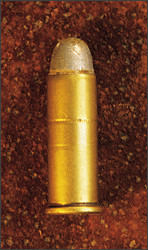
Accepting something difficult or unpleasant. As in, "You're going to have to bite the bullet and admit you killed that hooker."
Most say it came from ...
When engaged in war there are times when emergency surgery is needed: Legs have to come off or deeply-buried bullets need to come out. And sometimes, there's no time for anesthesia when the Nazis are bearing down.
So, rather then stabbing a patient in the arm to distract him from the saw going through his foot, the surgeon would supposedly shove a bullet in his mouth and ask him to bite down. Of course, you could use a belt or shirt but even in the throes of death it's important for a man to look like a badass. Thus, "Bite the bullet."
So is that true?
All signs point to yes. And thank God for that, as we would hate to think that a soldier being operated on with no medication in the middle of a battle is some kind of pussy-ass cloth biter.

But, notice how we said "All signs point to yes" and not a definitive "yes." Nailing down the origins of these sayings is an inexact science. The only other popular theory has to do with the preparation of bullet before firing (in old carbine rifles, you had to bite a paper cap off the cartridge so the spark could reach the gun powder).
That one would of course make no damned sense, since no one would equate that task with resolutely doing something unpleasant. You might as well say it's about that dude who claimed to catch bullets out of the air in his teeth. In fact, let's just go with that one.
"Basket Case"
 Now Means:
One that is in a completely hopeless or useless condition. As in, "The new supervisor got his dick caught in the copier again. What a basket case."
Most say it came from ...
The supposed origin came about during World War I and was used to describe servicemen that had all of their limbs either surgically or explodingly removed--leaving them as nothing more then torsos that would have to be carried in a basket. Yes, like in that Metallica video.
So is that true?
Again, it's a yes and no answer. Yes, there were servicemen that went home sans all limbs during the World Wars, but only two documented cases and there were no reports of either of them being carried off in baskets of any kind.

Also, it was a 1982 horror movie
Confusingly, the earliest recorded uses of the phrase were from US military statements claiming no such limbless soldiers existed. One way or another, it doesn't seem like there were enough cases to create a whole phrase to describe them. Why have a term for something that doesn't exist? Then again we have a word for "leprechaun" so, why not.
"Bust Your Chops"
 Now Means:
To give someone a hard time. As in, "Yes, I'm late and I'm not wearing pants. Don't bust my chops."
Most say it came from ...
There was once a time in the world when it was considered cool to sport a long, ridiculous pair of mutton chop side burns. From America to England, Russia to ... some other place even further away than Russia, the civilized global population couldn't get enough of these peninsula-shaped patches of hair.
Then, these people got punched in the face--their "chops busted," if you will--and an idiom was born.
So is that true?
Even though there is no definitive proof to back this up, this seems to be the only theory going. Also, it involves stupid looking facial hair, so it has that going for it.

It's just too bad that as regal and dignifying as the chops were for our founding fathers they only made hippies in the '60s seem like unwashed piles of tie-dyed failures. To this day the only people able to successfully pull off mutton chops are old-timey gold miners. If you have the chops in question and you are not one of these three, please, shave now or prepare to have them busted.
"Raining Cats and Dogs"
Now Means:
A torrential rain. As in, "It's raining cats and dogs. Which sucks because my hat is made of pure sodium."
Most say it came from ...
In the 1500s human beings had the pleasure of living in homes with thatched roofs which, keep in mind, had the ability to repel winds no stronger than a burrito fart. In these strange times, humans for some reason didn't want their pets shitting in their homes and so they were always kept outside. The animals would keep themselves warm in the little nooks in the thatching on the roofs and store their food and porno up there for a rainy day.
When an especially rainy day did come along, the animals would either get washed off of the roof or would come leaping down looking for better cover. The story goes that the townsfolk would look out their window, see pets falling from the sky, and proclaim it to be "raining cats and dogs." Then they would probably burn a witch or something.
So is that true?
Apparently the saying didn't come about until the 17th century, not the 16th. Also, this story was popularized by a 1999 chain email that is entirely comprised of rather pungent bullshit. So, we'll just move on and call this a complete lie.
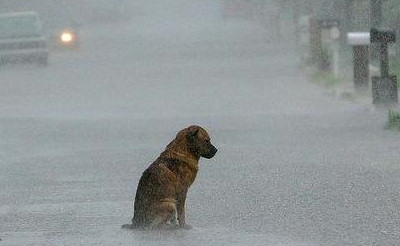
Unfortunately there are so many suggested origins of this one that it's hard to tell if any of them are more than legends mutated by time and people who like to lie. One story says 17th century sewage systems (if the town even had one) were prone to massive flooding, washing out dead dogs and cats that had fallen in. This would leave some to believe that dead animals were literally falling from the sky. Why the sight of a dead animal on the ground would cause anyone to assume it fell from the heavens, as opposed to just falling over dead the normal way, is anyone's guess.
Others claim it goes all the way back to Norse mythology (the storm god Odin had two hounds). Still others say it has to do with the freak occurrence of frogs or fish falling from the sky (after being swept up by storms and flung miles away) and that the saying "it's raining cats and dogs" is just a way to say it's raining even harder than the time it rained fish. Still it seems like a catchier idiom would have been, "It's raining bears!" or "It's raining human babies! Quick, catch the babies!" followed by frenetic screaming.
Anyway, there's no hard and fast proof for any of them so take your pick.
'By the Short Hairs"
 Now Means:
Being in such a strategically advantageous position that you can bend another person to your will. As in, "Once Hannah Montana's lawyers file suit, Disney's really going to have Cracked by the short hairs."
Most say it came from ...
The history behind "By the short hairs" is a strange one as the phrase (as it's used today) really has no history. One day somewhere in the world someone must have thought it would be funny to grab a dude by his pubes and refuse to let go--completely ignoring the poor fellow's yelps for mercy and womanly crying.
The grabber probably then realized that by putting this person in such a painfully precarious position he could then force them to, say, shovel the snow on the side walk, pay a long overdue debt or maybe just scream like a man having his pubes yanked like it was an S&M-themed tractor pull.
So is that true?
No. We made that one up because, as we stated, the reference to pubic hair has no history. When 'By the short hairs' was first coined it was referring to hair a bit north of the proverbial "junk."
The earliest documented usage of the phrase can be found in a novel written by the man that brought us The Jungle Book, Rudyard Kipling. His short nonfiction story, The Drums of the Fore and Aft had this quote:
"They'll shout and carry on like this for five minutes. Then they'll rush in, and then we've got 'em by the short hairs!"
It's explained elsewhere in the story that the hair being pulled is the hair on the back of the neck.

We know what you're feeling right now: betrayal, bewilderment and utter disappointment. We felt the same way. It's sad to see a phrase that brings to mind the violent pulling of pubes be debunked. But it makes sense, if you're walking around with your hand on some guy's pubes while he shovels your walk, aren't you the loser there?
So the phrase is being misused anyway. It'd make more sense to say, "Yes, we're up by 21 with just two minutes left! We're really making them touch our pubes now!"
"Wrong End of the Stick"
 Now Means:
Short end of the stick refers to getting screwed by chance, but wrong end refers to a misunderstanding. As in, "Whoops, I walked into the girl's locker room, and I'm a man. Looks like I got the wrong end of the stick. Or did I?"
(Cue funky bass riff)
Most say it came from ...
As advanced as their sewage systems were, the Romans still had not arrived at the toilet paper stage. In their public toilets, the pooper would rely on a sponge or cloth that was attached to a stick which rested within a bowl that contained a mixture of two-parts salt water and three-parts nightmares.
After a person had finished discussing the days events with their constituents, all while becoming a few pounds lighter, they would request the sponged stick to be passed along to them. If they weren't concentrating on the task, they would end up grabbing the end of the stick that was covered in the shit of 50 other guys. This was considered grabbing the "wrong end of the stick." Yeah, no shit.

So is that true?
This is another idiom whose history is contentious, but as a comedy website you'll have to work hard to talk us out of this one, since it radically changes the classic idea of a Roman bathhouse orgy from a swinging good time to the largest collection of unintentional Dirty Sanchez's ever.
There is, though, another origin that's widely held to be the true one. The origin pertains to walking sticks and accidentally grabbing the dirty, non-handled end, the "wrong end." OK, maybe. But ask yourself: If you somehow had a stick that was clotted with dirt on one end, and with the turds of a dozen Romans on the other, which would truly be the "wrong" end?
Exactly.
"As Pleased as Punch"
 Now Means:
To be very happy. As in, "Uncle Bernie is pleased as punch now that he has his cocaine."
Most say it came from ...
Apparently the phrase spawned from an English puppet show that goes all the way back to the 1600s (Punch and Judy) which was written by a chemically imbalanced sociopath, or a 17th century Eli Roth. No two performances of the show were totally alike, but they all usually involved the same events:
1. Punch kills his infant child
2. Punch punches Judy until she dies
3. Punch goes to prison and escapes using a golden key (strangely, he doesn't kill the prison)
4. He then kills doctors, lawyers and a hangman
5. He kills Death, as in, the Grim Reaper
6. Then it all ends spectacularly as he kills the fucking Devil.
So, how does "Pleased as punch" come out of a killing spree perpetuated by a puppet? Well, Punch got a raging murder-boner off it all. That is to say that "Punch" was "Pleased" with killing his wife and baby among other things (read: he was the fucking Devil).

So is that true?
We here at Cracked are pleased as punch (see what we did there?) to inform you that this is, in fact, true. Punch and Judy is generally a summertime show put on for English children who have yet to learn the subtle differences between edutainment and infanticide.
"Dead Ringer"
 Now Means:
An exact duplicate. As in, "That stripper's crotch is a dead ringer for your mom's."
Most say it came from ...
This origin holds that a "Dead Ringer" was a person that was prematurely buried and is supplied with a rope attached to a bell with which to draw attention to the not-so-dead guy in the totally-for-dead-people box.
Through some research we found that such a practice never actually existed, although there were instances of people being buried alive and there is actually a patent held for such a life saving device.

So why in the world would that term come to mean "exact duplicate?" Probably because it's bullshit.
So is that true?
No, sadly, it has to do with race horses.
Towards the end of the 19th century, race horse owners began to devise ways to fool bookies who would try to scope out the horses before a race. The trick was you brought two similar horses, one fast and one slow. The owners would run the slower horse around for all to see, thus driving up the odds against it. They have a friend place some bets, then at race time, whip out the fast horse.
So it was a "ringer" (slang for an illicit competitor in a sports event) and "dead" in that was dead-on, or identical.
Man, that's a bigger letdown than the short hairs thing. How about if we say the "dead ringer" horse was also a zombie?
"Nitty-Gritty"
 Now Means:
The heart of the matter. As in, "Let's get down to the nitty-gritty, home skillet."
Most say it came from ...
Nitty-Gritty has two popular origins, both of which may make you feel like a sack of shit for ever using the term.
The first popular belief holds that the term originated from British slave ships and references the loose debris that would fill the bottom of these ships. Some go as far as to say that the term actually referenced the slaves themselves.
A second origin pertains to, yep, you guessed it, pubic lice (nit) and dried fecal reminisce on ass hair (grit).
Ew.
So is that true?
Once more, no one can say which is true, if either of them. But, whether it's the tiny bugs on your tallywhacker or the horrors of slave ships, either way we really never want to hear grandma use it again.
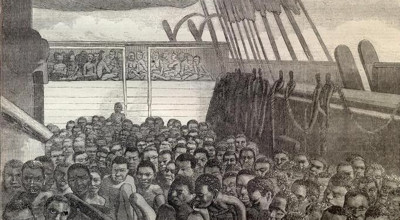
Nitty-gritty commonly gets paired with "picnic" (which was said to have been a reference to lynching) in the realm of seemingly benign words that have full-blown (and probably incorrect) racist origins. Both racially charged stories are completely unfounded and have no concrete histories other then the folk tales that get passed down from screaming Grand Wizard to frightened onlooker.
Yes kids, language is awesome.
If you liked that, you'll probably enjoy our look at 9 Words That Don't Mean What You Think. Or, head over to the blog and learn a thing or two about the horrifying origins of comedy. Then, check out some good old fashioned pool hustling (a phrase which got its origin from a 1961 Paul Newman film).