What Were the Real Rules for Performing at the Riyadh Comedy Festival?
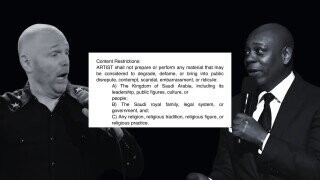
Depending on who you ask, the rules for performing at the Riyadh Comedy Festival ranged from: none at all to an extensive list of rules, guidelines and parameters. It’s all been very confusing, and has complicated arguments about whether or not the participating comedians censored themselves in the name of cashing a big juicy check from the Saudi Arabian government.
While the censorship isn’t the most concerning issue with agreeing to perform for the Saudi Royal family (if I had to pick it would be the brutal murder and dismemberment of Washington Post journalist Jamal Khashoggi, at the direction of Crown Prince Mohammed bin Salman in 2018), it’s been a point that a lot of the participating comedians have cited. Dave Chappelle said it was easier to speak in Saudi Arabia than it is in the U.S., while Louis C.K. insisted that Saudi Arabia was “opening up,” in a conversation with Bill Maher.
But all of this insistence that Saudi Arabia didn’t censor the American comics they paid for doesn’t stack up with other information we’ve received. Comedian Atsuko Okatsuka shared on Threads the stipulations she received for performing in Riyadh, an offer which she declined.
Don't Miss
In screenshots, the censorship specifically detailed what the artists could not say during their sets:
ARTIST shall not prepare or perform any material that may be considered to degrade, defame or bring into public disrepute, contempt, scandal, embarrassment or ridicule:
A) The Kingdom of Saudi Arabia, including its leadership, public figures, culture or people;
B) The Saudi royal family, legal system or government, and;
C) Any religion, religious tradition, religious figure or religious practice.
Okatsuka’s post is seemingly supported by another comic who did agree to perform at the festival, Omid Djalili. Djalili wrote an essay in The Guardian about his decision to perform, including what rules were outlined by the government for all performers. “The restrictions on performing in Saudi were exactly the same as in Dubai — basically no jokes about the royal family, no disrespecting Islam and no humiliation of the government,” Djalili wrote, essentially confirming what Okatsuka posted.
Right-wing comedian and podcaster Tim Dillon even claimed he was fired by the Saudi government based on jokes he previously made about the Saudi Arabian government using slave labor in the country. “I addressed it in a funny way,” Dillon said on his podcast, “and they fired me. I certainly wasn’t gonna show up in your country and insult the people that are paying me the money.”
So based on multiple accounts, the Saudis definitely had rules in place for performers at Riyadh Comedy Festival. Still, there’s a minimization there about just how much censorship that really is. Maybe for a bunch of American comedians, the argument that they didn’t need to change their sets that much because they didn’t have material about the Saudi government in the first place holds up to some people.
But as an outside observer, it does seem like everyone who participated did agree to being censored.
