The Painfully Sad Reason Why Dick York Left ‘Bewitched’
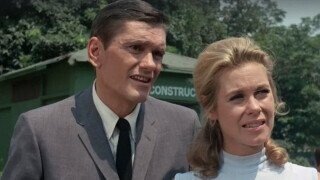
The recasting of Dick York with Dick Sargent as Darrin Stephens on Bewitched was such a watershed moment in classic television that ostensibly hip slackers were still talking about it 30 years later. Today, recasting a lead character of such a popular show would be unheard of, which is why the last season of House of Cards sucks so much.
They couldn’t leave Samantha without a husband, though, not in the ‘60s, and besides, so much of the plot concerns Darrin crashing out over whatever trouble Samantha’s gotten herself into. Recasting was necessary — in more ways than one. Have you ever wondered why Dick York left Bewitched? This wasn’t a simple case of contract negotiations breaking down or moving on to better opportunities, as is so often the reason why actors today might leave a successful series.
It all started on the set of They Came to Cordura, a Gary Cooper-Rita Hayworth joint in which York played a bit part five years before joining the cast of Bewitched. In a scene where he and Cooper operate a handcar — that’s those little seesaw-adjacent trolleys that run on a track that cartoon characters ride whenever they have to descend into underground mines and whatnot — York injured his back, resulting in years of debilitating pain and subsequent addiction to painkillers. The crew of Bewitched even built him a wall to lean against in between hard bouts of standing and wrote around his injury. In episodes where Darrin spends most of his scenes in bed or on the couch, that’s why.
Don't Miss
Finally, York was simply “too sick to go on” and collapsed one day during the filming of the fifth season. He spent the next 18 months in his bed in a “drug-induced haze,” which made it pretty hard to get to work. By 1971, however, he’d gone cold turkey, despite the setback of his career and the continuing pain on his back. Neither ever quite recovered, as York landed only a handful of TV guest spots until retiring for good in 1984, but he soon had a new problem: emphysema. It was his three-pack-a-day smoking habit, not the injury or opiate addiction, that was going to kill him.
At the same time, financial troubles led to the foreclosure of his home, forcing him and his wife to relocate to a “tiny red bungalow near Grand Rapids, Mich., that once belonged to in-laws,” where he lived until his death in 1992.
Unfortunately, a twitch of the nose can’t solve such problems in the real world, but in modern times, there would have at least been a GoFundMe.
