The 5 Most Needlessly Evil Movie Villain Strategies
Some classic movie bad guys have great motivations, like Darth Vader ("corrupted by the Force"), Voldemort ("I don't have a nose") or the shark from Jaws ("I am a shark"). Others are just crazy, like the Joker.
But in a lot of cases, the bad guy is just an excuse for the hero to do stuff, and so the writers are forced to come up with some flimsy explanation for why this particular guy has chosen to do things that are bad ... even when there are much better and easier ways to accomplish what he wants. Like ...
Up -- Charles Muntz

During the first few minutes of Up, we are introduced to the bad guy, Charles Muntz. He's a famous explorer who falls into disrepute after allegations that his latest find -- a skeleton of a never-before-seen bird -- was a fake. Muntz vows to prove his detractors wrong by capturing said bird and disappears into the South American wilderness. Some 70 years later, an old guy named Carl ties a bunch of balloons to his house and floats away in it.

It's a complicated film.
Carl, his floating house and a Boy Scout named Russell somehow make it to South America and inadvertently befriend the same strange-looking bird Charles Muntz has been looking for all these years. As a result, Muntz sets Carl's house on fire, kidnaps Russell and then tries to kill them both by sending an army of talking dogs to shoot them in little planes.

There's a pun somewhere in here.
The Pointless Evil:
Uh, why?
And don't say, "Because he was evil!" Even in terms of carrying out an evil plan to kidnap a rare bird, it doesn't make sense.
Things turn ugly at first because Muntz thinks Carl and Russell have come to steal the bird and rob him of his discovery, but Carl's story should have been verified once Muntz realized that he really did travel to South America in a floating house (if he was telling the truth about that, we'd believe literally anything else he said).

It's because he's old. Once you lose the ability to poop, everyone must pay.
But even if Carl and Russell turned out to be black market bird dealers or something, Muntz could have easily negotiated an arrangement with them, since he only needed the bird temporarily (that is, long enough to show it to the public). He was only making things harder for himself by antagonizing the only people who actually knew where the bird was.

And they brought along their entire kitchen as a warning.
Even if he was afraid Carl would take the bird to civilization and claim credit, he didn't need to worry -- all that would do is vindicate Muntz's discovery from 70 years earlier (remember, he had a skeleton of one -- he was unquestionably the bird's discoverer). Also, at one point Russell casually tells Muntz about the bird's weakness for chocolate bars (literally the only reason it befriended them) and he does exactly nothing with this information. It would have made a lot more sense to rig a few chocolate-laden traps, sit back and wait for the bird to wander into one.

"I don't understand. When do the flying dogs come in, exactly?"
It doesn't make sense from any angle for him to chase and terrorize the bird's friends for half the movie. If he had bothered thinking this through instead of instantly jumping to canine homicide schemes, he could have saved himself a lot of trouble and a lot of money in ammo and doggy parachutes.

Also, teaching dogs to pilot aircraft is arguably a more significant achievement than finding any bird.
First Blood -- The Hope Police Department

First Blood begins when Vietnam vet John Rambo wanders into the small town of Hope looking for a place to grab a bite. He happens to run into the sheriff, who makes fun of his jacket and tells him to go away. When Rambo refuses to leave the town, the sheriff arrests him for vagrancy. Things escalate, and soon the National Guard is shooting at Rambo with a rocket launcher.

In most other states, vagrancy warrants a small fine.
It's pretty clear that the sheriff is the antagonist here, but he was just trying (in his own assholish way) to protect his quiet little community from shady drifters, right? How was he supposed to know things would get so out of hand?
The Pointless Evil:
Actually, if that were the sheriff's motivation, the movie (and by extension the entire Rambo film franchise) would have lasted about 20 minutes. You see, after the cops start taunting and abusing Rambo in the police station, triggering his 'Nam flashbacks, he makes a run for the hills, and that should have been it: Rambo was no longer in the town. The sheriff got what he wanted. He could have turned around and gone back to, you know, actually doing his job.

"Time to give parking tickets to people without cars."
But no, for some reason he decides to keep going after Rambo in a Dukes of Hazzard-esque chase sequence through the outskirts. Maybe the sheriff wanted to get back the motorcycle that Rambo stole during his escape? Nope: Rambo drops it right before going into the woods, and as far as we know, the cops just left it there for the rest of the movie. But we're still within the realm of normalcy: The exact moment when things get out of hand is when the sheriff brings in a freaking helicopter to capture one guy whose only crime up to that point was defending himself from police abuse, borrowing a motorcycle and wearing a jacket with an American flag on it.

Didn't Arlo Guthrie write a song kind of like this?
At this point these small town cops are cracking jokes as they scour the area for Rambo with their high-powered rifles and killer dogs -- the only one who seems to think that devoting all their resources to chasing a hobo might not fall under his job description is the rookie played by David Carradine. It's perfectly possible, based on what we've seen, that all the others have made a habit of hunting drifters for sport.
And then, of course, the cop in the helicopter falls to his death while trying to shoot Rambo and all hell breaks loose. Rambo's jungle survival programming kicks in, and now he's the one hunting the cops ... but it really took a lot of effort on their part to even get him to this point.

"OK, let's all just take a breath and discuss what I believe to be a series of slight overreactions."
First Blood is a poignant tale about the American institutions' failure to reintegrate war veterans into society, and about how we shouldn't chase them with dogs and helicopters for absolutely no reason. We agree, movie!
Actually, this isn't the only Stallone villain to lack any kind of motivation for what he does ...
Demolition Man -- Dr. Raymond Cocteau

Demolition Man is a perfect example of the "futuristic cop" film genre we seemed to love so much in the '90s. More specifically, the "includes both Sylvester Stallone and Rob Schneider" subcategory.

We were sure there were at least 16 more of these, including one with Estelle Getty.
Wesley Snipes plays the world's most notorious criminal who, decades earlier, was cryogenically frozen as part of some freezing-based reform system. Sylvester Stallone is the world's most badass cop, who also was frozen decades earlier. When Snipes is unfrozen and starts wreaking havoc, Stallone is unfrozen to catch him. Wow. We've actually never stopped to say that plot out loud.
Anyway, you probably remember Wesley Snipes' murderous character as the villain of the piece, but the guy behind everything was actually Dr. Raymond Cocteau, the leader of the pacifist utopia of San Angeles. He was the mastermind.

You can tell by his completely emotionless, robotic gaze.
The story goes that by the year 2032, San Angeles is a city free of crime and violence -- we're specifically told that there hasn't been a single murder for the past 16 years. Sure, some people oppose Cocteau's bans on trivial things like junk food, swearing and freedom of speech, but all that these rebels can do is a) spray graffiti that is instantly, automatically cleaned away before anyone sees it and b) knock over the occasional Taco Bell truck.
Also, the rebels don't seem so threatening when you remember that their leader was this guy:

"Everyone take cover, he's gonna say 'HEY ASSHOLE!'"
The Pointless Evil:
The entire reason the rebels are acting up is that they don't have any food. Rather than throwing them some scraps to shut them up, Cocteau decides it would be much easier to break out Wesley Snipes -- the most diabolical criminal in cryogenic prison -- and program him to kill Denis Leary. Not all the rebels. Just Leary.

Pictured: Overkill.
Cocteau unleashed this psychotic killer on a city that had been a crime-free haven for nearly two decades (and therefore was completely unprepared to stop him). The fact that Snipes proceeded to immediately fuck things up for everyone -- killing a dozen cops, blowing shit up, getting into car chases, generally acting like a homicidal maniac -- came as no surprise to Cocteau. To make matters worse, Snipes was also trained with several violent skills while he slept. The man was a walking murder machine.

"Nope, still better than Denis Leary."
Sure, the other cops release Stallone to stop Snipes, but that wasn't part of Cocteau's plan. And that brings up another problem: Why not unfreeze Stallone in the first place, reinstate him as a police officer and order him to arrest Leary? Did he have to pick the biggest psycho in the bunch?
In the end, it all comes down to Cocteau being a huge dick. Think about it: When he inserted the orders to kill Leary in Snipes' brain, he could have just as easily added a line or two about perhaps not killing innocent people. We know this because that's exactly what he did -- but only to protect himself. The fact that he also provided Snipes with a posse of other violent criminals (with no mental programming at all) proves that he was either really stupid or he hated Denis Leary beyond all reason.

"I'll never forgive him for ripping off Bill Hicks. Never. Let me show you this YouTube clip ..."
So, to recap: Instead of giving some poor people food, Doc Cocteau decided to release a gang of murderous thugs onto a world that had no idea how to stop them, thereby ruining the paradise that he made.
Good Morning, Vietnam -- Sergeant Major Dickerson

In any movie about a rebellious, hilarious wise-cracker who plays by his own rules and flouts authority, there has to be an unreasonable, stick-in-his-ass authority figure to oppose him. If the main character is a student, then the bad guy is usually the school's principal (see: The Breakfast Club and Ferris Bueller's Day Off), and if the hero is in the military -- as in Good Morning, Vietnam -- then it's some mean commanding officer.
Now, we realize that it might be a little annoying to have to hear the comedic stylings of Robin Williams when you're busy trying to fight the Vietcong, so even though bad guy Sergeant Major Dickerson is, well, a dick, his motivations in Good Morning, Vietnam are understandable. After all, when the Army DJ continuously disrespects his superior officer, starts bar fights and reports classified information without clearance, someone has to take some sort of action.

But mainly it's the "having to hear the comedic stylings of Robin Williams" part.
Also, the guy has a controversial habit of playing some of that wildly offensive rock 'n' roll music (mainly the Beach Boys).
The Pointless Evil:
What doesn't seem so reasonable is the key plot point where Dickerson sends Williams to an almost certain death on a road he knows is infested with Vietcong combatants. Because he was a bad DJ. That's right, Robin Williams is so annoying that he single-handedly causes a perfectly normal army officer to turn into a war criminal.

"Let's see how wacky you are when I assign you to landmine-stomping duty."
Earlier in the movie, Dickerson does try to get his superior officer, Brigadier General Taylor, to kick Williams out, but Taylor sticks up for him. This is the moment in every '80s high school movie where a parent firmly tells a bully to back off, which usually has the exact opposite effect. The same thing happens here -- Dickerson, like a typical bully, hates Williams because he's the unconventional new guy who's causing a stir among the students and becoming close with the main cheerleader.

Played here by Forest Whitaker.
The difference is that instead of giving him swirlies or atomic wedgies, Dickerson's bullying consists of sending Williams and his friend on a deliberate suicide mission. It's like when the bully rats out the new guy to the principal and they send him to detention, except "detention" in this case means "five years drinking his own piss in a prison camp." These are all adults fighting a war against a common enemy, and you'd think there would be more pressing things than an interpersonal rivalry regarding the quality of the army's music.
And then there's also the fact that the soldiers (for whatever reason) absolutely love their new DJ -- even if Dickerson was physically incapable of laughing, he had to have realized the importance of troop morale.

"I've had it up to here with how effective you're making our soldiers!"
Obviously Williams survives (thanks to the help of some natives he had befriended), so what does Taylor do when he realizes that Dickerson is actually a dangerous psychopath? He transfers him to Guam, which is apparently the army equivalent of switching a priest to another parish if he gets fresh with the altar boys.
The Fifth Element -- Jean-Baptiste Emanuel Zorg

You might recall The Fifth Element under its working title, Die Hard ... In Space! Bruce Willis plays a space prosti-- er, futuristic cab driver and retired army officer who finds himself in the wrong place (the universe) at the wrong time (right before the end of the universe). Meanwhile, Milla Jovovich.

"Does this lack of an outfit make me look fat?"
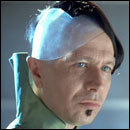
The bad guy is Jean-Baptiste Emanuel Zorg, played by Gary Oldman, who has been paid to help precipitate the aforementioned end of the universe.
The Pointless Evil:
Wait, what? Someone is paying this guy to destroy everything that exists ... including himself? How could he not see the problem with that plan?

The same way he can't see the problem with that comb-over, apparently.
Zorg isn't a supernatural entity capable of withstanding universal annihilation, by the way -- he's just a businessman, motivated entirely by greed. He also happens to be the wealthiest and most powerful person in the universe, which means that he's actually the one who stands to lose the most if all of existence should blow up. Which, we can't stress this enough, is exactly what he's trying to do.
Maybe his reward will be spiritual, like he's some sort of worshiper of death or something? Nope: At one point we see him talking on the phone with the "Great Evil" that hired him, whom he warns that his "costs have tripled." He's definitely doing this for money (that he'll never be able to spend). There's a huge chance that Great Evil, having laid dormant for the past five thousand years, doesn't even have access to that type of cash, but that makes no difference whatsoever because there's no scenario in which Zorg will get to collect his reward.

"A bajillion dollars, you say? Sure. I can promise a naked Marilyn Monroe, too, while we're at it."
Well, what if Zorg simply doesn't know what his boss is up to? As if the fact that he can't talk to Great Evil on the phone without his head spontaneously starting to bleed didn't tip him off, Zorg uses surveillance bugs to listen to a conversation in the president's spacecraft in which Great Evil's purpose is spelled out, and he still agrees to help it. A last minute double-cross is out of the question, too, because Zorg knows that Great Evil can't be destroyed by any human weapons, only through five elemental stones -- the same stones Zorg is actively trying to destroy.
The closest explanation we get is a scene where Zorg breaks a glass and a bunch of little robot helpers immediately come in to clean it up, as Zorg explains that "all life comes from destruction" ... but that makes no sense in this context, because there'll be nothing to clean up after the universe explodes and no one to do the cleaning.

Also, the surveillance bugs we mentioned were actual bugs, so maybe the guy was just easily confused.
For more shortcomings by writers, check out The 5 Most Easily Avoidable Movie Deaths and The 6 Most Pointless Supervillain Schemes Ever Hatched.
And stop by LinkSTORM to see why John Cheese keeps his G.I. JOEs in mason jars.
And don't forget to follow us on Facebook and Twitter to get sexy, sexy jokes sent straight to your news feed.
Do you have an idea in mind that would make a great article? Then sign up for our writers workshop! Do you possess expert skills in image creation and manipulation? Mediocre? Even rudimentary? Are you frightened by MS Paint and simply have a funny idea? You can create an infograpic and you could be on the front page of Cracked.com tomorrow!
