The 6 Worst Jobs Ever (Were Done by Children)

Kids have it nice here in the future. What with their hover boards, hover ponies and hover sexting. They get their whole lives handed to them on a silver platter (that hovers).
It wasn't always so easy. Back in the day, people had only one reason to produce offspring: To force them to do the abhorrently awful work no grown person would dare to. And if you think child labor didn't get any worse than dirty-faced children in Victorian shoe factories, well, you apparently haven't heard about...
Castrati

Oh, man. You know by the name this isn't going to end well. Castrati.
The thing is, today the theater struggles to retain audiences. In fact, the only thing that draws folks back to the aging whore that is the stage is the chance to see live, 3D nudity. And even that's getting quickly replaced.

Your move, Shakespeare.
But the 1600s were a different time. A time when hookers were honest and the stages were free from all those icky, heathen women. In fact, no woman was allowed in the choir or stage production in the 17th century. Theater houses were like those ball pits at McDonald's... you know, if those little plastic balls were actual balls.

Testicles.
Nonetheless, playwrights and composers kept writing female parts. To keep the songs from sounding like a barbershop quartet comprised of bulky Hungarian dudes, the choir masters would give the womanly roles or alto parts to prepubescent boys. And, every so often, one talented scamp's melodious voice would catch the master's ear and become the prize pupil.
But of course, all good things come to an end. Flowers bloom, caterpillars turn into beautiful butterflies and boys go through the often traumatizing experience of puberty.
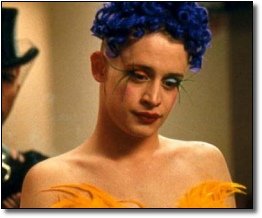
Just ask Macaulay Culkin.
But for those boys whose sopranos were sweet enough to make a mob boss weep, a minor surgery could preserve their voice, joining them to the ranks of the castrati. In fact, 70 percent of stage performers in the 17th century were castrati.

A fad that reappeared in the 1970s.
And how did one become an illustrious member of the castrati? You already guessed, you just won't admit it to yourself. It was via the process of cutting blood supply to the testicles, or more commonly amputating them altogether.
How did they perform such an invasive--and not to mention traumatizing--surgery on a six- to 12-year-old kid? By giving them a bath. They simply soaked them in a tub of water to soften them up, and then performed the surgery when they were rendered unconscious. We assume the unconscious part came from telling the seven-year-old that they were not, in fact, receiving candy for this public bathing but actually getting their balls chopped off.
Then castrati might hope for a good 10 year run as a performer, after which the boy would only be 17 and rethinking the long term strategy of a castration career. Of course, settling down and getting married wasn't an option, unless the boy could find that one in a million girl turned on by non-existent erections.

I think I just felt- no nevermind. Just a breeze.
Eventually, castratis fell out of fashion in the late 1700s, not because of the ridiculously brutal violence visited upon little boys, but because the Italian soap opera plots they performed in became too silly to watch. The audiences didn't mind the castrations; it was the authenticity of the scripts that turned them off. Hear that, M. Night Shyamalan? No amount of castrated boys could save your films from sucking.
Coal Carriers
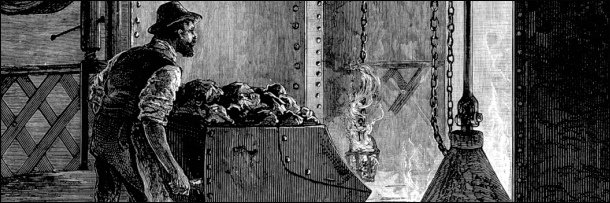
Coal remains one of the most vital sources of energy the world over, but mining the stuff continues to be an ugly, incredibly dangerous business. So picture how rough it was prior to the 20th century when coal provided virtually the only power source, and the height of safety technology involved ropes, carts and yelling, "Run!" when stuff blew up.

Or if they were really rad, they would simply walk away calmly.
You couldn't imagine worse working conditions. Explosions, shaft cave-ins, asphyxiation, black lung; it was all in a day's work for Ye Old coal miners. To put it in perspective, we have more than once left work early because we felt "itchy."
Of course, the only way to ensure any measure of safety and success back then was to rely on the most experienced and well-trained coal miners. Or children. Yeah, screw it, children will do.

They would have used bunnies, but they were resistant to learn the trade.
From ages as young as four, children were employed in the art of hurrying: pulling giant sled loads of coal through tiny shafts. Children made perfect carriers because their short stature allowed them to crawl around two foot tunnels in the bowels of the Earth for 12 hours a shift. You might wonder why midgets were not employed. Because midgets are people too, jerk.
Evil, evil, little people.
Oh, and did we mention the children were often forced to do the work naked? Perhaps clothes were forbidden because loose articles might catch on shaft walls. Or perhaps the idea of a fully-clothed child crawling on their belly in an ink black hole deep underground came off as too dignified.
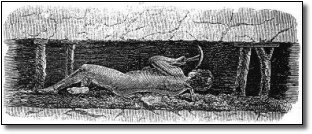
The fact is, there was no physical need for mine shafts to be constructed that small, and therefore no need to employ children. Building shafts over 24-inches wide just cost more. It's simple Supply and Demand: people kept supplying disposable children, and mining companies kept demanding those kids to shimmy their little asses down the scary, dark hell mouth.
Loblolly Boys

If Hollywood taught us anything about life at sea it's that it's rough, dirty and a little sexually ambiguous. If you were a strapping young lad in the 18th or 19th century and wanted to experience life on the high seas firsthand, you simply volunteered for the position of Loblolly Boy.

Alternatively, be in a Disney movie.
Considered the lowliest position on the boat, a Loblolly's day included serving food and cleaning medical instruments. Oh, and cleaning up blood and severed limbs.
See, the Loblolly played the roles of janitor, waiter and nurse on a ship. The position's name derived from the name of a thick oatmeal gruel or porridge, perhaps with a bit of meat or some vegetables in it that the boy was in charge of serving. The Loblolly stew was also called spoon meat but likely no one wanted a "Spoon Meat Boy" on board.
First, there was the simple job of cleaning, which sounds like fine entry-level work, except it mainly consisted of cleaning up motion-sick rider's barf and throwing sand over the blood and guts covering the deck during a battle.
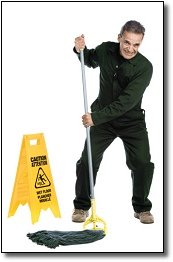
"Mind the wet floor, gentlemen. Don't slip and hurt yourselves."
But even that had to be less traumatizing than the Loblolly's role as assistant to the ship surgeon, considering this wasn't exactly the days of blue scrubs and sterile operating rooms. The job included collecting up amputated limbs, pouring hot tar on wounds and cleaning bed pans.

We're going to guess that there were more than a few "mercy" killings.
And the reward at the end of a good day's work was a punch in the face. Probably.
Whipping Boys
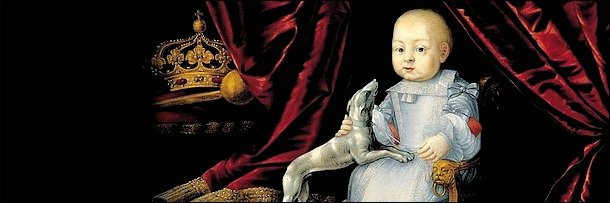
You've probably heard somebody use the term "whipping boy" to mean "scapegoat" or a guy who repeatedly takes the punishment for somebody else's screw-up. But once again, a term that serves as a ridiculous mental image in today's society was real life in the Middle Ages.
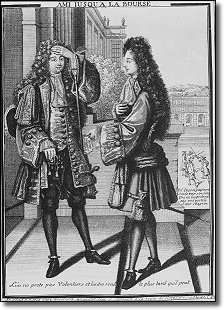
It was an odd time.
Being born in medieval Europe was like playing the world's worst game of womb-roulette. That's just like Russian roulette, if you replaced the bullet with a life of poverty and pestilence--and instead of only one guy at the table getting hit, you all did. Surprise! Live to 30 and you were a hero; live to 50 and you were burned at the stake for being a witch.

"He's trying to blow out the flames. Get him!"
Unless you were popped out by a queen and had a penis. Life as a prince was pretty sweet. Then there were the rags-to-riches stories of the lucky common boy chosen to live a life of luxury with the prince, employed as a full time buddy. Kind of like Pretty Woman, but replace Julia Roberts with Danny DeVito. And for this privileged life, all the "lucky" boy had to do was take physical beatings for all the prince's wrongdoings.
Back in the 17th century, people believed the body of a prince, like that of the king, was sacred and could not be harmed. So what to do when the sacred vessel was acting like a royal prick? The answer: Whip the prince's friend while he watched.
The practice started with King James the First, who instructed a peasant whipped for his son Charles's crimes--clearly demonstrating both his authority and complete lack of understanding of little boys' sociopathic nature. While the royalty assumed the young prince would learn his lesson after watching his only companion take violence for the prince's own misdeeds, more likely the royal shit assumed the position of a unfuckwithable little tyrant with no regard for the pain and suffering of others. But history clearly shows this is just a phase they grow out of toward becoming benevolent and perfectly reasonable rulers.
Chimney Sweeps

OK wait, chimney sweeps are just adorable, cockney-throated, soot-smudged rapscallions given to dance and song. Getting dirty, dancing and playing, what's not for children to like?
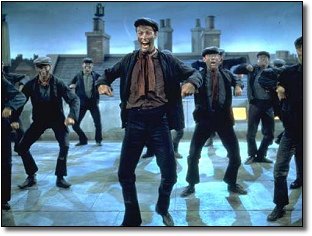
The choreography?
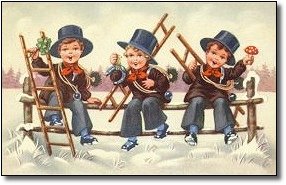
Well, for starters, during the chimney sweeping heyday in Victorian London, it was legal to simply pick up vagrant children and force them to work for you.
There was a whole litter of them in a free box in front of the drug store.
Once a master sweep collected his slave orphans, it was time to put them to work. The children climbed up the chimney flue, scrubbing as they went. The job wasn't done until their heads stuck out of the chimney like an adorably mistreated groundhog. Constant exposure to soot could lead to lung cancer, while many children would slip and fall to their deaths. Get stuck? Just hang tight until you fall to your death. For those reluctant to climb to higher more dangerous places, the master climber would help light a fire under them with a pep talk! Wait, no, the fire was the pep talk.
And since chimneys were also narrow, it was in the master sweeps' best interest to starve the child.
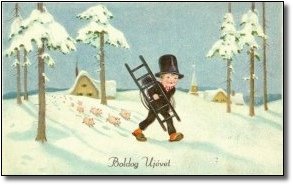
"Tee-hee, I haven't eaten in weeks!"
But hey, look at those snazzy dressers! At least they got to be the Don Draper of the huddled masses, almost always wearing top hats and tails. They were probably so smug, striding around in their fancy clothes that they got as cast offs from funeral directors. Then when the black lung or whatever disease made kids fall down chimneys came for them, they didn't even have to change clothes!
Mill Scavengers
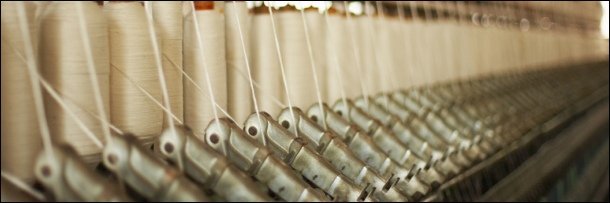
Small creatures make great little vacuums - ask any dog owner who's ever spilled hot dog juice on the kitchen floor. The same goes for children. Back in the 19th century, textile mills hired children to run around the factory 24/7, picking up debris and loose pieces of cotton. Called "Mill Scavengers," these tykes lapped up the proverbial hot dog water, except this hot dog water lay beneath giant, spinning death wheels.
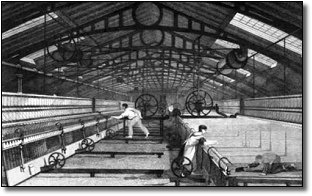
"Where did Jimmy go? I dunno, but he better have gotten that piece of cotton."
In fact, textile spinners made such good kiddy maulers, scavengers were reported to be "constantly in a state of grief, always in terror."
As you may have guessed, most mill scavengers were orphans adopted by the factory owners, which makes forced labor and child endangerment a family business. It's like Little Orphan Annie except without the money, happy ending or there being a tomorrow part.
It probably would have been easier to just turn off all the machines at the end of the day, then sweep everything up at once but it wasn't that easy because fuck you, kid, that's why.

Kids were pretty much lint screens that can feel terror and scream.
Without exposure to fresh air, children were susceptible to a multitude of health problems. You know, like cancer. Scavengers were not allowed to sit, rest or take a break while the mills ran. And the mills ran all day. And on Sundays? Those were usually spent cleaning the giant death wheels that terrified them so much.
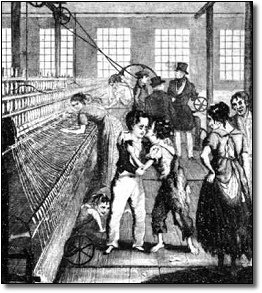
An artist's rendering of the noble sacrifices made to clean up lint.
What could make this worse? Worse than forcing an orphan to work in a noisy, unventilated factory, crawling under spinning manglers to pick up tiny bits of trash? Oh yeah, scalping.
While crawling under all those spinning wheels, if a child's hair got too close to the machinery their hair got sucked in, separating their skull cap rather efficiently from their head. If the child wasn't lucky enough to die, at least when it came time to play Cowboys and Indians they were way ahead of the game.
For more of Fero check out her blog at ThisIsntHelpful or validate her on Twitter.
Do you have an idea in mind that would make a great article? Then sign up for our writers workshop! Know way too much about a random topic? Create a topic page and you could be on the front page of Cracked.com tomorrow!
How else can you ruin your child's life? We thought you'd never ask; check out 9 Toys That Prepare Children for a Life of Menial Labor and The 5 Creepiest Sex Scenes in Comics.
And stop by our Top Picks (Updated 04.30.10) to see what God looks at on the Internet..
And don't forget to follow us on Facebook and Twitter to get sexy, sexy jokes sent straight to your news feed.
