5 Creepy Ways Video Games Are Trying to Get You Addicted

So, the headlines say somebody else has died due to video game addiction. Yes, it's Korea again.
What the hell? Look, I'm not saying video games are heroin. I totally get that the victims had other shit going on in their lives. But, half of you reading this know a World of Warcraft addict and experts say video game addiction is a thing. So here's the big question: Are some games intentionally designed to keep you compulsively playing, even when you're not enjoying it?
Oh, hell yes. And their methods are downright creepy.
Putting You in a Skinner Box

If you've ever been addicted to a game or known someone who was, this article is really freaking disturbing. It's written by a games researcher at Microsoft on how to make video games that hook players, whether they like it or not. He has a doctorate in behavioral and brain sciences. Quote:
"Each contingency is an arrangement of time, activity, and reward, and there are an infinite number of ways these elements can be combined to produce the pattern of activity you want from your players."
Notice his article does not contain the words "fun" or "enjoyment." That's not his field. Instead it's "the pattern of activity you want."

"...at this point, younger gamers will raise their arms above their head, leaving them vulnerable."
His theories are based around the work of BF Skinner, who discovered you could control behavior by training subjects with simple stimulus and reward. He invented the "Skinner Box," a cage containing a small animal that, for instance, presses a lever to get food pellets. Now, I'm not saying this guy at Microsoft sees gamers as a bunch of rats in a Skinner box. I'm just saying that he illustrates his theory of game design using pictures of rats in a Skinner box.

This sort of thing caused games researcher Nick Yee to once call Everquest a "Virtual Skinner Box."
So What's The Problem?
Gaming has changed. It used to be that once they sold us a $50 game, they didn't particularly care how long we played. The big thing was making sure we liked it enough to buy the next one. But the industry is moving toward subscription-based games like MMO's that need the subject to keep playing--and paying--until the sun goes supernova.

Now, there's no way they can create enough exploration or story to keep you playing for thousands of hours, so they had to change the mechanics of the game, so players would instead keep doing the same actions over and over and over, whether they liked it or not. So game developers turned to Skinner's techniques.
This is a big source of controversy in the world of game design right now. Braid creator Jonathan Blow said Skinnerian game mechanics are a form of "exploitation." It's not that these games can't be fun. But they're designed to keep gamers subscribing during the periods when it's not fun, locking them into a repetitive slog using Skinner's manipulative system of carefully scheduled rewards.
Why would this work, when the "rewards" are just digital objects that don't actually exist? Well...
Creating Virtual Food Pellets For You To Eat
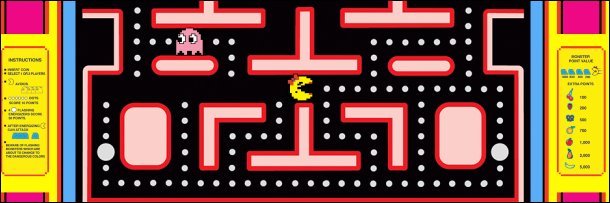
Most addiction-based game elements are based on this fact:
Your brain treats items and goods in the video game world as if they are real. Because they are.
People scoff at this idea all the time ("You spent all that time working for a sword that doesn't even exist?") and those people are stupid. If it takes time, effort and skill to obtain an item, that item has value, whether it's made of diamonds, binary code or beef jerky.
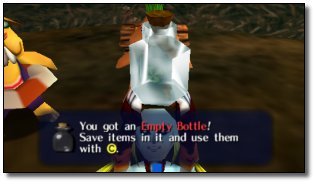
I have easily 500 hours in Zelda bottles.
That's why the highest court in South Korea ruled that virtual goods are to be legally treated the same as real goods. And virtual goods are now a $5 billion industry worldwide.
There's nothing crazy about it. After all, people pay thousands of dollars for diamonds, even though diamonds do nothing but look pretty. A video game suit of armor looks pretty and protects you from video game orcs. In both cases you're paying for an idea.
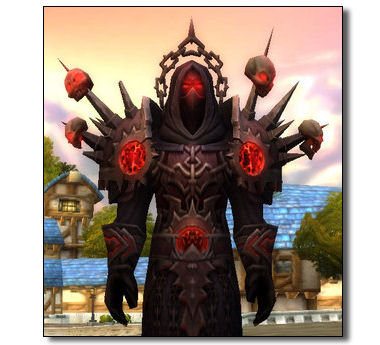
Happy anniversary, honey.
So What's The Problem?
Of course, virtually every game of the last 25 years has included items you can collect in the course of defeating the game==there's nothing new or evil about that. But because gamers regard in-game items as real and valuable on their own, addiction-based games send you running around endlessly collecting them even if they have nothing to do with the game's objective.
It is very much intentional on the developers' part, an appeal to our natural hoarding and gathering instincts, collecting for the sake of collecting. It works, too, just ask the guy who kept collecting items even while naked boobies sat just feet away. Boobies.
As the article from the Microsoft guy proves, developers know they're using these objects as pellets in a Skinner box. At that point it's all about...
Making You Press the Lever
So picture the rat in his box. Or, since I'm one of these gamers and don't like to think of myself as a rat, picture an adorable hamster. Maybe he can talk, and is voiced by Chris Rock.

If you want to make him press the lever as fast as possible, how would you do it? Not by giving him a pellet with every press--he'll soon relax, knowing the pellets are there when he needs them. No, the best way is to set up the machine so that it drops the pellets at random intervals of lever pressing. He'll soon start pumping that thing as fast as he can. Experiments prove it.
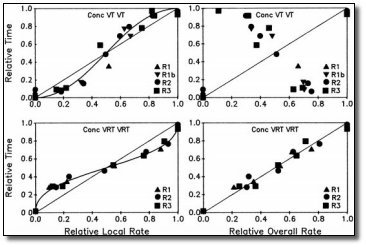
See? Proof.
They call these "Variable Ratio Rewards" in Skinner land and this is the reason many enemies "drop" valuable items totally at random in WoW. This is addictive in exactly the same way a slot machine is addictive. You can't quit now because the very next one could be a winner. Or the next. Or the next.

"Holy shit! We almost won."
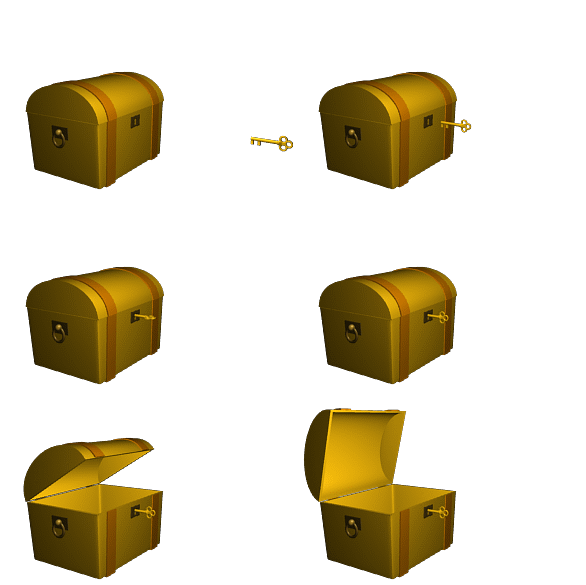
The Chinese MMO ZT Online has the most devious implementation of this I've ever seen. The game is full of these treasure chests that may or may not contain a random item and to open them, you need a key. How do you get the keys? Why, you buy them with real-world money, of course. Like coins in a slot machine.
Wait, that's not the best part. ZT Online does something even the casinos never dreamed up: They award a special item at the end of the day to the player who opens the most chests.

And that's hardly the most ridiculous aspect of the game.
Now, in addition to the gambling element, you have thousands of players in competition with each other, to see who can be the most obsessive about opening the chests. One woman tells of how she spent her entire evening opening chests--over a thousand--to try to win the daily prize.
She didn't. There was always someone else more obsessed.
So What's The Problem?
Are you picturing her sitting there, watching her little character in front of the chest, clicking dialogue boxes over and over, watching the same animation over and over, for hour after hour?
If you didn't know any better, you'd think she had a crippling mental illness. How could she possibly get from her rational self to that Rain Man-esque compulsion?
BF Skinner knew. He called that training process "shaping." Little rewards, step by step, like links in a chain. In WoW you decide you want the super cool Tier 10 armor. You need five separate pieces. To get the full set, you need more than 400 Frost Emblems, which are earned a couple at a time, from certain enemies. Then you need to upgrade each piece of armor with Marks of Sanctification. Then again with Heroic Marks of Sanctification. To get all that you must re-run repetitive missions and sit, clicking your mouse, for days and days and days. Boobies be damned.
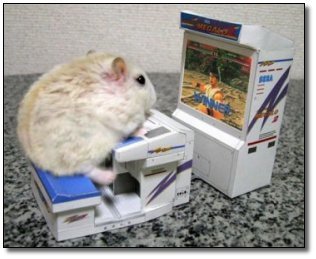
Once it gets to that point, can you even call that activity a "game" anymore? It's more like scratching a rash. And it gets worse...
Keeping You Pressing It... Forever
Now, the big difference between our Skinner box hamster and a real human is that we humans can get our pellets elsewhere. If a game really was just nothing but clicking a box for random rewards, we'd eventually drop it to play some other game. Humans need a long-term goal to keep us going, and the world of addictive gaming has got this down to a science. Techniques include...
Easing Them In:
First, set up the "pellets" so that they come fast at first, and then slower and slower as time goes on. This is why they make it very easy to earn rewards (or level up) in the beginning of an MMO, but then the time and effort between levels increases exponentially. Once the gamer has experienced the rush of leveling up early, the delayed gratification actually increases the pleasure of the later levels. That video game behavior expert at Microsoft found that gamers play more and more frantically as they approach a new level.
Eliminating Stopping Points:
The easiest way is to just put save points far apart, or engage the player in long missions (like WoW raids) that, once started, are difficult to get out of without losing progress.
But that can be frustrating for gamers, so you can take the opposite approach of a game like New Super Mario Bros. Wii, where you make the levels really short so it's like eating potato chips. They're so small on their own that it doesn't take much convincing to get the player to grab another one, and soon they've eaten the whole bag.

Somewhere in that bag is an angry dinosaur and a kidnapped princess.
By the way, this is the same reason a person who wouldn't normally read a 3,000-word article on the Internet will happily read it if it's split up into list form. Are you ignoring boobies to read this? I've done my job!
Play It Or Lose It:
This is the real dick move. Why reward the hamster for pressing the lever? Why not simply set it up so that when he fails to press it, we punish him?
Behaviorists call this "avoidance." They set the cage up so that it gives the animal an electric shock every 30 seconds unless it hits the lever. It learns very very fast to stay on the lever, all the time, hitting it over and over. Forever.

"Get back to Excitebike!"
Why is your mom obsessively harvesting her crops in Farmville? Because they wither and rot if she doesn't. In Ultima Online, your house or castle would start to decay if you didn't return to it regularly. In Animal Crossing, the town grows over with weeds and your virtual house becomes infested with cockroaches if you don't log in often enough. It's the crown jewel of game programming douchebaggery--keep the player clicking and clicking and clicking just to avoid losing the stuff they worked so hard to get.
All Of the Above:
Each of those techniques has a downside and to get the ultimate addictive game, you combine as many as possible, along with the "random drop" gambling element mentioned before (count how many of these techniques are in WoW). They get the hamster running back and forth from one lever to another to another.
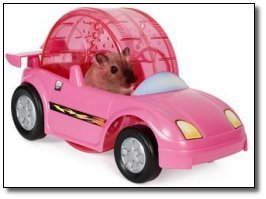
If the levers are far away, they may drive their adorable cars from one lever to another.
So What's The Problem?
We asked earlier if the item collection via obsessive clicking could be called a "game." So that raises the question: What is a game?
Well, we humans play games because there is a basic satisfaction in mastering a skill, even if it's a pointless one in terms of our overall life goals. It helps us develop our brains (especially as children) and to test ourselves without serious consequences if we fail. This is why our brains reward us with the sensation we call "fun" when we do it.
This is why I haven't included games like Guitar Hero in this article. They're addictive, sure, but in a way everybody understands. It's perfectly natural to enjoy getting good at something. Likewise, competitive games like Modern Warfare 2 are just sports for people who lack athleticism. There's no mystery there; everybody likes to win.

But these "hit the lever until you pass out from starvation" gaming elements stray into a different area completely. As others have pointed out, the point is to keep you playing long after you've mastered the skills, long after you've wrung the last real novel experience from it. You can't come up with a definition of "fun" that encompasses the activity of clicking a picture of a treasure chest with your mouse a thousand times.
This is why some writers blasted Blizzard when WoW introduced a new "achievement" system a couple of years ago. These are rewards tied to performing random pointless tasks, over and over again (such as, fishing until you catch a thousand fish). No new content, no element of practice, or discovery, or mastery was included. Just a virtual treadmill.
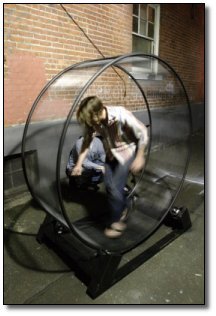
Or a hamster wheel.
Of course, game developers (and various commenters, I'm sure) would correctly point out that nobody is making the players do it. Why would humans voluntarily put themselves in laboratory hamster mode? Well, it's all about...
Getting You To Call the Skinner Box Home
Do you like your job?
Considering half of you are reading this at work, I'm going to guess no. And that brings us to the one thing that makes gaming addiction--and addiction in general--so incredibly hard to beat.
As shocking as this sounds, a whole lot of the "guy who failed all of his classes because he was playing WoW all the time" horror stories are really just about a dude who simply didn't like his classes very much. This was never some dystopian mind control scheme by Blizzard. The games just filled a void.
Why do so many of us have that void? Because according to everything expert Malcolm Gladwell, to be satisfied with your job you need three things, and I bet most of you don't even have two of them:
Autonomy (that is, you have some say in what you do day to day);
Complexity (so it's not mind-numbing repetition);
Connection Between Effort and Reward (i.e. you actually see the awesome results of your hard work).

Notice that pants are not necessary for job satisfaction.
Most people, particularly in the young gamer demographics, don't have this in their jobs or in any aspect of their everyday lives. But the most addictive video games are specifically geared to give us all three... or at least the illusion of all three.
Autonomy:
You pick your quests, or which Farmville crops to plant. Hell, you even pick your own body, species and talents.
Annoying your Facebook friends with updates is a really annoying talent.
Complexity:
Players will do monotonous grinding specifically because it doesn't feel like grinding. Remember the complicated Tier Armor/Frost Emblem dance that kept our gamer clicking earlier.
Connection Between Effort and Reward:
This is the big one. When you level up in WoW a goddamned plume of golden light shoots out of your body.
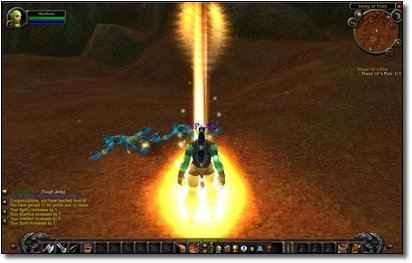
This is what most of us don't get in everyday life--quick, tangible rewards. It's less about instant gratification and more about a freaking sense of accomplishment. How much harder would we work at the office if we got this, and could measure our progress toward it? And if the light shot from our crotch?
The beauty of it is it lets games use the tedium to their advantage. As we discussed elsewhere, there's a "work to earn the right to play" aspect of World of Warcraft, where you grind or "farm" for gold for the right to do the cool stuff later. The tedious nature of the farming actually adds to the sense of accomplishment later. And it also helps squash any sense of guilt you might have had about neglecting school, work or household chores to play the game. After all, you did your chores--the 12 hours you spent farming for gold last Tuesday was less fun than mowing the fucking lawn. Now it's time for fun.
So What's The Problem?
Video game designer Erin Hoffman said it perfectly: "Addiction is not about what you DO, but what you DON'T DO because of the replacement of the addictive behavior." She was talking about how the attraction of a simple flash game like Bejeweled depends entirely on how badly you want to avoid doing the work you have open in the other window.
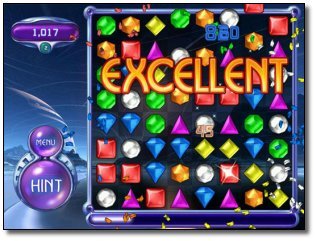
Wait, what was I saying again?
The terrible truth is that a whole lot of us begged for a Skinner Box we could crawl into, because the real world's system of rewards is so much more slow and cruel than we expected it to be. In that, gaming is no different from other forms of mental escape, from sports fandom to moonshine.

Heroin: It's pretty much WoW in a syringe.
The danger lies in the fact that these games have become so incredibly efficient at delivering the sense of accomplishment that people used to get from their education or career. We're not saying gaming will ruin the world, or that gaming addiction will be a scourge on youth the way crack ruined the inner cities in the 90s. But we may wind up with a generation of dudes working at Starbucks when they had the brains and talent for so much more. They're dissatisfied with their lives because they wasted their 20s playing video games, and will escape their dissatisfaction by playing more video games. Rinse, repeat.
And let's face it; if you think WoW is addictive, wait until you see the games they're making 10 years from now. They're only getting better at what they do.
David Wong is the Executive Editor of Cracked.com and a NYT bestselling author, his long-awaited new novel is about cybernetic criminals and other futuristic shit like that. Pre-order it at Amazon, B&N, BAM!, Indiebound, iTunes, or Powell's. You can read the first seven chapters for free by clicking below:

Want to write articles like this for Cracked? Just go here and say you want in. No experience necessary, just the ability to write things people like to read.
Wong wasn't kidding about his love for video games. Check out more of his exhaustive research into the subject in The 7 Commandments All Video Games Should Obey and The Next 25 Years of Video Games.
