6 Famous Movie Wisemen Who Were Totally Full of Shit
Sometimes you'll be watching a movie and an old wise man will appear on the screen. He will say little, but those few words will be full of sage advice that will guide the hero on his journey. You may even find yourself quoting him later.
What is easy to forget is that behind that wise old man is just a hack Hollywood screenwriter, and that those ancient words of wisdom were thrown in on the third draft, at four in the morning, after half a pound of cocaine.

Hollywood loves it when wisdom comes from unexpected places. There is always a homeless man around to teach an uppity grad student about love or janitor or limo driver to offer some folksy homespun wisdom.
More often than not, Morgan Freeman is involved.
That's why The Empire Strikes Back introduces Yoda as a rubbery little nuisance, seeming at first to be the comic relief, until we realize this wacky little gremlin is the spiritual and philosophical heart of the trilogy. The wisdom that comes from this troll sets the foundation for a creed which is more adored and revered today than many religions.
And it's pretty much all shit.
Take Yoda's chilling warning to Luke about the consequences of his decision to go to Cloud City:
"If you go now, help them you could, but you would destroy ALL for which they have fought and suffered..."
Set aside that this is vague to the point of incoherence, it consists of two separate clauses which are both proven completely untrue within minutes of Yoda saying them.
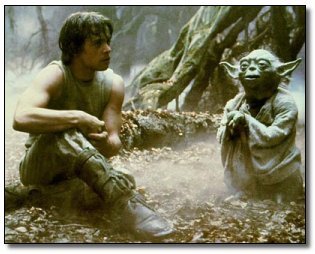
You're full of shit, old man!
The marginal "help" Luke provides to his friends consists in absorbing a Washington Generals-level beatdown from Vader, thus creating a painful and humiliating diversion to distract the Sith Lord from his friends' escape. Luke showing up at Cloud City has NO negative consequences for anything the Rebellion was fighting for or anything else we can see for that matter.
And let's not forget that Luke also "helped" them pick up Lando Calrissian, the guy who eventually joined the Rebellion and BLEW UP THE SPACE STATION CARRYING THE EMPEROR. In other words, the guy who ended up winning them the war.
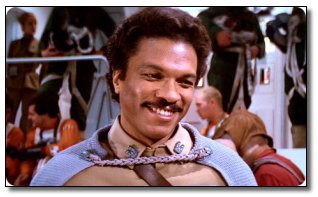
Great call, Yoda. With those predictive skills, you must have spent many a long, hard day at the race track.
But even this comes after Luke's training, which largely consisted of slogans like:
"Do, or do not. There is no try."
Nonsensical lines like that one make Yoda the Yogi Berra of the galaxy. He seems to have picked up an incorrect definition of the word "try" at whatever community college he attended. You cannot do without trying first. It is impossible. If he'd said "get drunk, or do not, there is no drinking" it would have made as much sense.

"WOOOOO! Pride or no pride, I will get drunk."
Or was he just telling Luke to believe in himself, to plunge ahead against all odds, regardless of appearances? After all, Yoda said the line after Luke expressed doubt in his abilities. Well, we're all for self-confidence, but Luke's whole problem was that he overestimated his own abilities, and was charging into the situation without stopping to train first. The entire rest of Luke's training revolved around breaking him of that.
Which brings us right back to the trip to Cloud City that Yoda tries to talk him out of. Wasn't that just Luke trying to seize the initiative and "do" instead of hiding on a planet with the swamp rats and doubting himself?

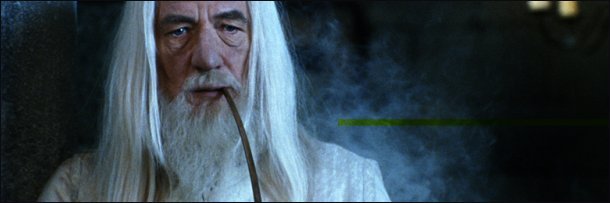
Despite being generally the least useless of the forces of good, Gandalf is not immune to delivering little wisdom turds like these:
Frodo: It's a pity Bilbo didn't kill [Gollum] when he had the chance.
Gandalf: Pity? It was pity that stayed Bilbo's hand. Many that live deserve death. Some that die deserve life. Can you give it to them, Frodo? Do not be too eager to deal out death in judgment. Even the very wise cannot see all ends. My heart tells me that Gollum has some part to play yet, for good or ill before this is over. The pity of Bilbo may rule the fate of many.
No, someone should have really, really killed Gollum. It's precious that Gandalf wants a little Hobbit to keep his innocence, but the price of that innocence is thousands of other beings dying in a war over The Ring. Gollum is the one who told the bad guys where to find the ring, and later it's his betrayal that gets the ring within inches of being captured by Sauron (thanks to him feeding Frodo to a giant spider).
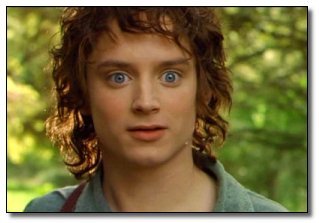
Though, we may have done the same thing.
Also, why is Gandalf so uptight about killing people, when according to his own words:
"End? No, the journey doesn't end here. Death is just another path... One that we all must take. The gray rain-curtain of this world rolls back, and all turns to silver glass... And then you see it. White shores... and beyond, a far green country under a swift sunrise."
Hell, you'd be doing him a favor! Only we see just minutes later that Gandalf and the good guys are delivered from their fate by, well, dead people. Dead people who have not actually been resting in beautiful fields, as much as trapped in a dark, dank cave for millennia.
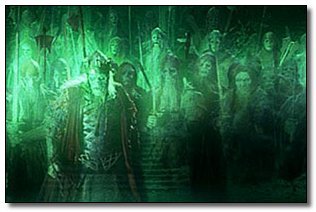
It turned out they had been trapped there due to an old curse. So, no, Gandalf. In the Lord of the Rings universe you don't get to see those "white shores" if some third party, without your knowledge, casts the right spell. Better hope you never pissed off any powerful wizards when you were alive!
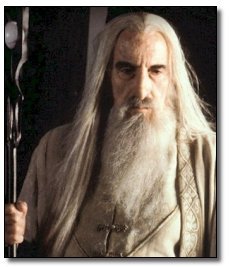
Oh.

It was the 1980s and American spirits were at a nadir. We were still heavily ensconced in the Cold War, and recovering from a recession. Skinny, vaguely ethnic kids across the country were getting their asses kick by blond alpha-douches. America needed something to believe in.
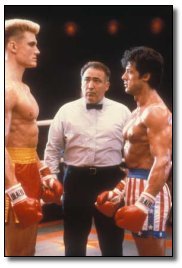
America, circa 1985.
Then a man with crazy moves and ancient wisdom emerged from the most unlikely of places (Happy Days) and taught America how to believe in itself again. That man was the Fonz.
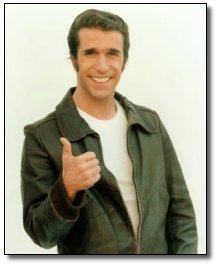
Aayyyy.
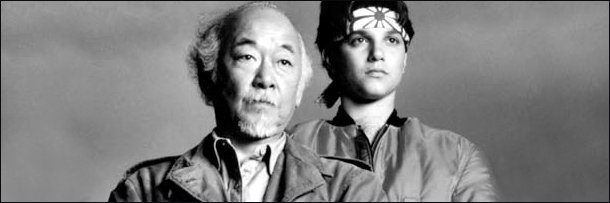
But we were also introduced to Mr. Miyagi, the mentor every hapless kid dreamed of. He gives you a classic car, beats up high schoolers for you and speaks in a broken English that alternately sounds hilarious and wise. Between Miyagi and Yoda, we want to know what it is about clearly spoken English that interferes with sage pontificating. Quote:
"No such thing bad student only bad teacher."
No. That's not even sort of right, Mr. Miyagi. We are not blaming bad teachers for Hitler, Timothy McVeigh and Spencer Pratt. Each of these guys had probably dozens of teachers in their life and we highly doubt they were all assholes.
And kids, whatever classes or karate trainings you try in your life, you'll only get out of it what you're willing to put in, even if your teacher is a cyborg with Bruce Lee's resurrected brain.
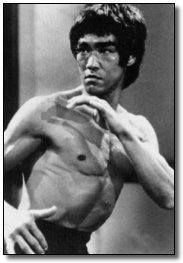
All Rights Reserved on that idea.
Do not write off your failure to a bad teacher.
The thing is, Miyagi knows this from his own life experience. In Karate Kid 2 we meet Miyagi's nemesis, Sato, the guy who drove Miyagi out of Japan. How does Miyagi know Sato? They were both students of the same teacher, Miyagi's father! In what must be the most telling statement in the Karate Kid franchise, Miyagi essentially says that his father was a miserable prick, and apparently so is Miyagi.
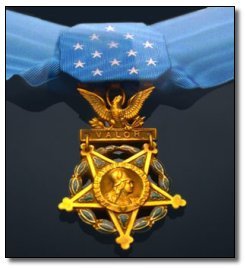
And while we're here, we'd like to point out another piece of wisdom that doesn't sit well. Upon Daniel finding his Medal of Honor, Miyagi tells him:
"Daniel-san, this [points to heart] say you brave, this [points to Medal of Honor] say you lucky."

The Medal of Honor is apparently the same as a four leaf clover.
This is one of the real bad habits of movie wise men. It's not enough for Miyagi to say he won a medal due to sheer luck. No, he has to phrase it as an inarguable law of the universe: Every Medal of Honor recipient who put their life on the line in defense of their beloved country is just a lucky asshole.
But, we guess Mr. Miyagi is a fictional character who made fictional heroic sacrifices so he's entitled to his fictional opinion.


With Yoda add to that his fake-ass limp, as revealed in the Pre-Trilogy. I assume it was some sort of disability fraud thing, or he threw himself in front of a speeder and claimed it forced him to walk with a limp the rest of his life, all so he could collect a nice settlement cheque and retire on it.
ReplyI think Miyagi means Medal of Honor winners are lucky to be alive, not lucky to get the medal.
ReplyWell, you don't need to be alive to receive the Medal of Honor
gandalf sucks yoda makes no sense and morpheus gets owned in every fight in the matrix. Neo should just say why the hell am i still listening to you.
ReplyNo. Gandalf was right. If Gollum had been killed, Frodo and Sam would never have had him to guide them into Mordor, and Frodo would have just run off with the ring instead of Gollum falling into the pit with it.
ReplyBut the baddies wouldn't have known where the ring was.
Since when did people start taking Cracked articles so seriously?
ReplyIt's like people can take a joke, until it's a joke about something they get mega fan-boners over.
The bit about Alfred being a complete lunatic had me laughing my ass off. Almost as much as the comments section.
There ain't nothin' like a horde of nerds scorned.
Don't be so quick to write off every one of these comments as the misplaced angst of fanatical nerds. What was discussed in this article is not just some of people's favorite characters but also philosophical ideas that have been around much longer than even the art of film making. Attack a character and annoy some nerds. Attack a philosophy and prepare for people to get their s**t together and let you know what's up. Admittedly I am a fan of some of these characters but I also have no problem making jokes at their expense, but when someone misses the point on actual pearls of wisdom you can bet I'll be quick to explore what they missed and how someone can pull more from these ideas than just a cheap laugh. Nothing against cheap laughs but in this case I feel there are true lessons to be learned from the dialog written for these characters.
this was pretty bad.
ReplyThis article is such unsubtle horsesh*t
ReplyThis whole article was a load of $H*T,you totally missed out on the point.
ReplyI can't say I agree with anything you've written in this article, Dave. Though the people who wrote these movies may not be the wise men they tried to convey, they have certainly at least borrowed ideas from wise men. I have explanations for each below.
Reply Hide All See All 4 Replies1. Yoda's cryptic pearls of wisdom may not be groundbreaking ideals but they are not meant to spell out to Luke what he should think, feel, or do. They are statements that force Luke to carefully consider the situation. Many of Yoda's philosophies reflect Buddhist thought and one of the ideals of Buddhism is that one can learn from everything including misguidance. When Yoda tells Luke of the future he predicts if Luke goes to the cloud city, Luke must decide whether to believe him or not. Basically Yoda taught him the lesson that a jedi must think and act for himself. Those that blindly follow may not have to put up with what Luke did at the cloud city, but they also make no progress towards what they believe to be right. As for "do or do not, there is no try" it only points out that when you need to actually accomplish something the amount of effort you put in is negligible compared to the real outcome. He is not saying that there is no such thing as trying, just it doesn't matter if it yields no results.
Example: write or do not, it really doesn't matter if you don't fully understand the topic.
2.Gandalf was teaching frodo a lesson in benevolence when he says to him "Pity? It was pity that stayed Bilbo's hand. Many that live deserve death. Some that die deserve life. Can you give it to them, Frodo? Do not be too eager to deal out death in judgment. Even the very wise cannot see all ends. My heart tells me that Gollum has some part to play yet, for good or ill before this is over. The pity of Bilbo may rule the fate of many." Frodo showed little concern for a creature that deserved pity and Gandalf, being the wise man he is, knew this to be a step towards a more evil thought process. It's all in the part where he tells him not to be quick to judge others because even the wisest do not know what outcomes your judgements might create, and he was right to say so. If Bilbo had killed Gollum there is nothing in the story saying the ring ever would have been destroyed. The actions of many characters are effected by Gollum. I won't list all of the examples here because there are many, but if just one interaction that any of the characters had with Gollum did not occur who knows what series of events may still happen, or not, or happen completely differently. it's the idea of the butterfly effect applied to whether or not anyone is capable of deciding who should live and die. As for Gandalf's idea of the afterlife, the ghosts do not disprove what he says. Middle Earth is a land of magic and spells that can effect basically every aspect of life. Especially if you consider death to just be the next path in life's journey, magic could also have an effect on the dead as well as the living. Also, as far as middle earth is concerned, different races go to different afterlives. Gandalf is not trying to protect Gollum from death or, as he describes, a pleasent afterlife. He is merely attempting to denounce the fear of death for a fictional character, in a fictional world, believing in a fictional afterlife. (By the way, I am not a religious man so I don't mean to imply such a thing as a realistic afterlife)
3.I don't even know where to start with your misread of Mr. Miyagi's wisdom. You can definitely blame Hitler's and Soto's teachers for their actions. Keep in mind, however, that no one goes through life with only one teacher. You may not refer to everyone you've ever met as a teacher but in reality they are. Part of the human experience is learning from every single thing that happens to you. You may not learn much or you may not learn the right lesson but those are not consequences of a bad student, not to mention that bad student and bad person do not mean the same thing. Those that attempt to teach are those who have decided to effect what you learn and how those lessons effect your actions in the future. The problem with almost every villain (fictional or real) is that, at some point, they learned the wrong lesson, but with so many teachers and experiences to learn from in life how is someone supposed to figure out what the right lessons are. THIS is the job of a teacher, to guide their student to positive or useful or effective thought. Did Hitler and Soto have bad teachers? The obvious answer is they did, at least one somewhere in their life. The downfall of their other, supposedly better, teachers is that they were not good enough to overcome the ill-fated lessons taught by the bad teachers. As for the medal of honor being a sign of luck and not bravery is not to say that those with a medal of honor are not brave, just that the medal is not what makes a man brave. Not every man who has been brave has received a medal for it. Those that have are lucky to have gotten recognition. Conversely, not every one who possesses a medal of honor is brave. Daniel san's sensei (I hope I spelled that correctly) is convincing him to focus on achieving bravery as opposed to focusing on earning recognition for it.
example: Mr. Miyagi was a bad teacher for you as you thought he meant that a recognition of your actions is just a symbol for future good fortune.
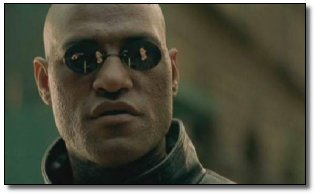
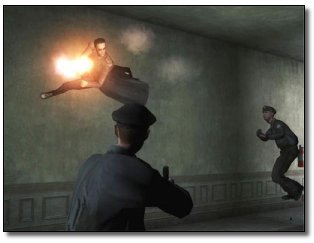
4.At what point did Morpheus tell Neo to kill every random person he saw. He didn't give Neo license to kill indiscriminately, he was warning him of the potential danger of the people around them. Remember that the reason those people are dangerous is not because they may try to stop the protagonists, but rather that at any moment the business men, teachers, lawyers, and carpenters he mentioned could become deadly, deadly agents. There are many arguments for Morpheus, Neo, and their team to be seen as terrorists in this story but not because Morpheus wants to raise awareness of the very real danger the regular people of the matrix pose.
Example: If you're in a room with ten people and you're told that one of those people wants to kill you but you're not told who, would you treat everyone their as friend or enemy.
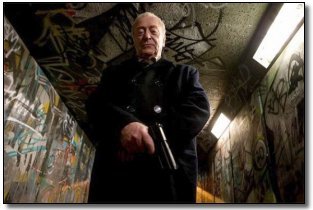
5 & 6. I'm going to group your criticisms for both Alfred and Lucious together, not because both characters are from the same movie, but because their wisdom is connected through the plot of the "cell phone sonar" device. The story Alfred relates to Bruce does not imply that whenever things get tough one should abandon all restraint and destroy everything in sight at will, nor does it imply that burning down a forest was Alfred's choice. When working for any sort of military, decisions are not made democratically, nor are they commonly made by the soldiers expected to carry them out. There is ample reason to believe that Alfred was ordered to burn down that forest as well as character evidence to support that Alfred did not look at having to burn down a forest to catch a bandit as a good thing. He specifically tells Bruce that better options had been sought after when he explains that within months of searching for the bandit they didn't find a single person who had done business with him. So what associates would there be to bribe? This story is an example of how a less than ethical choice can sometimes be the best option for a moral victory. If you look at Batman's thought process this is the center of what batman does. Batman stands on the moral high ground by ignoring the legal ethics of Gotham. He becomes batman in the first place because ethically attempting to stop criminals was obviously not working. Batman is not an ethical figure, he is a moral one. This, by the way, fits into the category of batman wanting to do rather than not doing despite how much trying he puts into it (thank you again Yoda). More than anything Alfred's story convinces Batman to go through with his Cell phone sonar plan. He knows it to be less than ethical which is why he plans for the machine to be destroyed before it is misused. You know who else thought the machine was not an ethically sound plan? Lucious Fox. Which is why he initially dislikes it, but he changes his mind "just this once" because using the machine for the purpose it serves in the movie is not unethical. Even if you would like to refer to the joker and his henchmen as Gotham citizens no one's privacy is infringed upon. They use the machine to view an empty building save for the hostages and the joker and his men. Now I'm not a legal expert but I'm pretty sure that holding people hostage with illegal weapons inside of a building you don't own does not allow you any rights to privacy and as for the hostages I don't think they would feel that their rights had been infringed upon either. Yes the machine could be used unethically but if you've ever seen an episode of MacGuyver you know that so can a paper clip and a bit of string. This does not mean that the items themselves are ethically in question. Personally I believe that Alfred and Lucious are the best examples of wisdom in your article as it is a wise man who can balance his views on ethics and morality.
I hope this comment doesn't come across as insulting because I don't intend for that but I do hope you reevaluate your view on the wisdom these characters are trying convey. I'm also curious of your response if you read this so please comment or e-mail. See all the trying these characters could muster didn't make them good teachers to you nor does it change the answer to the question of "Did you understand what they were trying to teach". the answer to which, of coarse, is you do not.
Well the writers of these movies are skilful. They are good in employing 'suspension of disbelief'. I never realised how irrelevant Yoda's advise was until I read this article!
"Batman is not an ethical figure, he's a moral one." Huh? Ethics and morality are not two distinct things; ethics is the branch of philosophy which deals with moral decision making. To say that a character is being unethical but still being moral makes no sense. It would be like saying Bruce Wayne is an entrepreneur, but not a business man. The whole theme of the Dark Knight series is that Batman is not a moral figure - he's not a knight in shining armor, he's the Dark Knight - i.e. morally ambiguous.
Tinsmith63- I have to agree with you to a point but I believe my point to still be valid. Ethics IS a system by which individuals make moral decisions but ethics usually refers to a code or set of rules one follows to remain in the moral right. Robin hood is a good example of someone who is out for moral justice. Still if Robin Hood were to follow an ethical set of rules he would either always find stealing reprehensible or he would find no problem with theft and would instead become just a petty criminal. Batman, in a similar sense, has only one ethical rule he sticks by (not killing). Otherwise his process of deciding between right and wrong is not an ethical system of being guided by rules of thumb but is instead based on a situation by situation decision making process. Basically ethics lead to laws and social taboos but the moral decisions batman makes are not choices one would want anybody and everybody to make. We as viewers/readers know batman's whole story and trust the moral ground he stands on, but without the trust we give the character we would find batman's actions reprehensible. And even if we agree with why he does it, we still would want crime handled differently.
Example: Say you're in a situation where killing a single child would save thousands of lives. Morally you save thousands of lives by killing the child but that does not keep away the guilt you would feel from yourself and others as your ethical basis was one that allowed you to decide to kill a child. In this case ethics says it's never okay to kill children while morals say it is better to save a larger group.
I know that I'm not a great writer and often I do not correctly present my ideas in written word, but I hope this cleared up what I was trying to get at. Truth be told it's a very large topic that entire classes are taught around and I hope that I've done some justice to the content.
As for you HonorRoller, thanks for putting your comment just anywhere instead of actually paying any attention to what you replied to. And once more, just for good measure, there is nothing irrelevant about Yoda's advice.
@tinsmith63: Ethics and morality are indeed intertwined, but not as close in meaning as you seem to be stating. It may be immoral to do drugs or harbor ill-will or put your penis in a cow's vagina, but it's not unethical.
i think this article missed the point
ReplyAs for the whole stealing of civil rights, it's not like Batman and Lucius actually use that device to spy. It is used ONLY for figuring out who is in the building and which people are the good/bad guys. It never gets used for something else. I wouldn't consider that an unethical use. Technology is never good nor evil. It's always neutral. How you use it is what can be seen as good or evil.
Reply2. You were way off on Gandalf. Gollum was a tortured soul wrecked by greed and desire. See where the author was going with this now? Though he may be a wretched, miserable creature who jeopardized the entire fate of middle earth, it was because of the ring. Frodo is cautioned to take pity on him because killing him would only spew more despair into their world. Negative intention hurts more than one victim, it has far reaching consequences to all. This proves true especially when violence is involved. Gandalf is reminding the reader that despising the character of Gollum is a projection of our own inward fears, mainly, becoming trapped in a cycle of endless desire and pain. Somewhere we know this is a fate possible for anyone and Gollum is a victim. So, basically, Gandalf is a badass and don't you ever forget it.
ReplyDave, really... seriously dude... article fail. It's not funny when it's so far off base. Take Yoda's advice man... DO NOT write about things you obviously don't get... like philosophy for instance.
ReplyI like some of the points you made, Dave.
ReplyBut you come off as kind of a pretentious dick obsessed with his own opinions. A little too much stereotypical "basement dweller" glee in tearing people down in here for me.
When I first read the words 'Hollywood' and 'more revered than many religions' I thought he was going to launch into a criticism of the new-aged, watered-down, selectively interpreted borrowing of Eastern philosophies, which many in Hollywood, think make them deeper to believe than the 'consumerist drones' of the corporate 'system.' Then, when I read it, I realized the author just didn’t understand the philosophies at all, much like the wannabe mystics fail to grasp it. When Yoda says, “Do, or do not, there is no try,” it has nothing to do with ‘plunging in against all odds’ – it means literally what it says – an attempt at doing something, is not doing the thing. It doesn’t matter how pure your intentions were or how hard you fought for it, you either did the thing or you didn’t; there is no ‘trying’ to do something. In other words, there is no ‘A’ for effort. This is something Lucas derived from Eastern philosophy, specifically Buddhism (which he stated was a strong influence in his writing of the scene). You may disagree with Yoda/Lucas’ view, which many in the West do (in Western thought there is very heavy emphasis placed on the value of making an attempt, even if it ultimately fails) but that doesn’t mean it’s “totally full of s**t,” it just happens to be a philosophy with which you disagree.
Reply Hide All See All 3 RepliesIf you don’t understand why the Gandalf quote is poignant, and not “totally full of s**t,” then I’m afraid there is no helping you.
To understand Miyagi’s quote, you have to keep in mind the history of the Medal of Honor. It is only awarded for “Conspicuous gallantry and intrepidity above and beyond the call of duty.” Most (and I mean significantly more than 99%) of soldiers will never even be in a position to demonstrate the kind of moral fortitude required to receive a Medal of Honor. Of the rare few who do distinguish themselves with this type of heroism, most don’t even survive. Since World War II, 530 of the 861 Medals of Honor awarded (or 60%) were done so posthumously. When Miyagi says he was one of the lucky ones, what he means is that he was of the rare soldiers that survived to receive the award, rather than having it awarded to his widow; the lucky part is having survived it. Also, he’s making the point that he doesn’t need the social recognition that comes with receiving the Medal to prove to himself that he is brave, only he in his heart gets to judge if he is brave. Again, this is a particular belief, one with which you may disagree, but that doesn’t make it “totally full of shit.”
As for Morpheus, yeah, I give you that one – the man’s totally full of shit.
With Alfred, his whole characterization of the bandit is that the man works alone and is totally untraceable. Alfred even states, “In six months, we never found ANYONE who traded with him.” The bandit had no associates to bribe. He essentially would come in, presumably in the dead of night, steal the stones (maybe even kill the guards just for fun) and then disappear without any trace, and throw the stones away. To find this man, they had to do something incredibly drastic – burn down the whole forest so he had nowhere to hide. Later on, Bruce metaphorically razes Gotham to find the Joker, with the collateral damage being everyone’s privacy. The point of Alfred’s speech is that you are supposed to be disgusted by his actions. You are supposed to realize the sacrifice that fighting evil requires, and be disturbed by it, but that doesn’t mean that Alfred is “totally full of shit”.
Wow, dude. You're a huge nerd.
He's also absolutely right.
SHENANAGINS to your Morpheus comment. It wasn't about the killing of randoms but about the fact that most people are so entrenched in the bullshit lives they live out that any attempt to change it, be it for better or for worse, would be met with resistance. And the fact that once they get a 'ping' the Agents can become anyone in the system. Did you even watch The Matrix??
This just seems like an opportunity for the author to write a scathing and sarcastic article. Overlooking the obvious intention of either the writer of charicter.
ReplySo I'll write a scathing and sarcastic retort
1) Yoda is advocating training and temperance instead of running into an obvious trap (que the Akbar line) Han is "imprisoned" only when Luke is near and the others escape on their own accord....and then have to save Luke....which Yoda was hinting at
2) this was almost laughable. If Gollum was dead not only would Sam and Frodo have gotten lost way before Mordor, But when frodo claims the ring there would be no other ring addict to wrestle it from him. The ghost people cursed themselves with their own cowerdice, and the grey havens are for Valar and elves not mortals
3) I'm gonna leave this one alone because I only saw the (pre-transexual) Hillary Swank kriate kid and learned long ago to leave tranny's and alcholoic Asian men alone.
4) Morpheus was desensitizing Neo to the idea of attacking/ defending himself aginst some who could turn into a leathel enemy (should have mentioned the homeless as well) CLEARLY he means " become the one so you can slaughter the helpless masses." Which in retrospect is a far better arch for the trillogy I think.
5) How do you stop a man who has no disserable pattern or method and has just taken a city hostage (perscriptions?) if you're the police your fucked but if you're a vigilante who brakes the law to maintain the spirt of the law then you eliminate every dark corner for him to plot in regardless of privacy. The other chaicters of the (fanasy) city understand that extraordinary lengths must be crossed to end the madness. But I do agree with the "not my job discription/ ok just once"
This has been a prudent use of my free time
1) Exactly. Yoda simply says rushing into action headlong without being prepared can have disastrous consequences in the future.
2) And let's not forget that in that quoted lines, Gandalf does NOT say it would have been better to let Gollum live - he merely says that all things have consequences for good or ill, and that no one can see what those consequences will be, therefore dealing out hasty judgment is unwise - the article misses the point of Gandalf's quote entirely.
3) The medal of honour quote actually has merit if you see it the way it was intended: Miyagi clearly means that many men would have deserved the medal for a valiant heart if they hadn't been killed, and that even more were brave enough but never got the medal because they weren't lucky enough that their actions were noticed. He simply says that a heart is a better measure of valour than a medal.
I didn't see the entire Matrix trilogy or any Batman films so I can't comment on those. But no, this article seriously misses the ball.
I love how people take these articles so seriously
ReplyIt's only funny if it's true. When it's obviously off track, it ceases to be funny and it's simply annoying. Besides, the CRACKED writers know that if they hack on the most popular movies and characters that they'll generate exactly this kind of response.
I like many of the articles on this site, but not a single entry on this list makes any sense unless you are just not paying attention to the movies. Ridiculous over simplifications. This article seems to just be making the point of "don't make a plot point or scripted conversation more complicated than a kindergartener would understand". Most of the points the author takes exception with are the types of complex issues most pablum does without, and we are lucky sneak by studio executives to make a somewhat engaging plot.
ReplyThe Batman one completely misses the point. When Alfred said "We burned the forest down," he meant it metaphorically - they left him nowhere else to hide. They resorted to any tactic necessary to find him. Not literally burning down the forest, which would just make him flee and they'd never catch him anyway.
ReplySupporting this interpretation is the fact that Batman DOES go and do exactly that. He "burns down the forest" with the cell phone tracking system. There's nowhere left for the Joker to hide.
As for the "we never do bad things except when we have to" part, Alfred says earlier in the movie that "Batman exists to make the hard choices that others can't." The movie ends with Batman on the run for crimes he didn't commit. The point of the movie is Batman's fall from grace because he has to do things which are wrong or morally questionable, and how that weighs on his conscience.
this may be very irrelevant , i just needed to put it out there , michael caine is f*****g great .
ReplySeconded.