‘Back to the Future’ Screenwriter Bob Gale on the Work of Drew Struzan, Who Made All Your Favorite Movie Posters
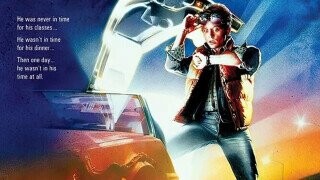
Legendary movie poster artist Drew Struzan has passed away at 78, after a multi-year battle with Alzheimer’s
Because most movie posters today mainly rely on photographs or Photoshopped collages of photographs, it’s difficult to overstate how important his beautifully-rendered, photorealistic paintings once were to a movie’s success. Struzan’s work drove audiences to theaters and helped cement the Indiana Jones, Star Wars and Harry Potter franchises, just to name a few, as classics.
Among the dozens of iconic movie posters Struzan helmed is the Back to the Future trilogy. “When we hired Drew, he came up with a bunch of ideas, many of which have been seen over the years in things like Back to the Future: The Ultimate Visual History,” begins Back to the Future screenwriter Bob Gale, telling the history of the iconic image of Marty McFly checking his watch while entering the DeLorean. “We liked them all. That was a problem with Drew Struzan’s work, you just said, ‘Wow, this guy gets it.’ He came up with some really fabulous stuff. Many of them were the collage-type stuff that’s part of Drew’s trademark that you’d see on his Indiana Jones and Star Wars posters.”
Don't Miss
The final image of McFly checking his watch, however, didn’t begin with Struzan. “The idea of a guy looking at his watch was developed by somebody at the Universal ad department. We showed it to Drew and said, ‘See what you can do with this image.’ He was a consummate professional, so he didn’t have any problem with it. If he did, he certainly didn’t let on. He was a total pro, and he left his ego at the door. He understood that the creative process was collaborative.”
Once the image of McFly checking his watch and entering the DeLorean was painted, Gale explains, “It was a situation where a whole bunch of people were in the conference room and all this artwork was laid out. Everybody just kind of thought that was something intriguing about Michael J. Fox looking at his watch.”
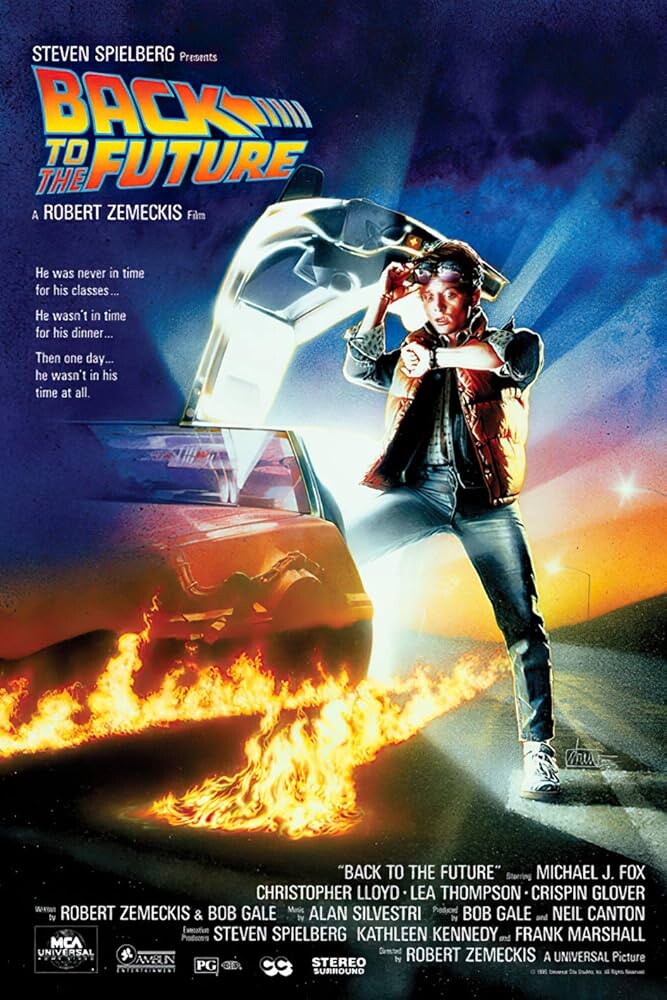
The final poster, according to Gale, was a singular image that also became a trademark. “The thing that’s so wonderful about it is its simplicity. Whenever we’re doing photographs or promotions of Back to the Future in any way — or when people say, ‘I want to get my picture table with you, Bob’ — I’ll always say, ‘Let’s do the watch image’ and everybody understands what that is. That’s pretty neat when you have that singular image that just says, ‘I get this forever.’ Like the shark coming up for the swimmer on the Jaws poster.”
“Struzan had a very identifiable style,” continues Gale. “You see a Drew Struzan poster, and you know who painted it — it’s him. He had some sense of color and composition and how he made it all work together. I, certainly, can’t put it into words, but it’s like Supreme Court Justice Potter Stewart said when asked about pornography: ‘I know it when I see it.’”
“Drew made a mark on the movie business, and we’re going to be thinking about that for a long time,” Gale concludes. “The measure of a life is if you can make the world a better place than when you got here, and he certainly did that.”
