‘On Brand With Jimmy Fallon’ Is Very On Brand for Jimmy Fallon
If events of the last few months have taught us anything, it’s what Season Four of Hacks got right and wrong about late-night TV. It was apparently wrong that a woman would struggle and scheme to get and keep her job hosting a show; Taylor Tomlinson showed us that. It was probably right that creating social media content is soul-killing. It was wrong that a network would sacrifice a head writer for controversial material; just last week, ABC showed us that it had no compunction axing a host for rankling the wrong people. But it was right that hosts are expected to secure their shows’ futures by moonlighting to keep their faces and voices in front of the public as much as possible. Jon Stewart has a tie-in podcast. Seth Meyers has multiple podcasts and a web series, Corrections. Jimmy Kimmel hosts Who Wants to Be A Millionaire. And they’ve ALL put their names on books they may or may not have actually written.
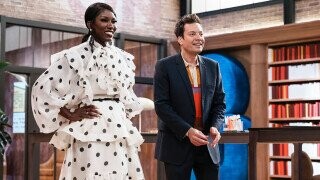
Then there’s Jimmy Fallon. He stars in Password. He’s put on a Halloween “experience” at 30 Rockefeller Plaza. Seven of him starred in an ad for the mobile game Royal Kingdom. Jimmy Fallon is (officially) known for his positivity, which may be why he likes to say yes even to a competition show about marketing called On Brand. Jimmy Fallon isn’t worried about looking corny. Jimmy Fallon just wants to sell you Dunkin’ Donuts. Unless you’re a contestant on On Brand: then he wants YOU to sell Dunkin’ Donuts.
In the opening voice-over, Fallon tells us that in a world where marketing messages scream at us from multiple media, “brands need bigger and louder ideas than ever before.” Does this mean they’re putting increased pressure on the experienced professionals at established ad agencies they pay millions of dollars every year? Well, yes, probably, but the premise of this show is that they’re giving “10 everyday Americans from all walks of life” the chance to pitch and develop marketing campaigns for a different national brand each week. At the end of each challenge, a contestant will be eliminated, with the final player winning $100,000.
Don't Miss
It is, of course, common for brands to arrange product placement deals on reality shows. Winning a reward challenge gets Survivor contestants a special meal at a pop-up Outback Steakhouse. Big Brother houseguests win a special sneak preview screening of The Wild Robot. Project Runway designers are constantly enthusing about their Pilot FriXion Eraseable Pens. But what On Brand dares to wonder is, what if product placement was the whole show?
Each episode isn’t just one big ad for Marshalls, KitchenAid, Captain Morgan or Therabody; it’s multiple ads. First, one or more representatives from the given week’s brand tell contestants (and the viewer) about a specific new product or service they want to promote. Then, all the contestants get a chance to pitch their concepts. The best two or three get to develop their vision into a mini-campaign — all assisted by their official Samsung phones, and using design tools from Canva. Over and over, the viewer is hammered with the messaging: Now I’ll simply never forget that Dunkin’ has a breakfast meal deal, or that Southwest has increased leg room (but not for the entire plane, although that part doesn’t get much emphasis). It’s deeply cynical, but producers have probably never had an easier day at work than when they were lining up companies to be featured in On Brand; they can even look forward to bonus mentions on The Tonight Show as well.
Some discerning viewers who find On Brand by accident will be put off by Fallon’s shtick. He’s probably the only late-night host who would have no compunction about introducing contestants to their new “home” (presumably a corner of a studio stage made over to look like a co-working space 12 years ago) with “This place was built for creativity, and it's all powered by Samsung.” Fallon doesn’t have to worry about losing cred; he hasn’t had it to lose since the mid-aughts, if not before — something that’s underscored in the intro as a montage of memorable TV commercials includes several from his SNL heyday, like the Budweiser “Wassup” ad (1999). Throughout Fallon’s screen time, his expression of vapid astonishment is unvarying…
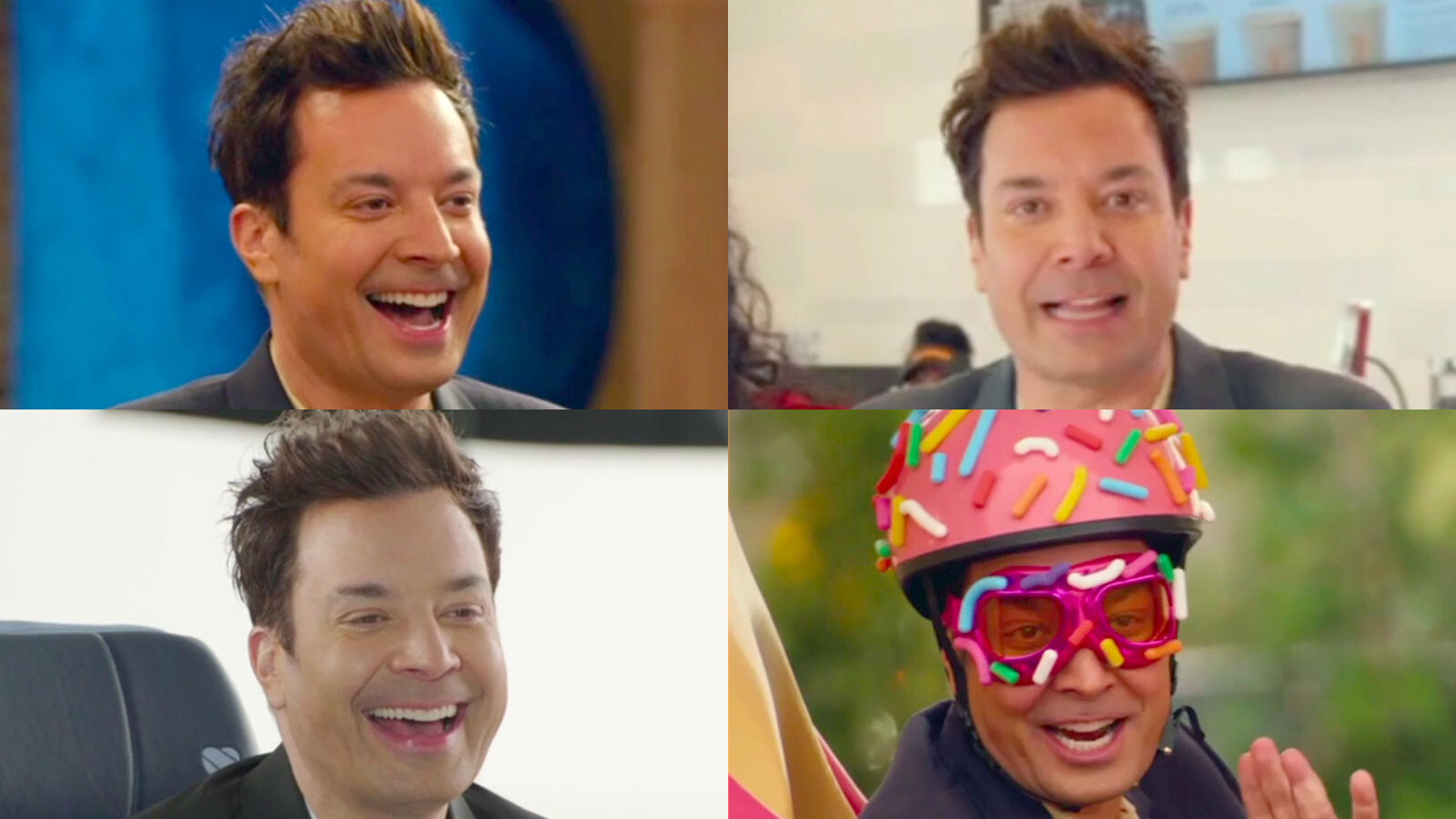
…right up until he has to eliminate his first contestant, and cries so unsettlingly about how hard it is that the departing contestant feels obligated to comfort him. If you’re hoping for an Arnettian level of light snark, don’t; I don’t think that’s a mode Fallon can access.
On Brand’s worst sin is that it’s bad TV. Back in the early 2010s, AMC tried a quasi-spin-off of Mad Men, its buzzy scripted drama about advertising, with The Pitch. As with On Brand, The Pitch featured real clients. As with On Brand, episodes ended with two different concepts being presented. But the participants weren’t realtors and swimming instructors; they were creative teams from actual ad agencies. They also didn’t have to slap something together in a matter of hours, like the On Brand contestants do; they had a full week to develop something compelling.
I was riveted by The Pitch throughout its brief run, so my issue with On Brand isn’t that I’m too good to engage with unapologetically capitalistic material; it’s that I’m interested in seeing it done well. The Honky Tonk Emcee, the Toy Designer and the Travel Journalist with no fixed address might have all applied to be on this show because they know how to market themselves and figure doing it for a multinational corporation couldn’t be that different. Based on the evidence of the first two episodes provided to critics, they’re wrong. One has to be told by the client why “Duh” shouldn’t be part of her slogan. Another is so confused about what he’s expected to do that “Pitch” is part of his tagline for Southwest Airlines campaign — a term that has no relation either to increased leg room nor to assigned seating, another new feature Southwest is rolling out and DAMMIT NOW THEY’VE GOT ME DOING IT.
The point is: There’s a reason American Idol confines its most hopeless aspirants to the first few weeks of the season. Putting someone in the mix of contestants just to watch them flounder would be cruel to them, and excruciating for the audience. From what I’ve seen, at least half of the “everyday Americans” cast in On Brand never should have made it onto our screens.
What makes the show toughest to watch is that there are a couple of contestants who might actually have talent for this. Unsurprisingly, they’re a social media manager and a self-employed business owner, who were probably already doing a version of these challenges in their working lives. And in this economy, these two might prefer a job with one of these companies, rather than the chance to keep riding their metaphorical tiny trikes around this clown show. But obviously that’s not something a Jimmy Fallon would consider. In this economy, he has to focus on keeping the 12 jobs he already has, no matter how humiliating they seem.
