A Supreme Court Justice Called the FBI Over A 'Simpsons' Writer’s Joke
The Simpsons has ridiculed a number of government officials over the years — from the time Homer brawled with George H.W. Bush, to the walking Ted Kennedy parody that is Mayor Quimby, to the “Treehouse of Horror” episode that featured Bob Dole’s nude corpse floating through the vacuum of outer space.
But the show has been pretty chill when it comes to poking fun at the U.S. Supreme Court. In one version of the show’s future, Bart even becomes a Supreme Court Justice himself. Looking back at the episode from 2025, it’s clear they could do far worse.
But several years before the series premiered, legendary Simpsons writer and producer Al Jean made a public joke about a sitting Supreme Court Justice, and nearly landed in legal hot water as a result.
Jean recently guested on the Funny in Failure podcast, and recalled that, back when he was fresh out of college and writing for National Lampoon magazine in the early ‘80s, he and future Simpsons writer Mike Reiss penned a piece parodying articles advertising “how to write a novel (like) Kurt Vonnegut, or how to write an essay.” “So we satirized this by having Thurgood Marshall — whose job as a Supreme Court judge, was partially to decide what is pornographic — tell you how to write pornography,” Jean explained.
In his book Springfield Confidential, Reiss noted that the article was entitled “How to Write Dirty, by Justice Thurgood Marshall.” He later realized that the joke was “racist and stupid.” “And so we wrote this article in the first person (by) Mr. Marshall, and it was spot-on the way it looked,” Jean continued. “So somebody sent it to him, and he gave it to the FBI. And he said, you know, ‘Take care of this.’”
But Jean and Reiss had the law on their side. “We’d used, at the bottom … the National Lampoon address, so they said, ‘Wait a minute, this is a parody which is protected under the first amendment, Mr. Chief Justice.’ So they didn’t do anything.”
“We did wonder when we wrote it if he would ever see it,” Jean added, clarifying that “the reaction he had was the last one I would have envisioned.” The writers only found out about all of this after Marshall died. It was mentioned in a 1996 Los Angeles Times article, which reported that the judge was “outraged” by the article. “No FBI jurisdiction is apparent,” an agent concluded after determining that it was a parody.
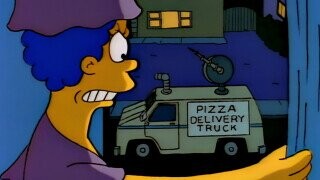
Had the FBI decided to investigate, their “Flowers By Irene” van probably would have tipped the writers off.
