7 Video Game Healing Methods Least Likely to Actually Work
 Thanks to the many, many problems young men possess, video games about killing things have become more popular than ever. And because the pleasure felt in violently slaughtering a man is only surpassed by that felt by violently slaughtering many men, video game design has leaned towards the ideal of pitting the player against ever increasing quantities of enemies, lining thousands of poor pixelated bastards up to be cut down by greasy teens.
But this "maniac butcher hero" design choice has forced designers to make allowances for the possibility that the player might make a small mistake along the way. Killing enough Nazis to fill a stadium without any of them laying a claw upon you would be almost impossible, and at a minimum frustrating to play. To avoid this, video games have developed a variety of mechanics that allow their protagonists to absorb and recover from ridiculously grotesque wounds. And because this is Cracked and it's what we do, here are an enumerated list of these video game healing methods.
1) First Aid Kits
As Seen In Every First Person Shooter prior to 2002
Thanks to the many, many problems young men possess, video games about killing things have become more popular than ever. And because the pleasure felt in violently slaughtering a man is only surpassed by that felt by violently slaughtering many men, video game design has leaned towards the ideal of pitting the player against ever increasing quantities of enemies, lining thousands of poor pixelated bastards up to be cut down by greasy teens.
But this "maniac butcher hero" design choice has forced designers to make allowances for the possibility that the player might make a small mistake along the way. Killing enough Nazis to fill a stadium without any of them laying a claw upon you would be almost impossible, and at a minimum frustrating to play. To avoid this, video games have developed a variety of mechanics that allow their protagonists to absorb and recover from ridiculously grotesque wounds. And because this is Cracked and it's what we do, here are an enumerated list of these video game healing methods.
1) First Aid Kits
As Seen In Every First Person Shooter prior to 2002
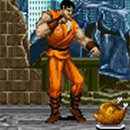
 For example, stepping on this turkey will heal Guy as much as stepping on three Manwiches.
Game Mechanics
Basically the same as a first aid kit, although if the game is good you'll get to see some clever eating animations. Curiously, games with food in them are notorious for having multiplayer modes where you can really screw over your friends by eating their food. Just like a Turkish prison.
Realism
In a strictly biological sense, healing is just a macroscopic perspective of cellular regrowth, a process which requires the body to have a source of energy. This energy is commonly supplied by food - at least in the non-plant protagonists common in video games.
But as with first aid kits, it's the speed with which these entire chickens are digested and turned into re-grown tissue which defies belief. Some extremely dubious experiments conducted on homeless people in the 50s concluded that a hot dog's ability to heal puncture wounds is dreadfully slow.
_____________
3) Miscellaneous Collectible Items (Potions, Stimpaks, Herbs, Fairies, Mushrooms, etc)
As Seen In: Role Playing Games, Action Games, Adventure Games, Jewel's Foolish Games and everything else.
How it Works
Again very similar to first aid kits and food above, with the form of the specific healing item being determined by the dream logic of the universe the game takes place in. In this case, the items are collectible and can be stored for use at a later time.
Game Mechanics
The ability to save and collect healing items provides flexibility to the player, which is generally a good thing. This also requires the game to have an "inventory system," which can be best thought of as a friendly invisible Sherpa who can freeze time during a battle, heal you and help change your trousers into a pair more appropriate to this particular fight. (Inventory systems probably deserve their own separate whiny-article)
Realism
The feasibility of using most of these items as healing agents is sharply limited by the fact that they don't actually exist, or if they do, don't exhibit any of the healing properties displayed in games. Ingesting random herbs or mushrooms is as likely to wreck you as it is to help you, and approaching a real life fairy and asking them to heal you is a recipe for its own type of hilarious disaster.
_____________
4) Waiting Around
As Seen In: Every First Person Shooter since 2002
How It Works
After getting hurt, all you need to do is find a place to hide. In games with this kind of healing mechanic, these are widely available - falling down is usually good enough. After five to 10 seconds of not getting injured, every one of your wounds will completely heal.
Game Mechanics
In terms of game mechanics, this completely prevents those unwinnable situations discussed above. Furthermore it encourages gamers to seek out and employ cover, which is something that earlier first person shooters didn't do. (Running sideways and bouncing up and down like a heavily armed aerobics instructor was the preferred combat technique back in those days.)
Realism
Completely ridiculous. In fact, sitting around doing nothing is perhaps the worst possible way to treat a traumatic injury. This is as irresponsible as suggesting to a friend that the best way to go cure diarrhea is to take off his pants and stand on his head – it's definitely not going to help, and will probably make things much worse.
_____________
5) Visiting the Inn
As Seen In: Role Playing Games
How It Works
Broken leg? Torso violated by an orc? Arm severed above the elbow by a prickly drowish prostitute? Well just head down to the nearest Ramada, where a night on their reasonably priced sheets will sort that all out for you. You'll wake up the next morning with your limbs and orifices restored to their original count.
Game Mechanics
In RPGs, towns act as relatively safe hubs where the player can come to restock their equipment, discover new quests to go on and yes, restore their health. The open-ended nature of RPGs mean players can kill things effectively indefinitely, so cheap, effective methods of restoring player health are necessary. Also look for the tent, which serves as a portable inn, only eight times more ridiculous.
Realism
A good night's rest works great when you have a cold, or have just drank all the whiskey. But the concept of having traumatic injuries healed by a night's rest is insane. In fact your likelihood of even getting a hotel room while displaying open wounds is pretty unlikely these days, unless you're in the South or something. Historically, you're more likely to come out of a hotel room worse off than when you enter, given well-known outbreaks of bed bugs, Legionnaires disease and drug deals that go wrong in a chainsaw fashion.
For example, stepping on this turkey will heal Guy as much as stepping on three Manwiches.
Game Mechanics
Basically the same as a first aid kit, although if the game is good you'll get to see some clever eating animations. Curiously, games with food in them are notorious for having multiplayer modes where you can really screw over your friends by eating their food. Just like a Turkish prison.
Realism
In a strictly biological sense, healing is just a macroscopic perspective of cellular regrowth, a process which requires the body to have a source of energy. This energy is commonly supplied by food - at least in the non-plant protagonists common in video games.
But as with first aid kits, it's the speed with which these entire chickens are digested and turned into re-grown tissue which defies belief. Some extremely dubious experiments conducted on homeless people in the 50s concluded that a hot dog's ability to heal puncture wounds is dreadfully slow.
_____________
3) Miscellaneous Collectible Items (Potions, Stimpaks, Herbs, Fairies, Mushrooms, etc)
As Seen In: Role Playing Games, Action Games, Adventure Games, Jewel's Foolish Games and everything else.
How it Works
Again very similar to first aid kits and food above, with the form of the specific healing item being determined by the dream logic of the universe the game takes place in. In this case, the items are collectible and can be stored for use at a later time.
Game Mechanics
The ability to save and collect healing items provides flexibility to the player, which is generally a good thing. This also requires the game to have an "inventory system," which can be best thought of as a friendly invisible Sherpa who can freeze time during a battle, heal you and help change your trousers into a pair more appropriate to this particular fight. (Inventory systems probably deserve their own separate whiny-article)
Realism
The feasibility of using most of these items as healing agents is sharply limited by the fact that they don't actually exist, or if they do, don't exhibit any of the healing properties displayed in games. Ingesting random herbs or mushrooms is as likely to wreck you as it is to help you, and approaching a real life fairy and asking them to heal you is a recipe for its own type of hilarious disaster.
_____________
4) Waiting Around
As Seen In: Every First Person Shooter since 2002
How It Works
After getting hurt, all you need to do is find a place to hide. In games with this kind of healing mechanic, these are widely available - falling down is usually good enough. After five to 10 seconds of not getting injured, every one of your wounds will completely heal.
Game Mechanics
In terms of game mechanics, this completely prevents those unwinnable situations discussed above. Furthermore it encourages gamers to seek out and employ cover, which is something that earlier first person shooters didn't do. (Running sideways and bouncing up and down like a heavily armed aerobics instructor was the preferred combat technique back in those days.)
Realism
Completely ridiculous. In fact, sitting around doing nothing is perhaps the worst possible way to treat a traumatic injury. This is as irresponsible as suggesting to a friend that the best way to go cure diarrhea is to take off his pants and stand on his head – it's definitely not going to help, and will probably make things much worse.
_____________
5) Visiting the Inn
As Seen In: Role Playing Games
How It Works
Broken leg? Torso violated by an orc? Arm severed above the elbow by a prickly drowish prostitute? Well just head down to the nearest Ramada, where a night on their reasonably priced sheets will sort that all out for you. You'll wake up the next morning with your limbs and orifices restored to their original count.
Game Mechanics
In RPGs, towns act as relatively safe hubs where the player can come to restock their equipment, discover new quests to go on and yes, restore their health. The open-ended nature of RPGs mean players can kill things effectively indefinitely, so cheap, effective methods of restoring player health are necessary. Also look for the tent, which serves as a portable inn, only eight times more ridiculous.
Realism
A good night's rest works great when you have a cold, or have just drank all the whiskey. But the concept of having traumatic injuries healed by a night's rest is insane. In fact your likelihood of even getting a hotel room while displaying open wounds is pretty unlikely these days, unless you're in the South or something. Historically, you're more likely to come out of a hotel room worse off than when you enter, given well-known outbreaks of bed bugs, Legionnaires disease and drug deals that go wrong in a chainsaw fashion.


