6 Things Movies Love to Get Wrong About The Workplace
Hollywood loves to make movies about businesses, because that's where all the peasants in their audience work. But writers and directors aren't exactly corporate experts and often don't even know what an average office job is like.
That's why they've come up with these weird misunderstandings of how companies work.
Owning 51 Percent of a Company's Stock Makes You Supreme Ruler

The Myth:
Countless plot points have turned on the "51 percent rule," where if you own 51 percent of a company's stock, you are the supreme ruler of the company and can do anything you want. The villain in Mr. Deeds had the power to sell the company because he controlled 51 percent of the shares, even though the owners of the other 49 percent were unanimously against it.

Here he is spelling it out in case you weren't following.
Tons of other movies, ranging from The Secret of My Success to Richie Rich, have been based off of pivotal 51 percent moments, where the villain could only stare dumbfounded as the hero was discovered to have 51 percent ownership. Despite paying millions of dollars for the other 49 percent of shares, the other stockholders apparently have zero say in any business decisions and probably would have to bark like a dog if the 51 percent king ordered them to.

"Nyaah! I own 51 percent! Mush!"
The Problem:
The truth is that most corporations require a two-thirds majority vote and are actually legally bound by some state laws to do so for big decisions (like whether to sell the company). Which makes sense. Is it really a good idea to give your company a self-destruct button that can be activated when almost half the shareholders don't want that at all?
Even if the company doesn't require a two-thirds vote for a decision as big as basically killing itself, there are laws to protect minority shareholders from "oppression" (that's the legal term) by the majority, which kick in during a number of different circumstances, like if the majority owner is doing something that makes no business sense for the corporation and only benefits himself. If the majority tramples these rights, minority owners have the right to sue their pants off.

Also a legal term, referring to suing someone for so much money they can no longer afford pants.
A legitimate case can be made that the owners of the 51 percent in these movies, both villains AND heroes, make some decisions an outsider could consider questionable (Richie Rich spontaneously appoints a team of street urchins as his R&D team), which the minority owners could use to at least start a lawsuit and cause some serious headaches for the "supreme ruler."
Sure, maybe the most dramatic choice for Mr. Deeds' climax was for the girlfriend to appear out of nowhere and discover a secret heir, but it could equally have ended with the bad guy going down in a storm of lawsuits from what appear to be a couple hundred people.
Firings Are Often Spontaneous and Dramatic

The Myth:
There's no boardroom scene Hollywood loves more than the dramatic, unexpected firing. In Batman Begins, a corrupt executive fires Lucius Fox with the quip, "Didn't you get the memo?" a line which Fox himself cleverly uses to counter-fire the corrupt executive at the end.

It's probably at least somewhat reassuring to be fired by the soothing voice of nature documentaries.
And there's plenty of surprise firings with a twist -- like this one in Entourage -- where the firer uses some kind of clever gimmick or catchphrase. We mentioned Mr. Deeds above for the 51 percent rule, but the climax of that movie also involves firing almost the entire board. And of course, look no further than Robocop for one of the most extreme firing scenes in movie history.

We're just saying, if The Celebrity Apprentice ever wants to boost ratings, they have their blue print.
The Problem:
Both the spontaneous firing scene and "51 percent rule" are based on the notion that the "boss" at a company can do whatever he or she wants. If a CEO fired someone so definitively in a real boardroom, he'd probably end up asphyxiating on all the red tape he'd be tangled in.
HR departments have extensive bureaucratic guidelines for how to fire someone and are so paranoid about building a paper trail of documentation that the process of firing someone usually takes weeks. They're justified in their paranoia, since there are a number of laws that allow at-will employees to fight wrongful termination for various reasons. Most employees, especially at the top, actually have detailed contracts to protect themselves in case of a firing.
That's why HP's CEO Mark Hurd got about $40 million as a reward after being fired for sexual impropriety and fudging expense reports -- because it was in his contract. Mercedes booted exec Ernst Lieb for billing his home improvements and vacations to the company's account, but couldn't even get him out of the company, because of the paperwork and legal nightmare that firing an executive usually involves. The payoffs are called "golden parachutes" because you now have enough money to equip your fleet of golden leer jets with the appropriate safety equipment

Actual photograph.
If they'd dumped him, they might have a lawsuit on their hands, like the ones filed by this fired casino CEO or the fired CEO of U.S.A. Track and Field. And what's at stake if the company loses? Well, when Renault fired three execs accused of corporate spying, the company's COO and six other people involved with firing them lost their jobs for improperly firing the first three guys.
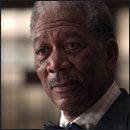
So while Morgan Freeman's comeback was certainly snappy, actual executive would gladly go through the tedium of filling out HR forms and letting the bureaucracy slowly grind out the termination process, instead of seizing the opportunity for a clever spontaneous firing. Despite what their name would have you believe, firings are best served cold.
You Wear Either a Suit or a Uniform

The Myth:
Not only does Hollywood have a baffling idea of how most people work, they also seem to have a disproportionate idea of what most workers wear. There's plenty of high-ranking characters wearing suits: Wall Street's Gordon Gekko, American Psycho's Patrick Bateman, Bruce Wayne, whatever Richard Gere's character was named in Pretty Woman, the list goes on.

Apparently his name was Edward. An obvious Twilight rip-off.
Meanwhile, blue-collar workers wear uniforms even if they manage the plant. Office peons get to wear a tie just like the boss, but they must have their forearms exposed for at least part of the workday for some reason.

Everyone who works for a "company" has to wear something restrictive. If anyone goes to work in shorts or jeans, they're a surfer, an artist, an off duty or undercover cop or a stunted man-child hacker.

Mix and match two casually dressed professions and your job is done: The Point Break law of screenwriting.
The Problem:
In real life, 55 percent of workers report that their workplace has no dress code, and tech companies in particular commonly have workers of all ages wandering in at 10 or 11 a.m. wearing shorts and sandals. Not little quirky companies, but giants like Cisco, Google and Microsoft.

Microsoft workers on the company bus going to their office near Seattle. No suits, but you may be required to wear flannel once a week.
Companies have even started hopping on board a trend where they encourage their employees to wear shorts in order to save money on office air conditioning in this economic crunch.
Yet you would probably be hard-pressed to name a movie where a well-adjusted 9-to-5 worker and father of two shows up to the office in a T-shirt.
Any Stressful Office Job Revolves Around "Presentations" and "Accounts"

The Myth:
Watch any movie where a character's company duties are in conflict with something else (family, finding love, being a good person) and you'll almost always find their source of stress is a "big presentation" or an "important account." Maybe they need to develop a campaign for Nike (What Women Want) or make a big presentation on a merger plan (RV) or land an important client (Dinner for Schmucks).

Sometimes we get so hung up on Mel Gibson's anti-Semitism that we forget about his misogyny.
The reason Jim Carrey's character in Liar, Liar fails to spend enough time with his kid is because he's always got an important case to get to, and a important client to coddle. Sarah Jessica Parker's greatest challenge to finding time for family in I Don't Know How She Does It is having to dash about pitching an important deal about retirement funds.

She is standing in front of five computer screens because she is five times busier than you slackers.
The Problem:
But seriously, how many of you out there have a job that constantly revolves around big presentations and landing important accounts? Don't most of us have jobs where we have to process X number of records a day, or fix cars, or process claims, or ring up customers, or answer calls? Jobs where we don't have one really big thing to do, but just a set of duties we carry out every day.
Hollywood can't imagine those kinds of jobs being stressful enough to cause a dramatic career-family crisis, but they easily can be. Is the job tearing the main character away from his family? Maybe his company just laid off a bunch of claims adjusters, and as one of the few remaining, he has to work double the hours. If he's an accountant, maybe it's tax season. The average overworked person who needs to rethink her priorities isn't someone who's moving from exciting presentation to exciting presentation, she's just a person who's got too few hours.

All this lady has to do is go through all her case files and the files of her coworker who just got laid off. Why would she be stressed?
Even if they need a plot point where the character has to get something done by a specific date, we all have those. They're called deadlines. The end of a project or a quarter, or just some arbitrary deadline your boss sets, which works great for a plot where the workplace is supposed to be oppressive and unfair.
So why is it that Hollywood thinks clients and presentations are what the face of overworking looks like? Well, because that's what it's like in Hollywood. Work there is always about a big project (a film), or a big presentation (a pitch), or a big client (for agents). That's what being busy and stressed out looks like to them.

Their experiences pitching projects to studios gets translated into an advertising executive character trying to sell a campaign or slogan to clients. After all those sleepless hours they've spent getting a movie ready to put on the silver screen, they'll naturally invent a character frantically putting together a flashy Powerpoint to project in the boardroom.
They've managed to translate their experiences into the settings most people work in without translating them into the way most people actually work.
The Board of Directors Runs the Company Day-to-Day

The Myth:
Almost every movie about corporate shenanigans has got a board of fat old white men in business suits who apparently meet every day to discuss what the company should do. This is supposed to be the board of directors.

Richie Rich's board of fat old white men.
The Problem:
While real life boards of directors have a lot of power -- they can hire and fire the CEO -- they're more like high level advisers who make decisions on really big, long-term things, like whether to sell the company, not managers who make decisions on how many nuts the company should add to its candy bars (Richie Rich) or who approve each individual researcher's project (Rise of the Planet of the Apes).
They meet about six times a year, some more, some less, but certainly not every day, as movies like Meet Joe Black seem to imply.

Meet Joe Black's directors seem to commute to the company every day, just like the peons beneath them.
In fact, there's such a low level of actual commitment required to sit on a board of directors that people commonly sit on multiple boards at the same time, which requires a pretty large metaphorical ass. One of the largest symbolic asses in the United States belongs to Susan Bayh, wife of Senator Evan Bayh, who in 2007 sat on no less than eight different companies' boards at the same time.
Multiple board-sitting leads to an interesting phenomenon called "corporate interlocks," a sort of degrees-of-separation thing where tons of companies are connected to other companies because either one person is sitting on both of their boards, or two directors from each of the two companies sit together on the board of a third company.

Unfortunately Kevin Bacon is not on any of the boards, so we can't play that game.
As you can imagine, directors are picked pretty often for name recognition or connections (we'll let you figure out what kind of connections they're picking the senator's wife for) and aren't expected to do anything meaningful as far as decision-making.
They're not people who actually manage the nitty-gritty tasks of a company so much as celebrities dropping in on the African orphanage they founded a couple of times a year. If they were to say they've decided all the children need to wear fruit hats, someone would promptly put in an order for fruit hats and take care of it, but they wouldn't grill the celebrity on each article of clothing each child should be wearing, or their meal schedule, or ask them to break up a fight.
All 9-to-5 Jobs Are Soul-Sucking Prisons

The Myth:
There's no shortage of movies showing contempt for ordinary 9-to-5 office jobs -- Wanted, Office Space, American Beauty, The Incredibles, The Matrix. The characters always discover that the only way to find happiness is to break out of that job and pursue the special thing they were meant to do (save the world, become an assassin, leer at teenage daughter's friend).

Neo isn't just escaping the agents that want to kill him but also those drab, orderly clipboards.
Which should come as no surprise. These films are being written by Hollywood screenwriters and made by Hollywood directors, many of whom probably would wither away and die if trapped in a 9-to-5 job and did find happiness and success by turning their backs on that. And there are plenty of other people out there who are genuinely unhappy in a cubicle and would be well-served by going to culinary school or starting a farm or pursuing their dream of being a dog groomer to the stars.

But don't quit your job to be a superior douche or whatever the hell Kevin Spacey was doing in American Beauty.
The Problem:
But a lot of these films imply that this is true for everyone in such a job. That these jobs are by their very nature a prison, and anyone who is in one must be having their soul drained daily and deserves pity. Even if the filmmakers don't mean to say that, that's what people are taking away. It's very likely you've met someone who said they "never want to work in an office," possibly citing Office Space as their impression of what it's like. For a lot of teenagers in particular, who understandably have no office experience, movies and TV are their only source of what office life is really like, and those media tell them that it's a depersonalized hell where they're just a number who fills out forms every day.

Or TPS reports or whatever.
Never mind that the animators at Pixar and DreamWorks work out of cubicles. Those people, as well as the programmers at tech start-ups, might zip around on Razor scooters, but they park those scooters in their cubicles and use them to zip to the shared copy machine.
And even if you're not at a particularly hip or high-tech company, you can still be happy with your "office drone" job. A 2007 job satisfaction survey showed that people in such cubicle-farm professions as "office supervisors" and "security and financial services salespeople" were among the top 12 most satisfied out of 198 professions.

Just because she looks boring doesn't mean she's not happy.
Half of all accountants, the poster children for boring 9-to-5 professions, reported that they were "very satisfied" with their jobs. On an interesting (depressing?) side note, looking at the "general happiness" rankings, it looks like "amusement and recreation attendants" apparently all wish they were dead.
Another survey of university faculty members showed that people working in your boring, conformist subjects like science, humanities and business were near the top of the job satisfaction list, while those in "visual and performing arts" -- your quirky individuals following their dreams -- were tied for last.

Or they might have been hipster art students responding that way so that the results would be ironic.
Now, we're not saying that everyone ought to be happy punching a clock in a cubicle farm, just that plenty of people out there are pretty happy doing it. Maybe we need movies that celebrate people leaving a suffocating job to find their true destiny without shitting on all the people who are quite happy in their jobs. Maybe they're not mindless drones who are too timid and conservative to pursue greatness. Maybe the job is just an easy paycheck to them, and they really find their meaning in life from their family or from working on a life-size replica of R2-D2 when they get home.

And THEN bringing it to the hospital to cheer up sick kids.
For movie examples, special thanks to posters Bakudai, werrior, Gishface, FuriousAngel, EFHRK, BanditThunder, 8_foot_dwarf, SakiPuppet, Optimist With Doubts, easilyconfused, BebopZaibatsu, jamiec, Phonz, guano77, Remington and LeCompte of the Cracked forums.
For more issues Hollywood can get right, check out 5 Ridiculous Gun Myths Everyone Believes (Thanks to Movies). And see why every trailer is the same in A Trailer for Every Academy Award Winning Movie Ever.
And stop by LinkSTORM because it's good to treat yourself during the holidays.
And don't forget to follow us on Facebook and Twitter to get sexy, sexy jokes sent straight to your news feed.
Do you have an idea in mind that would make a great article? Then sign up for our writers workshop! Do you possess expert skills in image creation and manipulation? Mediocre? Even rudimentary? Are you frightened by MS Paint and simply have a funny idea? You can create an infograpic and you could be on the front page of Cracked.com tomorrow!
