5 Useful Organizations You Think Are Evil (Thanks to Movies)
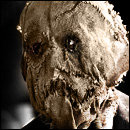
If there's one thing that Hollywood is crazy good at, besides explosions and anorexia, it's making sure the audience has an easy time of separating the good guys from the bad guys. No villain, no drama. No drama, no cocaine for the producers.
Unfortunately, Hollywood does such a good job that we forget that in real life, some organizations are, well, kind of the good guys. Consider ...
Insane Asylums

As Seen In: One Flew Over the Cuckoo's Nest, Girl Interrupted, House on Haunted Hill, Shutter Island, Nightmare on Elm Street, Batman Begins, 12 Monkeys
What Hollywood Thinks They Do:
Good luck if you're a mentally unstable character in a Hollywood movie, because you're in for a rough patch. You're either going to be held against your will and tortured by malevolent nurses with electroshock, or your asylum is straight haunted. Either way, your mental wellness is no one's priority.

Also, finding cigarettes can be a bitch.
In One Flew Over the Cuckoo's Nest, an un-crazy Jack Nicholson is committed to an insane asylum to serve out the rest of a prison sentence. He thinks he's going to get a cushy rehab before flitting back out into the real world, but he finds the place is even more oppressive and humiliating than an actual prison. Thanks to the brain-numbing drugs and daily humiliations distributed by Nurse Ratched, the patients end up crazier (or deader) than they were when they first arrived. Jack winds up with a chunk of brain cut out against his will.
But even that isn't as bad as the asylums in horror movies. Or the one in Batman Begins, where a crazy administrator gives patients hallucinogens that induce nothing but bad trips. Or the one in House on Haunted Hill, which was once the home of a diabolical doctor who performed Mengelesque experiments on his patients. Or Shutter Island, where we won't actually tell you what happens, but just know an insane asylum is involved and it is terrible.

Do not watch this movie on drugs unless you've got a mean hankering for PTSD.
The rest? All haunted.
What They Actually Did:
There's no question that back in the old days, there was some brutal treatment of the mentally ill in these facilities. But you also have to stop and ask: If there were no such thing as asylums, what's the alternative? What happens to the people too mentally ill to care for themselves?

They make tens of millions of dollars?
We know the answer, because about 80 percent of all the asylums in the country were closed down between 1955 and 1985, which left about 400,000 patients without care. The answer is sleeping on the park bench of every city you go to: We now call these people "the homeless." This is why about 40 percent of the homeless are people with mental illnesses.
The backlash against asylums started in the 1960s, when the government A) realized it was expensive to run group homes, and B) the world found out about a hellhole called Willowbrook. Staten Island's Willowbrook was an institution for mentally retarded children, and we're not going to lie to you, it was bad. Way bad. Robert Kennedy called the place a "snake pit," and it would have actually been better had it been filled with snakes.

"Dr. Jonesss, when would you say you started to fear commitment?"
Geraldo Rivera did an expose that showed patients rocking themselves on the floor, naked and surrounded by their own poop and pee. Naturally, the whole country freaked out that our most vulnerable children were being treated this way, especially after we found out that doctors intentionally gave the kids hepatitis to study its effects. So, yeah, Willowbrook was really bad.

Not quite Geraldo Rivera bad, but still pretty awful.
So, the good news was that a really evil place was shut down. The bad news was that people kind of got the impression that all asylums were as bad as Willowbrook, and they had no problem shutting down other group homes as well. The other bad news was that it turned out most families weren't all that interested in a lifetime of caring for their mentally ill, and those former patients usually ended up on the streets, which led to the huge spike in homelessness that Comic Relief has been talking about for decades.
But hey, at least the streets aren't haunted.
Motorcycle Gangs

As Seen In: Sons of Anarchy, Rat Race, The Terminator, Mad Max, The Wild One, Fletch Lives, Weird Science
What Hollywood Thinks They Do:
If you're in a movie and you see a motorcycle gang, run! Because you don't want to be around for all the rape and murder that will inevitably get under way. Like on the series Sons of Anarchy, which features a gang of bikers who sell illegal guns and run a protection racket. Not only do they beat up, shoot and kill people every other week, they also fight with rival biker gangs over territory, as if the whole country is just one big mess of outlaw biker hooligans or something.

Above: Voting.
We're so used to seeing biker gangs as the bad guys that we take the whole cliche for granted. Of course the villains of Mad Max are barbarians on motorcycles. Of course a lady biker gang runs a family off the road over a minor misunderstanding in 2001's Rat Race. In the movie world, stuff like that is how bikers get their kicks.
What They Actually Do:
There is such a thing as outlaw biker gangs, just as there is such a thing as outlaws who like to drive souped-up cars. The federal government claims that about 20,000 bikers are members of "outlaw motorcycle gangs," which usually means they use their clubs to traffic drugs. Sure, it sounds like a big number, but considering that the largest group of registered bikers (the American Motorcyclist Association) claims 25 million members, that'd give you less than one outlaw biker in a thousand. Which means that the 999 others are more likely to be regular guys who just have a thing for leather and love the feel of the wind in their mullets.

"I actually drive a Rascal. But I still pack a MAC-10."
So what do groups like the AMA do if they're not raping and pillaging? They raise millions of dollars for charity every year. Here's a list of their main functions:
1. Providing insurance benefits to members
2. Organizing rallies and educating riders on driver safety
3. Donating close to $8 million a year to charity
We suppose it's just not as exciting to portray motorcycle clubs as they really are -- composed almost entirely of regular guys who like motorcycles and want to hang out with other guys who like motorcycles. But that's all it is; they have rallies where people show off their bikes and ... well, that's about it. That and the charity.

"Y'all best donate to Amnesty International, 'fore I skin your face with a tire chain."
The Pound

As Seen In: Lady and the Tramp, Hotel for Dogs, The Shaggy D.A., Fluke, All Dogs Go to Heaven
What Hollywood Thinks They Do:
In the world of movies, the pound is basically a jail for dogs, only every animal is on death row and being someone's bitch isn't such a bad thing. In the kids movie Hotel for Dogs, not only is the pound built like an actual prison, with an iron fence and guards, but the people who work there seem to hate animals with a passion. Halfway through the movie, dozens of dogs are sent to the pound, at which point the pound workers brag about euthanizing them the next day. No waiting period, no trying to get them adopted, no remorse.
So maybe it's less like a prison and more like a freaking concentration camp.
What They Actually Do:
First of all, the pound actually gives you a place to look for your dog if it gets away, so you don't have to wander the streets like a hobo canine detective. In fact, 30 percent of dogs that are brought into shelters end up getting reclaimed by their owners. Of the leftovers, half get adopted by people who aren't out to kill animals at all.
Obviously there is a limited capacity to care for the animals, and eventually they have to be put down (though most states have no-kill animal shelters now, which are shelters that will never put down the animals they take care of, no matter how long it takes for them to get adopted).

"I've been here since the Nixon administration!"
We realize that in a movie starring, say, talking dogs, it makes sense from the screenwriter's perspective to make the dog catcher and the pound the villain -- a whole lot of dogs do go there to die. But what makes the portrayals in these movies so grossly unfair is that these facilities are run by the people who love animals the hardest. They're not exactly high-profit operations, and who else is going to take a job at a place where they get paid next to nothing to clean up dog poop?
It would be like a homophobe applying for a job as a roadie on the traveling production of La Cage Aux Folles. It just doesn't happen.

Pharmaceutical Companies

As Seen In: Resident Evil, The Constant Gardener, The Fugitive, Leverage, House
What Hollywood Thinks They Do:
If a movie or TV show features a drug company, you can bet your medicinal marijuana that it's doing one of four things: performing illegal experiments on people, charging an arm and a leg for treatments, lying about a drug's effectiveness or straight murdering anyone who stands in its way.

"And so, by murdering all of our customers with poison, Big Pharma can increase market penetration by 17 percent. Or something. I'll be honest: We've been dipping into the medical marijuana stash pretty heavily this week."
For example, in The Constant Gardener, African children are used as guinea pigs for tuberculosis drugs with known harmful side effects. And in The Fugitive, Harrison Ford spends the entire movie trying to figure out who framed him for his wife's murder, only to learn the whole shebang was set up by a pharmaceutical company that was about to release liver-damaging drugs. Because Ford discovered they were bad news, and apparently he was the only doctor who tested them.
A drug company is apparently the main bad guy in the new Wonder Woman. And don't get us started on the Umbrella Corporation, where pharmaceutical research is all a cover for... making zombies?

Age-defying zombies.
What They Actually Do:
Let's not get carried away here. Corporations don't care about you. So while pharmaceutical companies cure diseases (like, all the time) they don't care about your well-being any more than, say, the Starbucks corporation.
But they don't care about you any less, either.
They make good bad guys because we need drugs and drugs are expensive, so withholding drugs makes us think of them as heartless bastards. You figure that they know Grandma needs her heart medicine, so they know she'll pay through the nose for it. So it's like extortion! Our pain and sickness is their blank check!

"Jenkins, that slide show of dead grandmothers was fantastic. I think I speak for the entire board when I say my cock is hard enough to slice an apple with."
Yet ... drug companies aren't making all that much money. The world's largest drug company, Pfizer, is taking a beating and shutting down factories to cut costs. In fact, we hope you weren't invested too heavily in Big Pharma, because you're about to lose. Big time. Then you have a company like Hollis-Eden, which pumped over $100 million into medicine to combat the effects of radiation exposure and never made a profit. It eventually fired its CEO and started over with a new name.
OK, but maybe they're still crooks, but incompetent crooks? Or their evil CEOs are stealing all the money?
No, the problem is that making new drugs is ludicrously expensive. It may be true that your $300 bottle of pills has only $12 worth of chemicals in it, but behind that bottle is millions spent on researching, developing and testing the drug, and the bills from countless drugs that never made it to market despite all that money that was poured in (because only at the end did they turn out to be unsafe or ineffective, etc). Then they have to get everything they make through the FDA, market it and get doctors on board prescribing it to patients, and after all that there is still the potential for massive financial failure once their patents are up and anybody can make a dirt-cheap generic.

"Pfizer's new drug sends dolls tumbling off of comedically large waterfalls for half the price."
Again, please don't storm into the comments with "Oh, go cry us a river! Nobody made them get into this business!" Big Pharma is in it for the money, and we're not claiming otherwise.
It's just that they seem to suffer from the same paradox as the police -- we get more mad at them because what they're doing is more crucial to our safety. When's the last time you saw a movie where the villain was, say, a fast-food chain? It's as if because what they're doing is important, they can never do it to our satisfaction.

"Thanks for curing hundreds of diseases that have ravaged mankind since time immemorial ... assfucks."
Actually, we can think of at least one more group in the same boat ...
Insurance Companies

As Seen In: The Rainmaker, The Incredibles, As Good As It Gets, Leverage, John Q, The Island
What Hollywood Thinks They Do:
"Fucking HMO bastard pieces of shit!"
"Actually, I think that's their technical name."
-- Helen Hunt and Harold Ramis in As Good As It Gets

If you've been hankering to see Egon with a double chin, this is the film for you.
In Hollywood, insurance companies take your hard-earned cash, throw it into bags with literal dollar signs on them and then punch you in the junk when you ask for help with your medical bills. Like in The Rainmaker, where Matt Damon plays a lawyer suing an insurance company that won't pay for his client's cancer treatment. He manages to find a former employee who testifies that the company's official policy was to initially deny every single claim it received, whether it was legitimate or not, on the basis that most people eventually just give up trying.

Also known as the Eddie Murphy approach to coverage.
And then there's the Best Picture Oscar nominee As Good As It Gets, in which Helen Hunt's insurance claim is denied because her kid has asthma (the source of the above quote). Or the TNT series Leverage, where the main character's son dies because the insurance company that he works for won't pay for his kid's cancer treatment. And just to make sure that kids grow up fully believing insurance companies are the devil, the dad in The Incredibles works as an insurance agent but breaks the company's rules to actually help customers. And that nearly gets him fired.
What They Actually Do:
They cover 13 out of every 14 claims filed. So there's that. More than half of all denied claims that are appealed result in coverage being reinstated, often because it was just an issue with the paperwork.
And no, insurance companies are not rolling naked in cash any more than the drug companies are (profits by percentage are in the low single digits). Again, they're not a charity, but they're not robbing people at gunpoint either.

"If you're going to file a claim, we're damn well going to make sure you earn it."
Once more, it's easy to hate insurance companies, because the consequences of their business practices are much more devastating than with other companies. If a bank denies you a loan, it sucks, but nobody dies. And during the health care debate in the U.S., horror stories cropped up about insurance companies inventing reasons to cut off treatment to Grandma to save a few bucks.
But you can't lose sight of this: The thing that we really want insurance companies to do -- pay for everything every deserving sick person needs, ever -- is physically impossible.
Transport yourself to an alternate dimension where every insurance company employee is 100 percent honest and 100 percent compassionate. We're talking a company whose cubicles and board of directors are both full of Mother Theresa. By the sheer, mathematical realities of the insurance industry, they will still find themselves denying claims to poor people who badly need care.

"I'm sorry, but your plan only supports curing blindness in one eye. And the palsy cure is considered an elective miracle."
This is why during that health care debate, the opposing sides were both able to cite coverage-denial horror stories from every single system on Earth. Horror stories will always be part of the equation. It's as simple as this: We want insurance companies to say money is no object when providing coverage, but we don't say the same when paying premiums. That creates a gap into which sick people fall and die.
Dammit, are there no easy villains left? We bet if you look closely at its books, Umbrella even had a really good reason for creating all of those zombies.
For more on Hollywood's struggle to find good villains, check out yesterday's article on 6 Groups Who Don't Work as Movie Bad Guys Anymore.
For more folks we should probably ease up on, check out 6 Historical Villains Who Were Actually OK Guys. Or learn about some people who have their official Bad Guy cards in 5 Real World Criminals Who Were Certified Supervillains.
And stop by Linkstorm to see why 4chan isn't so awful. (Just kidding -- it's totally awful.)
And don't forget to follow us on Facebook and Twitter to get sexy, sexy jokes sent straight to your news feed.
Do you have an idea in mind that would make a great article? Then sign up for our writers workshop! Do you possess expert skills in image creation and manipulation? Mediocre? Even rudimentary? Are you frightened by MS Paint and simply have a funny idea? You can create an infograpic and you could be on the front page of Cracked.com tomorrow!
