5 Ways Stores Use Science to Trick You Into Buying Crap
A big chunk of the world economy runs on human weakness. Peer pressure, vanity, insecurity, the fact that we just cannot resist the sight of melted cheese -- all of these will make us fork over our cash. And really, we're fine with that.
But what you may not know is that there are some other, much weirder scientific principles that factor into what you buy. You might not know about them, but the people selling you things sure as hell do.
You Move in Predictable Patterns

You step in the front door of your nearest chain grocery store. What's immediately to your right? At Wal-Mart, Kroger, Whole Foods and countless others, that's the fresh produce section. Some of them have their baked goods over there, too. And at those stores, the doors and registers are positioned to steer you that direction when you walk in.

This is the only sheep-based image we'll use this article. Promise.
This is because, after years of analysis of how humans move in a store, they've found that we're as easy to predict as animal migrations. Studies show that Americans like to shop counter-clockwise. Over time, they've found that stores that cater to this by putting the door on the right do better business than stores with the door in the center or, worst of all, the left.
Grocery stores are laid out to lead you around a set path you didn't even know you were following. Knowing you'll head right, they place the freshest, best-looking stuff they've got right in your path. Not the most popular stuff, mind you -- they know most of you didn't run to the store at midnight to buy lettuce, and they know that if they put the Doritos to the right, you'd grab them and head to the counter. Instead, they lead off with the produce, which tends to make the best psychological impression on you. The idea is that you'll associate the rest of the store with the freshness, bright colors and nice smells you got from the nicely laid-out produce.

"Boy, those fresh carrots sure did help me forget that everything in this aisle has been dead for weeks."
After they hit you with the brightly colored lemons, apples and oranges, they schedule your predictable counter-clockwise path so that different products show up at the exact time that will make you most likely to buy. The stuff you actually came for -- cola, chips, milk, eggs, sliced cheese, cookies -- doesn't show up until the end, once your cart is chock full of stuff you didn't know you needed when you walked through the automatic doors.

And sweet lady Boxed Wine.
Remember, the goal is to keep you in the store as long as possible, and to make you pass as many shelves as possible. You can't buy the new nacho cheese flavored Hamburger Helper if you don't know it exists.
Why It Works:
We know that rotational patterns like this are common in herd animals, like elephants, but nobody is quite sure why humans do it. Studies have shown that British, Australian or Japanese shoppers tend to go the opposite way (clockwise) through the store, so some have speculated that it's based on the side of the road you're most used to driving on. If you drive on the right, you head right and follow the wall around.

Freaking barbarians.
But whatever causes the impulse, it's really strong. A store in Philadelphia wanted shoppers entering their store on the left, and to move clockwise. They forced customers to enter using the left entrance, only to see them immediately head to the right once inside. The managers then put down several pallets of goods in the way, thinking shoppers would just shrug and turn left and continue shopping. They were wrong. Customers struggled by the blockade to the right, shoving their carts through, demanding to move in a counterclockwise fashion, "as determined as salmon swimming upstream."
You Can't Resist Shiny Things

Quick: what does this car ...

... and this diamond ...

... have in common?
They're both shiny, and they're both expensive. Those things are not coincidental, and retailers know it. It's almost a physical response -- humans automatically assume something that gleams is fancy and valuable. Hell, most people subconciously think their car runs better after it's been washed and/or waxed. "There's no way this can be the same shitty 1988 Geo Metro I was driving before! Look how shiny it is!"
Likewise, go into any high-end shopping mall, and every surface you look at will be gleaming its ass off:

Don't you just want to lick every inch of this?
A company called Envirosell Inc. (a marketing consultant that has worked for Wal-Mart, The Gap, The U.S. Postal Service and many others) did a study on this and found that pedestrians automatically slow down for a shiny store front. We can't help it.

Why It Works:
Well, for one thing we know that it isn't just humans -- birds like shiny stuff too (you even hear stories of them stealing jewelry). Researchers came up with an interesting theory back in 1990, saying that it's due to an ability that evolved to help us find clean, drinkable water in the wild, back when the species had to worry about that sort of thing.

This was during the "shitting in bushes" phase of our evolution.
In their study, they showed volunteers four pictures of water of varying shininess. The shiniest was selected as the best in terms of quality, especially by women. In part two of the experiment, Researchers noted that infants would lick or put their lips on mirrored surfaces. Given the choice between a regular white plate and a reflective plate, the majority chose the reflective plate to try to ram their face into. Lay a shiny plate on the floor, and the kid will actually get down like he's drinking from a pond, licking the center of it.
None of the infants tested did this with the white plate, they were just gumming the edge instead.
So, the theory goes that early humans who had an eye for gleaming surfaces in the distance were able to pass on their genes, and today all of us get a little charge when we see light reflected on the surface of something.

Shopping Gets You High

This holiday season, like every one before it, will feature multiple stories of a stampede at a department store that was featuring "door buster" sales the morning after Thanksgiving. Hundreds of crazy people lining up in the predawn hours, not to buy something rare or even valuable, but just the same shit they could have bought the day before. The act of shopping itself, the high they get from it, is what's they're there for. And stores take advantage by turning it into an adrenaline-charged event.

ROCK'N'ROLL!
We love to mock people like this, the rabid shoppers and women addicted to buying shoes, but let us ask you guys something: do you play video games? Tell us you don't have multiple games in your collection that you've bought but never played. Surveys show more than 10% of you have games you never even took out of the shrinkwrap. There are entire websites devoted to helping gamers work through their backlog of purchased but unplayed games. Why? Because gamers simply like buying games, often more than actually playing them.

And they like bitching about games on the Internet most of all.
Look around your place. How many of your DVD's have you actually watched? Do you own that 19-season Simpsons box set? Are you actually going to sit down and watch all 110 discs, or did it just seem like a cool thing to buy, for the sake of buying it?
Why It Works:
Dopamine. Sweet, sweet dopamine. This is the stuff your brain produces in response to sex, recreational drugs, or a really good cheeseburger. It serves all kinds of functions related to behavior, cognition, movement, and other important things like keeping the drool inside your mouth and lactating. Can't forget lactating.
More importantly, dopamine is also the gatekeeper to rewards and punishments, a system it uses to motivate us to, among other things, explore, learn and acquire new stuff.
So not only does shopping satisfy the "new stuff" need but research shows the feeling intensifies when you visit a new store or go out of town -- for example, shoppers are more likely to buy something expensive and stupid when they're on vacation. Not for the expensive and stupid thing, remember, but for our dark master, dopamine.

Otherwise known as "the only reason life isn't constantly horrible".
There is a way to beat the system; it's actually the anticipation of the purchase that gives you the fix, not the purchase itself (though simple window shopping isn't enough). Though if you can figure out how to truthfully anticipate buying something without actually buying it, drop us a line at You-Are-In-The-Matrix-And-Are-The-One@cracked.com.
You Can't Comprehend Numbers

The headlines after Steve Jobs unveiled the iPad mostly focused on how inexpensive it was. Only $499! That's a good price for a ...

SHINY.
... wait -- for a what? The thing didn't exist before that day. That's actually more than a netbook costs. It's more than a phone. So how did we decide $499 was a good price? Good question.
Also, why are we still doing the $_99 thing on our prices? Instead of just saying "It'll be five hundred dollars" we still frame it as $499, even when addressing a crowd full of educated, savvy consumers? As if we're too stupid to realize $499 is only one dollar less? We've surely figured that out by now, right?

Actually, no.
Humans are really bad with numbers, and it manifests itself in a whole bunch of different ways in the world of retail. It's the reason you will patiently wait for a sweater to go on sale so you can get it for 10% off, then buy it with a credit card and wind up paying more than the original retail price once the interest is figured in. It's the reason we'll take a longer mortgage on a house in exchange for a lower payment, because we can't wrap our minds around the idea that the longer mortgage means over time we're going to pay $50,000 more for the exact same house.

By the time you actually own this place the roof will have burrito stains.
So when it comes to setting prices, sellers know that it's mostly up to them to frame for us what the price should be. In the biz they call this price anchoring. So you'll go to Best Buy and see a new TV that's 25% off of the "Regular Price" or "MSRP." Then you Google around and find that what they're claiming is the "regular price" is in fact not the price, anywhere. You're saving 25 percent over an imaginary number.
As for the iPad's pleasant surprise price of $499? That was due to rumors leading up to the launch that it would cost $1,000 from sources like Apple Insider. Then in the unveiling, Jobs was sure to mention how everyone expects the device to cost a thousand bucks. He plants that idea in your mind and suddenly $499 looks like a steal.
Why It Works:
Picture three golf balls, lined up in a row.
Now picture a box full of 4,258 golf balls.

Not only can you not see in your head what 4,258 balls looks like, you probably don't even have a ballpark idea of how big of a box it would take. Our brains just aren't equipped to handle numbers instinctively. From an evolution standpoint, it's no surprise -- complex numbering systems weren't even invented until 5,000 or so years ago and sexual selection doesn't exactly favor math geeks, if you know what we mean.
The $499 vs $500 thing is a perfect example. Even though you know on a conscious level that there is no important difference between those two numbers, your perception of them is radically different because your brain just is not very good at equating those digits with a real world quantity. One study suggests it's because your brain is reading the price like it reads everything else: left to right. It puts a higher value on the first thing we see so no matter what comes after that, you still wind up relating it to the first digit. No matter how much you tell yourself otherwise, $499 still registers as "in the $400 range" rather than "essentially $500."
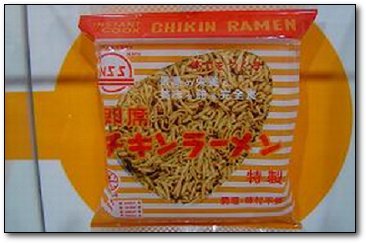
Or "enough Ramen to get you through graduate school".
But to really drive home how much we suck at math, this study found that the harder we try to keep track of what we spend, the worse we are at it. Budget-conscious shoppers who tried to track every penny in their cart wound up wrong by up to 20%. Why? Because the .99 thing makes doing the math almost impossible. Quick, how much does it cost for three cans of beer at $2.00 each? Six bucks, you knew that instantly. How much does it cost for three cans at $1.99 each? Most of you have to get out a pen and paper.
Strangely, the shoppers who weren't watching their budget actually did a better job of estimating their bill. They tended to just shrug and round the price up instead of doing the precise math and getting confused. Yes, they became better at math by admitting they sucked at math.

Hooray for ignorance!
Your Tastes Can be Tricked by Brand Recognition

Brand loyalty makes perfect sense, to a degree. If you were happy with your last Toyota, it's perfectly reasonable to buy another car from the same people who built that one. Even the Apple fanboys got to where they are by, once upon a time, buying an apple product and having a positive experience with it.

Probably not the Pipp!n.
But then there's a point where the sight of a label starts playing tricks on you, overriding any actual enjoyment you get from the product. And no, we're not referring to those vapid brand-obsessed Sex and the City types always talking about their Gucci shoes and Prada jockstraps -- they're often sporting labels to impress other people. That's more of a peer pressure thing.
No, here is where it gets weird:

Back in the 1970s Pepsi built an entire ad campaign around taste tests they called the Pepsi Challenge. They'd simply pit their sweet diabetes water against Coca-Cola's and asked people which one they preferred after sampling both in a blind taste test, where the labels were hidden. Most Americans chose Pepsi, so the campaign was a complete success and Coca-Cola went down in a burning heap of sugary black syrup, never to be heard from again.
At least that was what was supposed to happen. Instead, Coca-Cola went on outselling Pepsi around the world, to this day, despite people admitting repeatedly that they liked Pepsi better.

Even worse, in a test where they could see the labels, the results were completely reversed: people loved Coca-Cola, when they could see the familiar logo and red can. This became known as the Pepsi paradox.
Likewise, in taste tests people will consistently prefer a $90 bottle of wine to a $10 bottle, even if the only difference is the price tag. In China, they have a very expensive beer ($44 a bottle) that if you were to taste it you might recognize as Pabst Blue Ribbon, a dirt cheap beverage westerners enjoy only ironically. They just stick a gold label on the bottle and jack up the price. And the Chinese pay it, because the label overrides their sense of taste.

Presentation matters.
Why It Works:
Basically you're involving separate areas of the brain, one that recognizes sensations (like taste) and another that does thinking and categorization (like remembering which brands make the good stuff). The second one can override the first, if you create a positive enough association with a brand or label.
Scientists figured this out by redoing the Pepsi challenge with the added fun of an MRI machine scanning volunteer's brains.

In the test without the labels showing, researchers noticed Pepsi stirred up the ventral putamen (brain chunk related to reward) more than Coke did. With the labels revealed, however, the medial prefrontal cortex (brain chunk related to, among other things, figuring crap out) suddenly got in on the action, drawing on the implanted knowledge from countless ad campaigns that Coke is Good and You Like It. It overruled the part of the brain that dealt in mere sensation. Yes, they can in fact brainwash you into liking something.
Thankfully, science went even further and found a solution. According to another study, those with damage to their ventromedial prefrontal cortex (brain chunk related to emotion) lose their brand loyalty and actually pick Pepsi even after seeing the labels.

In a few seconds, he won't care that he's using a Black and Decker.
To see how else you're being fooled, check out Dickonomics: How 5 Everyday Businesses Trick You. Or find out which awful, awful customer-type you are, in 8 Customers Everyone Hates.
And stop by Linkstorm to see the shiniest links on the Internet.
And don't forget to follow us on Facebook and Twitter to get sexy, sexy jokes sent straight to your news feed.
Do you have an idea in mind that would make a great article? Then sign up for our writers workshop! Do you possess expert skills in image creation and manipulation? Mediocre? Even rudimentary? Are you frightened by MS Paint and simply have a funny idea? You can create an infograpic and you could be on the front page of Cracked.com tomorrow!
