Rerun: 5 Awesome Sci-Fi Inventions (That Would Totally Suck)
Remember all those Star Trek gadgets you wished you had because they looked so cool? Well, it turns out looking cool is about all they'd be good for.
Here's five inventions that will be available some day ... even if nobody wants them.
Flying Cars
As seen in:
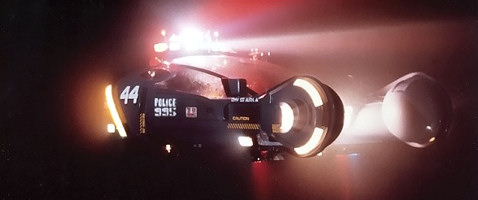
Blade Runner, The Fifth Element, Back to the Future II, Futurama, The Jetsons ... it's actually kind of difficult to list sci-fi that doesn't feature some variation of the flying car.
Why we thought we wanted them:
First, we don't mean some kind of sissy half-plane, half-car hybrid that some people will try to tell you is a flying car. No, we mean real, float off the ground, how the crap is that happening, Jetsons sort of flying cars. Admit it, when you were 7 years old, there were only two things you were sure of: Transformers fucking rule, and the future would be full of flying goddamn cars.
Of course, once you learned to drive you wanted one even more. Every time you're stuck in traffic, you can picture yourself flipping a switch and swooping into the sky, leaving those honking bastards behind. You'd fly straight to work, free as a bird.
Why we were wrong:
Well, guess what: They're not gonna let you do that. People just flying wherever the fuck they want would be a death warrant for every radio tower and power line in the country.
No, you'd have to fly according to a wussified autopilot, along pre-set pathways. Air-roads, in other words. And, once everybody has a flying car ... well, have you ever been driving to work in a city at around, oh, eight or nine in the morning? If so, you'll know exactly how bad traffic can get during rush hour. Now, imagine if there was not just one layer of cars, but there was layer after layer of flying metal death traps over top and below you.

That's not even the worst part. The many people who have tried to invent flying cars over are finding out that every single thing that's bad with cars (cost, safety, etc) is made worse when you try to make the thing fly.
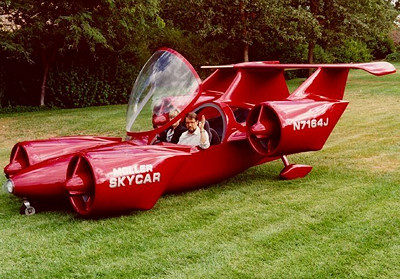
For instance, no matter what kind of engine they invent, a flying car will always burn more fuel than a regular car, especially on short trips (you burn a bunch of gas trying to overcome that gravity thing on takeoff).
Even worse, even a minor crash with another flying car could send both vehicles plummeting to the ground while you scream in terror. Imagine the poor guy on the ground, sitting there at a red light, as a flaming five car pile-up is hurdling down towards him from the sky. If you're not scared yet, try to imagine what they're going to charge you in insurance premiums as a result.
Jet Packs

As seen in:
The Jetsons (again), The Rocketeer, James Bond used one in Thunderball, Boba Fett... too many to count. If you've never heard about and/or purchased a toy featuring a jet pack, you are from the 1800s.
Why we thought we wanted them:
Because every single human wants the ability to fly, pretty much from birth. We're talking the ability to fly, not ride in a thing that flies.
Why we were wrong:
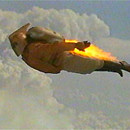
We're going to skip past the obvious point that the Rocketeer here would be left with charred stumps below the thigh, since that exhaust is coming out at around 2,000 degrees.

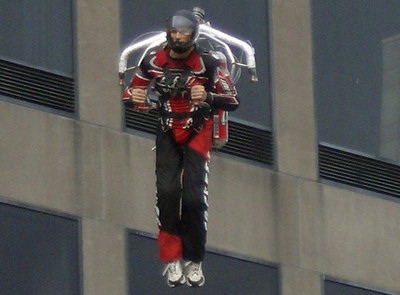
But let's assume they overcome all that and make one that actually works. All those safety issues we have with the flying cars? You've got all that, only without a car around you to protect your fragile body. The only possible method of saving your ass when you crash/fall asleep/run out of fuel is probably a parachute, which means you'd need extensive training on how to land without impaling yourself on a tree branch.
The only alternative would have to be some kind of air bag that instantly inflates around you in an emergency, letting you bounce gently to safety while you involuntarily shout, "WHEEEE!!!" The problem with that, of course, is that we'd be intentionally crashing all the time just so we can do that.
Holodecks
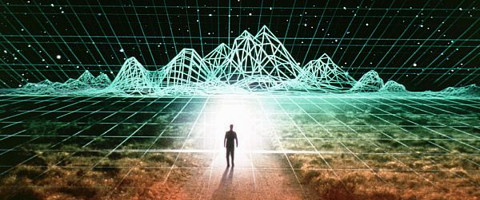
As seen in:
Most people would know the holodeck as being an invention out of the Star Trek series, but they probably took the idea from a Ray Bradbury short story called The Veldt where a family has a holodeck that simulates an African veldt, and then are (predictably) eaten by virtual lions.
Why we thought we wanted it:
The holodeck is just big room, that can simulate any number of environments and/or experiences for the user, and can trick all five senses into believing that it's real. You don't have to hook anything up to your brain, you can walk in and out of it like any room. A room that happens to be full of ninjas and naked women and everything else you don't have in your real life.
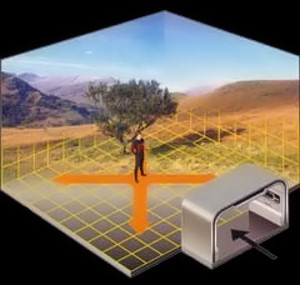
Why we were wrong:
Of course, we here at Cracked were too busy practicing Jujitsu and working on our dragsters to watch something as geeky as Star Trek, but we do know that the dangers of a holodeck were demonstrated in Episode 234 ("A Fistful of Datas", aired November 9, 1992, Stardate 46271.5). This episode proved that if you get shot by a cowboy in the holodeck world, you really die.
Now, assuming the creators of the real holodeck are not completely retarded and they install something that makes it so the simulation cowboys do not shoot real bullets and that the veldt lions don't really eat you (both of these would seem to be first-day considerations in the design phase), there is another problem.
Imagine how you'll react if you're in your holodeck and somebody interrupts you. Say, you're halfway through your chess game with Darth Vader, when suddenly he disappears, Scarlett Johansson is no longer sitting in your lap, and pizza costs money again. You'd find the guy who turned off the machine and snap his damned neck. Dilbert creator Scott Adams jokingly points out in his book The Dilbert Future that the holodeck, "will be society's last invention." It's no joke; once we had it, there'd be no reason to have anything else.
It's not just that it would be addictive; it's that it would literally fill every possible human emotional need and utterly eliminate all motivation to ever do anything ever. Everyone's only goal would be to do just enough work to keep food and electricity coming into the holodeck, to keep those interruptions by reality to a minimum.
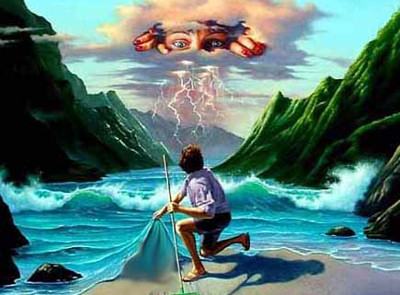
People would stop reproducing, your virtual Scarlett Johansson could have perfect virtual kids who'll never wind up in jail or steal money from you to buy crack. If you get tired of them, tell the holodeck to blink them out of existence. If you're saying that you're a high-minded person who pursues spiritual goals and would never be sucked in by anything as crude as a simulation, hey, they've got a holodeck for you, too. You can sit down to dinner with Plato and Abe Lincoln and Gandhi and Jesus. If somebody yanked you out of that to go work at the post office all day, you'd barricade yourself in with a shotgun.
If aliens showed up to Earth 1,000 years later, they'd find an abandoned planet with ten billion mummified corpses laying on the floor of ten billion dusty holodecks, with huge smiles on their faces.
Teleporters
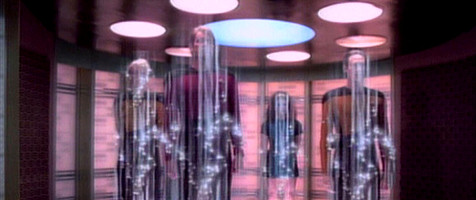
As seen in:
Star Trek, The Fly, countless video games.
Why we thought we wanted it:
Here's a technology that'd make the flying car and the jetpack both look like that retarded Flintstones car you drive with your feet. We're talking instant transport to anywhere, any time. You can live on the beach in Hawaii and live in New York. Sit there in the morning and sip coffee until about five seconds before the meeting is set to start, then step into your transport and there you are, in the conference room.
Why we were wrong:
Many later science fiction writers have declared that a device that can disassemble and reassemble a human molecule-by-molecule would be patently unsafe (the most famous and grotesque portrayal of a teleporter accident came, of course, in the film Spaceballs). But, even if they get the bugs worked out (what method of transportation is perfectly safe, after all?) there is a much larger and much weirder issue.
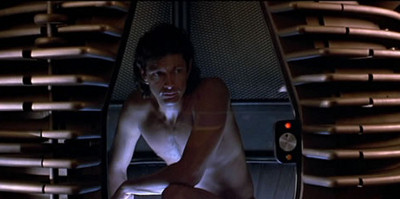
A teleporter wouldn't actually break down your atoms and then shoot those same atoms thousands of miles through the air; even if it were possible, there'd be no reason to do it. It would instead just grab Hydrogen and Oxygen atoms from out of the air and assemble you out of those (one Hydrogen atom is the same as another, after all).
In other words, teleporters would work more like fax machines than mail. It transmits a signal and the machine on the other end spits out a copy. Only instead of a copy of a letter, it's a copy of a person, right down to all their thoughts and memories and here the original is destroyed. This was demonstrated in Star Trek: The Next Generation, Episode 250 ("Second Chances", aired May 24, 1993, Stardate 46915.2) where they failed to destroy the original Will Riker and were left with two of him.
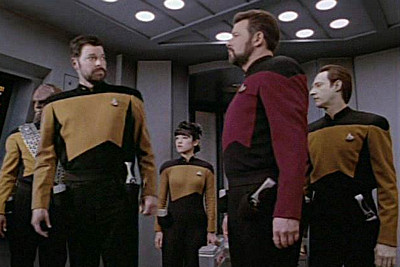
Are you grasping the weirdness of this? The original is destroyed. That means when you step into a teleporter, you die. But, the rest of the world won't know you died, because a copy of you will step out of the other end of the machine. It won't be you, though, it'll be another you that happens to share your memories. To the outside observer the thing will always work fine, and the thing that steps out of the receiving end will think it worked fine. The one person who knows it didn't worked fine, can't tell anyone because they fucking died via total atomization the moment they stepped into the machine.
So, the first time Captain Kirk used the teleportation device to beam down to an alien planet, he was basically resigning himself to an immediate death and hoping that his twin would carry out the mission for him.
Matter Replicators

As seen in:
Again, Star Trek
Why we thought we wanted it:
You're hungry, and you don't really feel like cooking or even going out to get something. Well no need to starve! This machine will replicate virtually any food that you can think of. Or, at least a series of foods that have previously been programmed into the machine.
Not just food, either. Anything. Need new batteries for your remote? Replicator. New pair of shoes? No problem. Forget your girlfriend's birthday? Punch a button on the replicator and it'll spit out a pair of flawless diamond earrings.

Why we were wrong:
Since it's just assembling molecules, presumably it would be cheaper for this thing to make you a pair of diamond earrings than a hot dog, since fewer molecules and less energy would be required. It could print perfect counterfeit money. Hell, punch a button, and it'll crank out a molecule-for-molecule replica of The Mona Lisa.
The bad news is, of course, it would eliminate your job. Your job, and all your friends' jobs, and, well, almost everyone else's. No need for farms or factories or stores. The only people who'd still be working are doctors and the people who make replicators. Oh, wait, you can just have a huge replicator that makes replicators. Nevermind.
It's just as well, even if there were jobs, there would be no way to pay you. You could make bars of gold in your replicator. Yes, we're talking about the utter collapse of the entire basis by which every society has ever existed on the planet.
The end of everything will come on the day when anyone can make anything. Except a flying car, those will still be useless.
