Vintage Carnival Rides Where Safety Was Just Optional
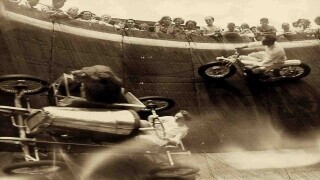
Before seatbelts had personalities and before engineers agreed that bones should stay inside bodies, carnivals delivered a different kind of thrill. The rides were metal sculptures held together by stubbornness and grease, spinning children into positions doctors were not ready to diagnose.
Parents watched while smoking, vendors yelled about caramel apples, and teenagers learned that gravity never negotiates. Nobody inspected bolts, nobody measured clearances, and nobody ever used the phrase “structural integrity” without a smirk.
What remains is a snapshot of when fun was physical, reckless, and immediate. Joy was produced by machines that resembled hardware store leftovers and felt like tickets to the local ER.
Loop-O-Plane Madness, 1960s
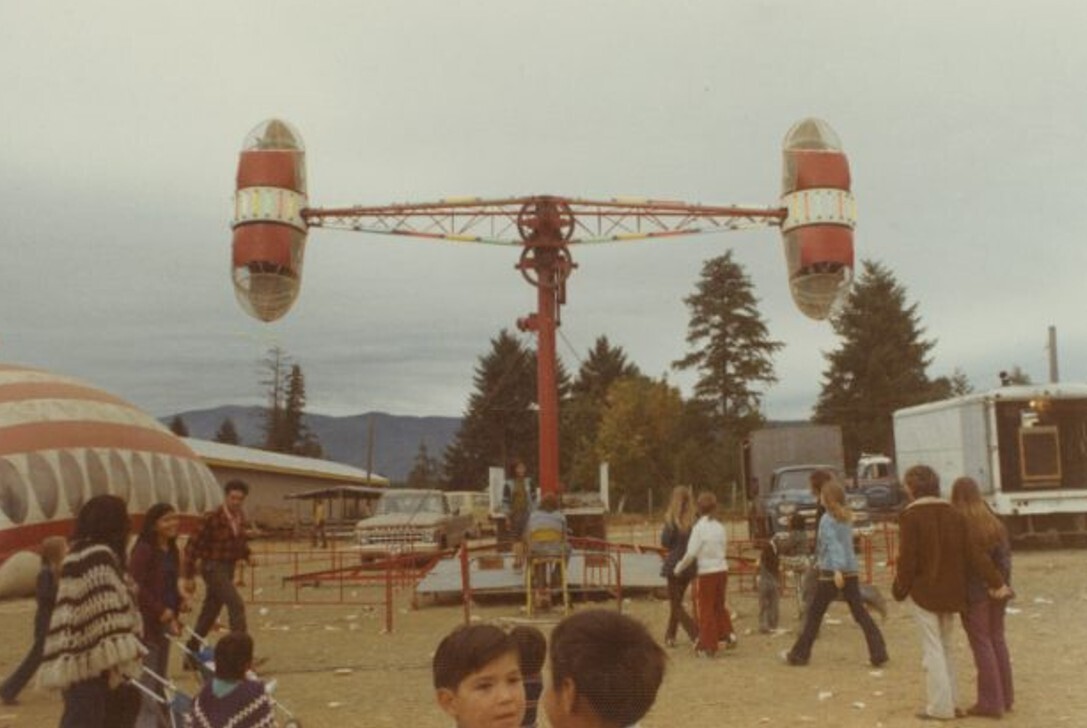
Cylindrical pods swing wildly on elevated beams, flipping passengers over under a gray, indifferent sky.
Elvis Bumper Car, 1950s
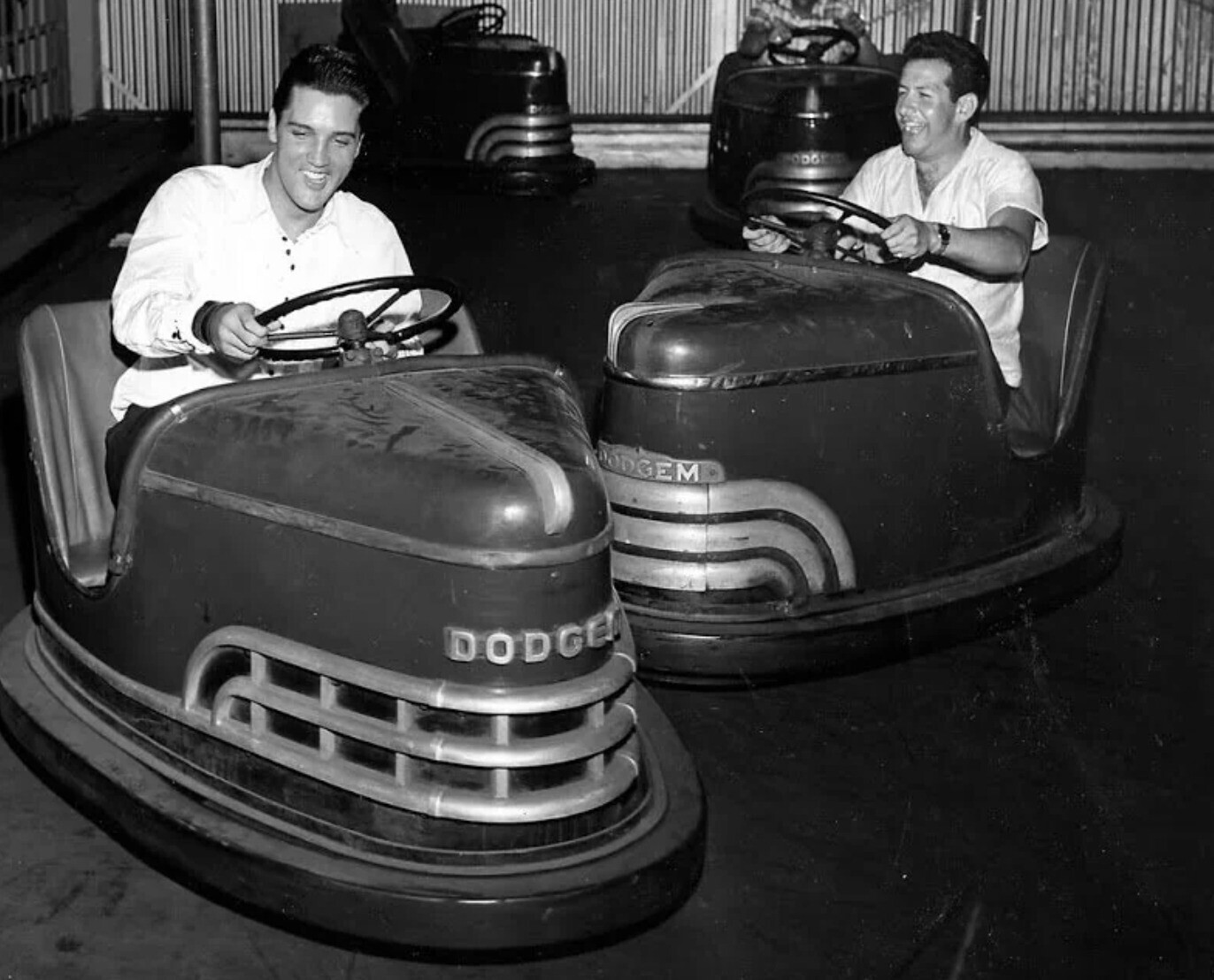
The King grins behind the wheel, cruising dangerously in a classic bumper car with zero safety gear.
Flying Chairs, Argentina 1967
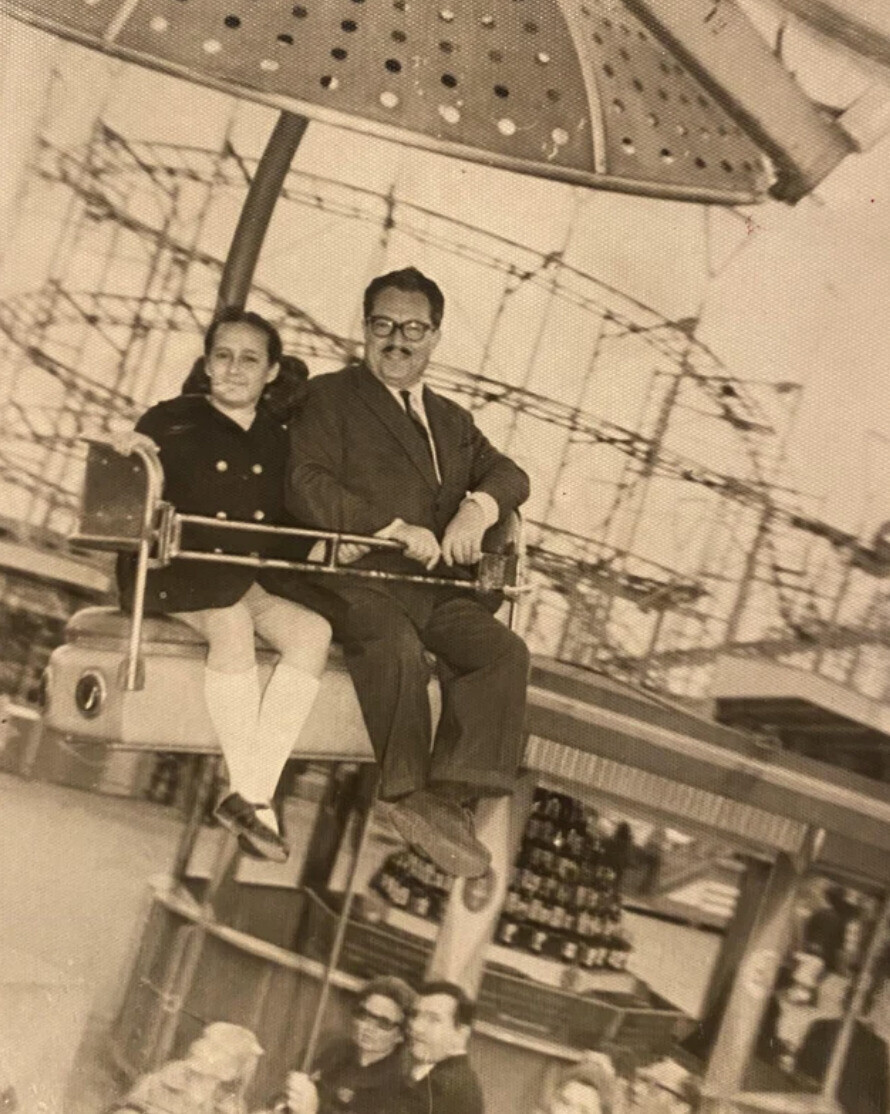
Suspended metal seats swing formal adults effortlessly, showing casual disregard for height or fall risk.
King George Helter Skelter, 1925
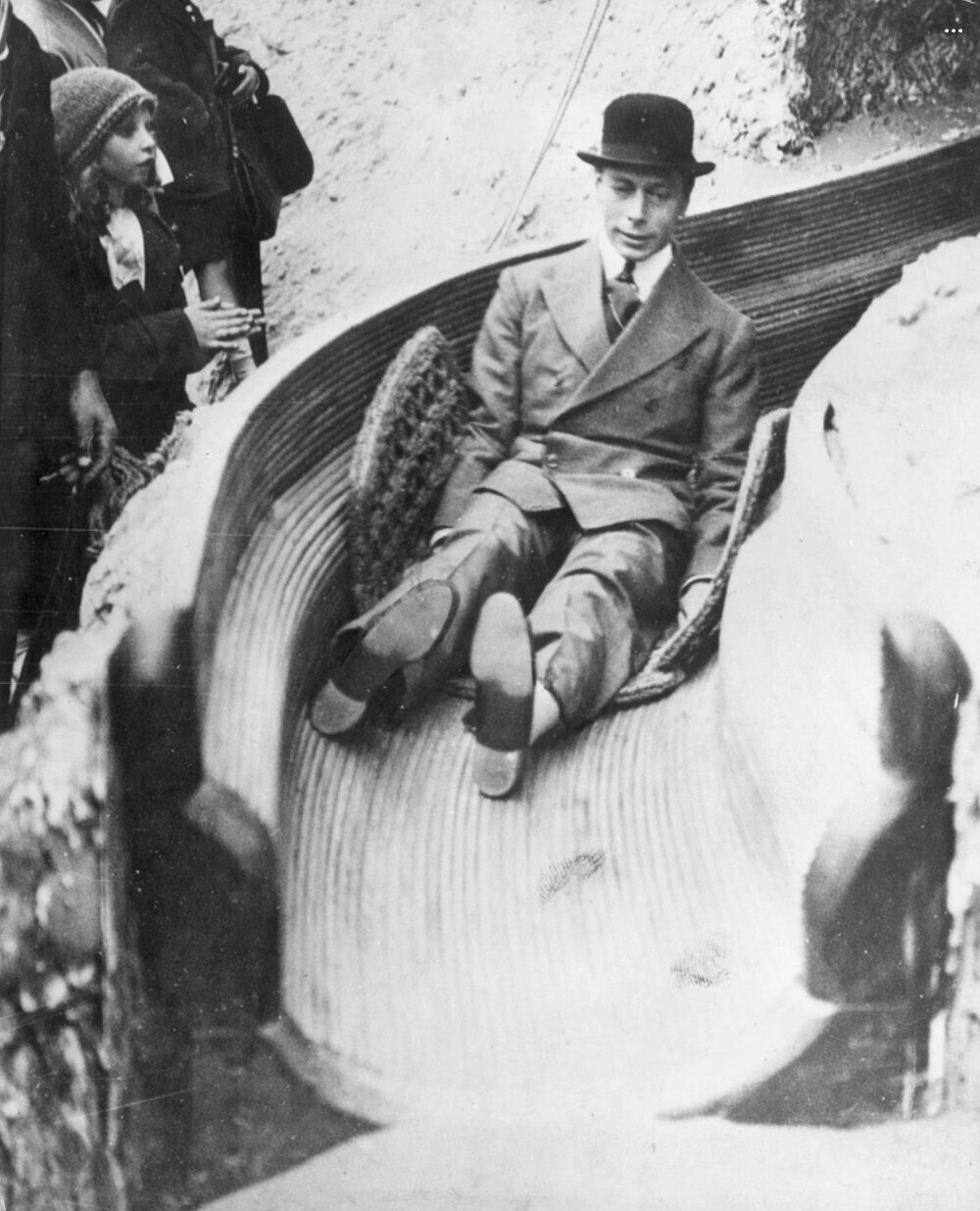
Future monarch slides down a spiraling tower, mat barely protecting him from gravity’s playful threat.
Kennedy & Glenn Coaster, 1968
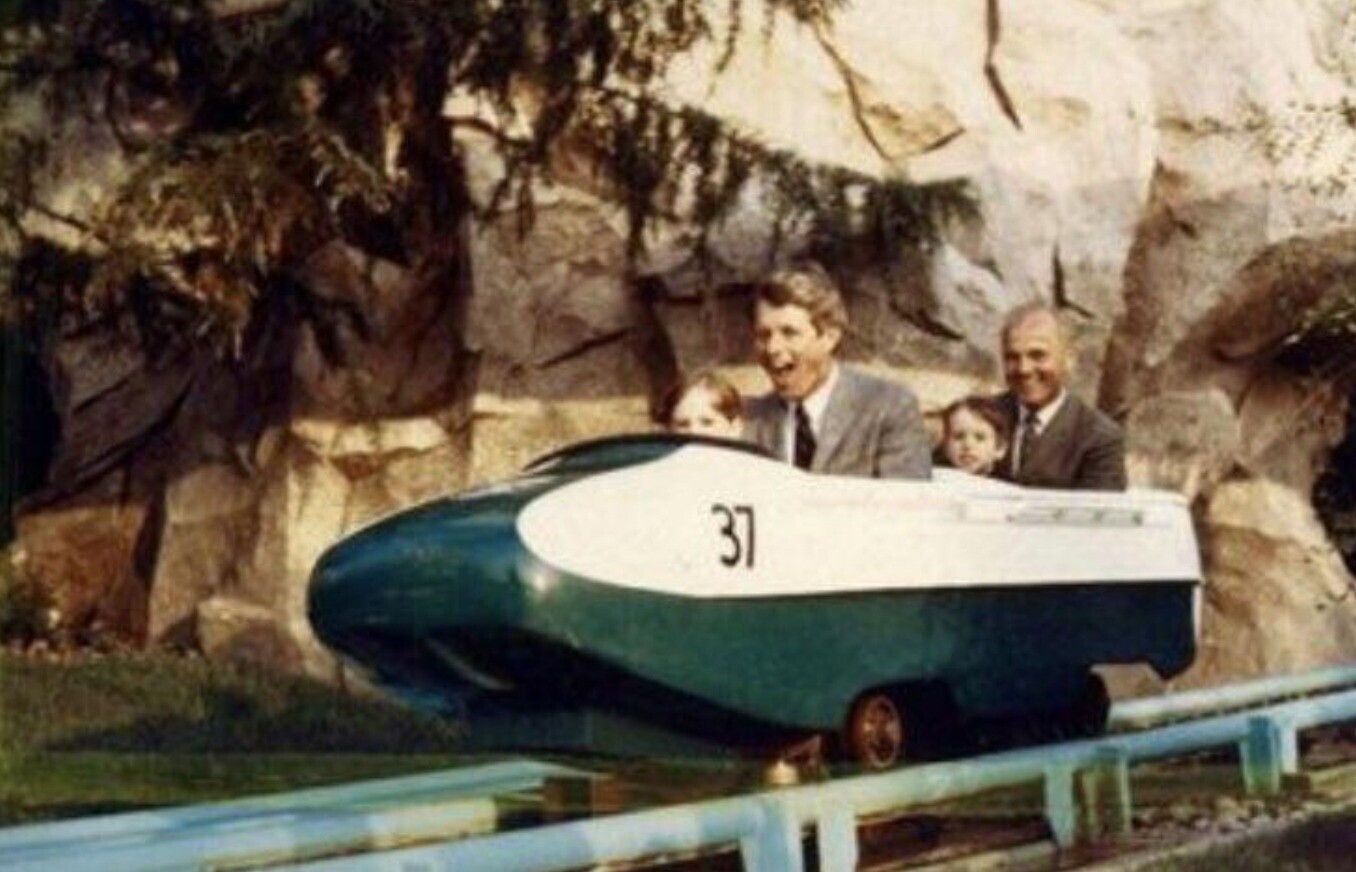
Politicians smile tightly in a Disneyland capsule, one of few rides with modest safety precautions.
Big Dipper Construction, 1922
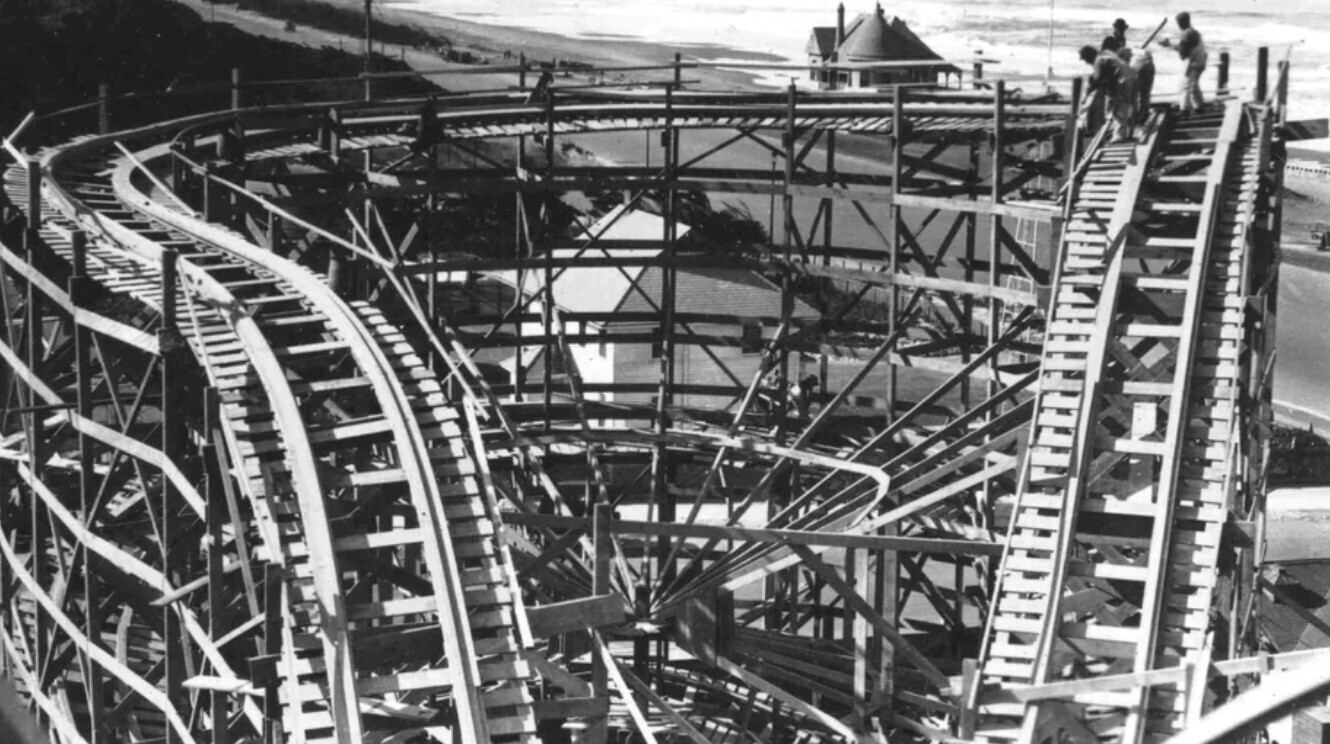
Workers cling to vast wooden skeleton, assembling a giant coaster with hair-raising commitment.
Vintage Go-Karts, 1980s
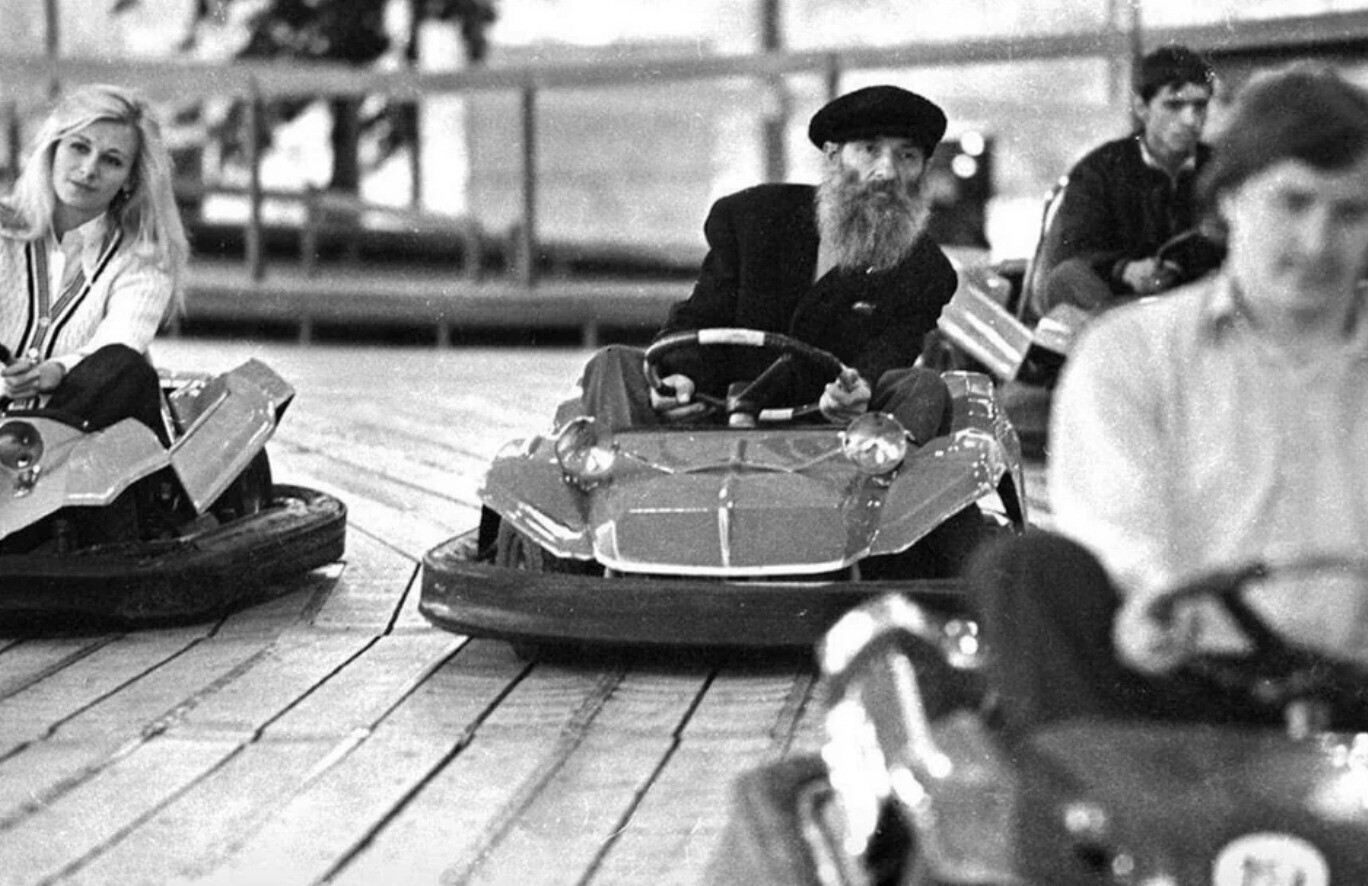
Drivers navigate battered cars with intense focus, surrounded by chaotic spectators and noisy collisions.
Arcadia Cliff Coaster, 1880s
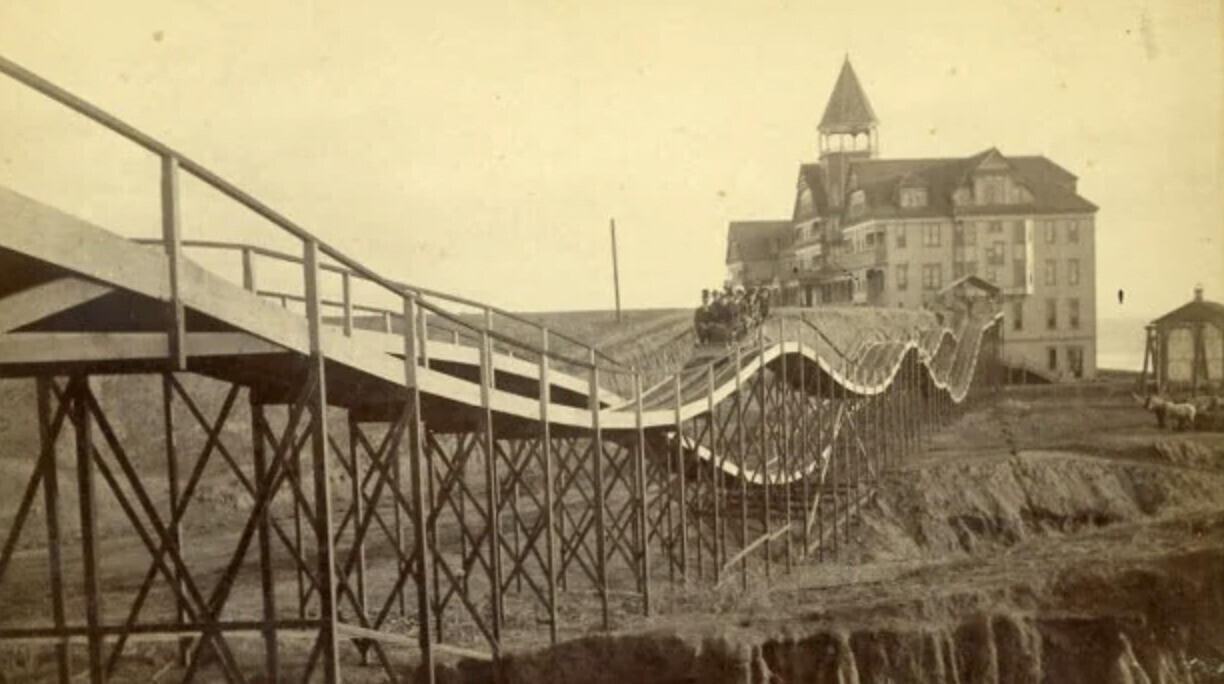
Primitive wooden coaster descends steeply along ocean cliffs, combining scenic views with extreme peril.
Scenic Spiral Wheel, 1917
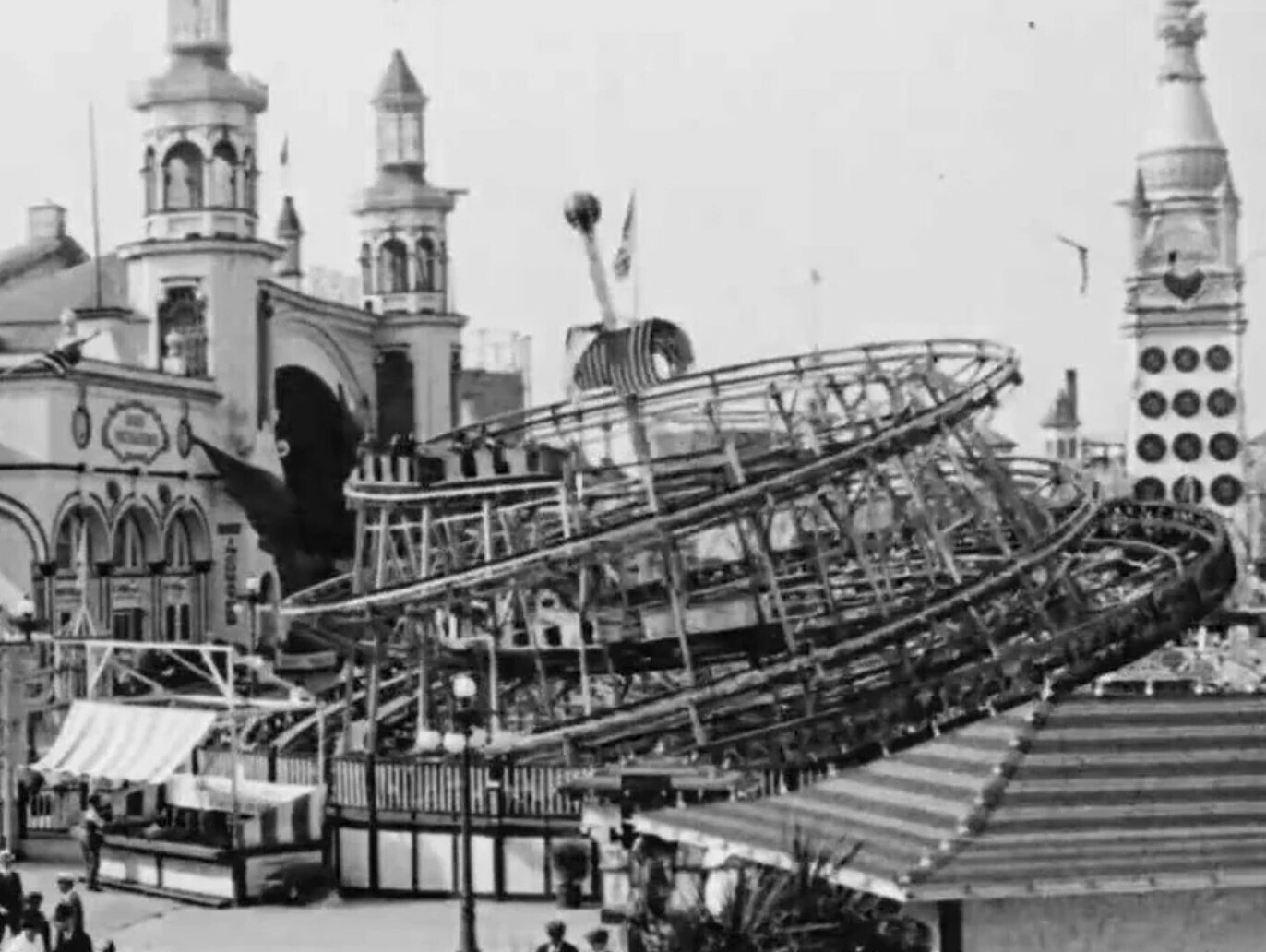
Wooden spiral track rises dramatically, forming a massive zigurat of twisted rails over fairgrounds.
Loop-the-Loop, 1900s
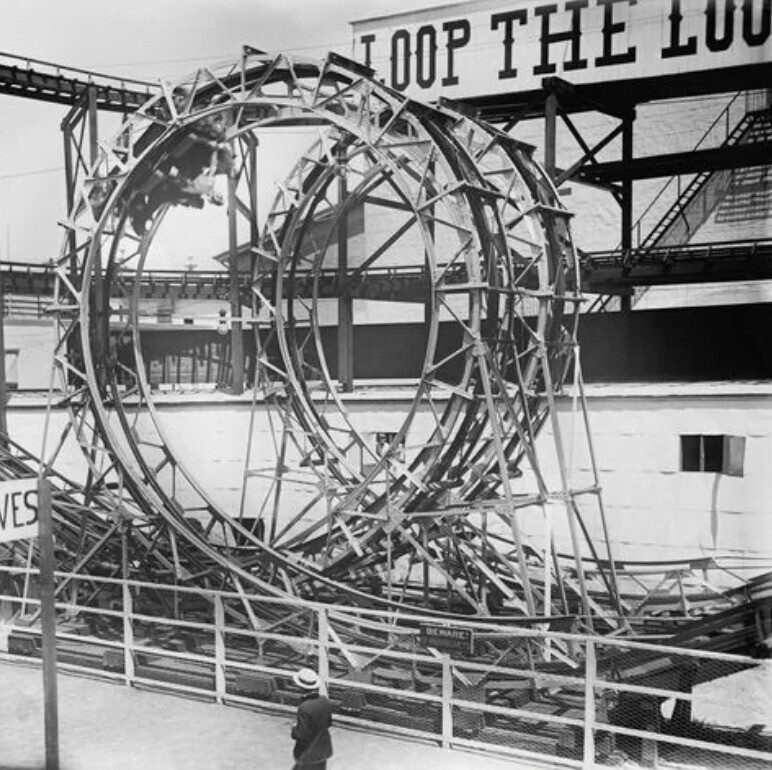
Fragile metal loops invert riders, defying physics and patience in a daring early coaster experiment.
Brandon Proto-Loop, 1909
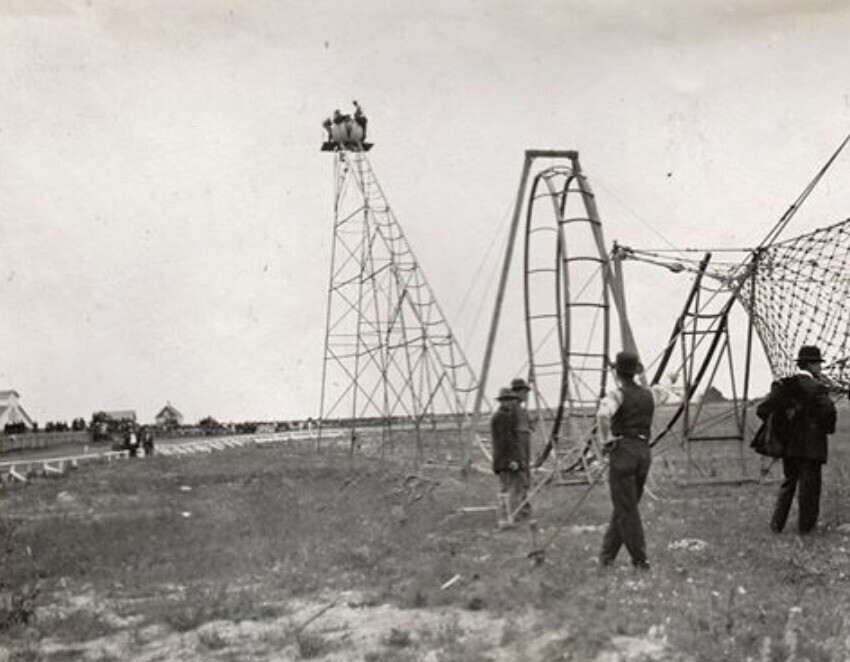
Two thin towers hold a rudimentary loop, daring riders to ascend and descend on a fragile track.
Flying Basket Ride, 1920s
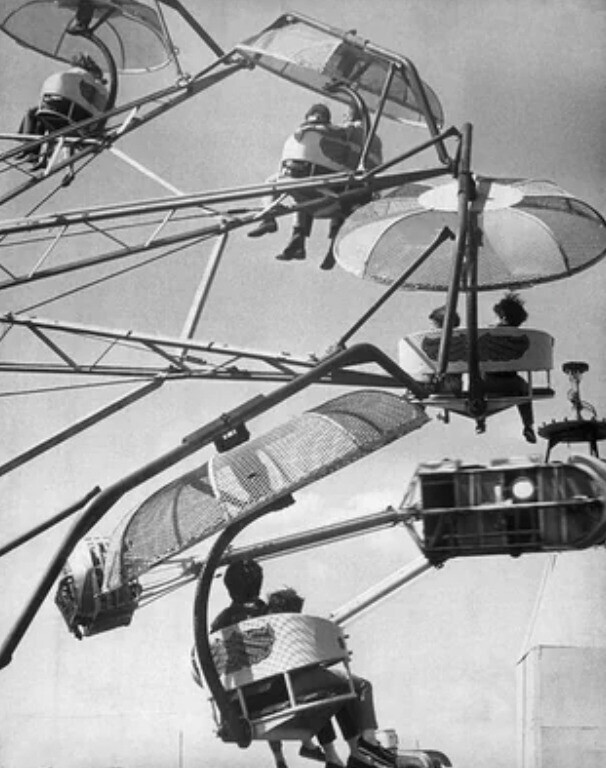
Open-air cabanas dangle high, offering minimal restraint as wind becomes part of the attraction.
Bumper Cars, 1920s
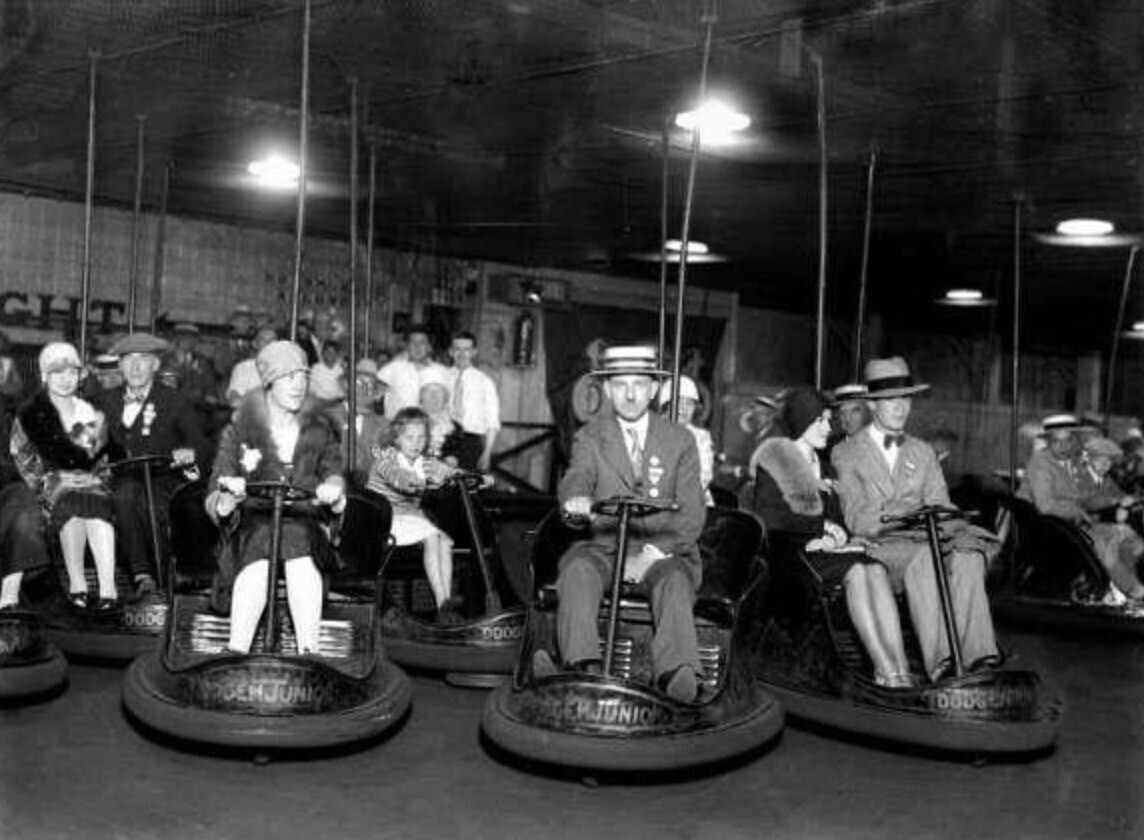
Vintage cars collide under formal attire, drivers clutching wheels like life depends on it.
Roll-O-Plane, 1970s
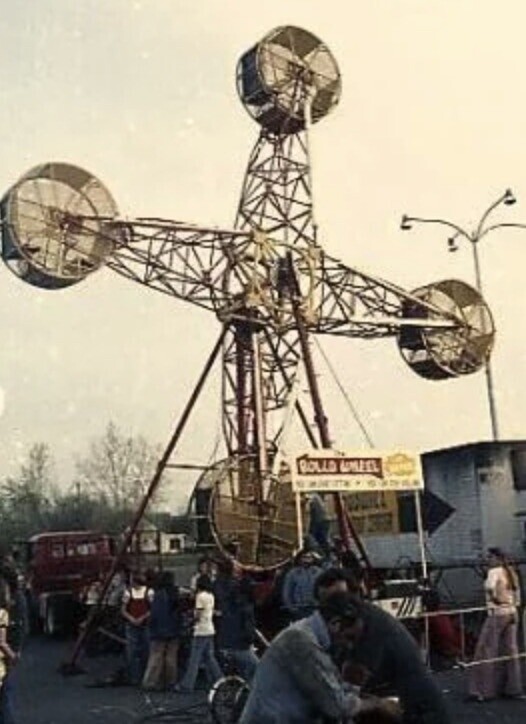
Metal X-frame spins cylindrical pods 360 degrees, spinning riders into nausea with mechanical precision.
KKK at the Fair, 1926
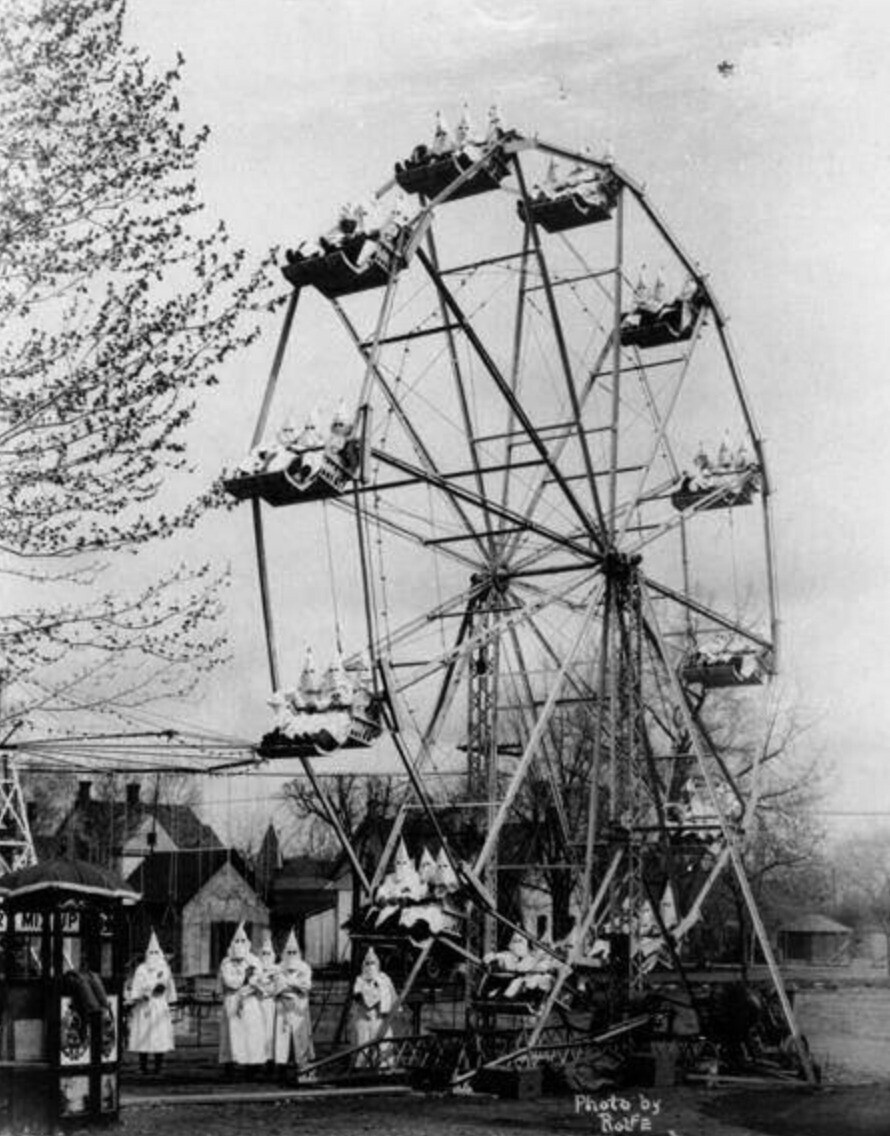
White-robed figures stand beneath a Ferris wheel, contrasting ominously.
Alligator Ride, 1920s
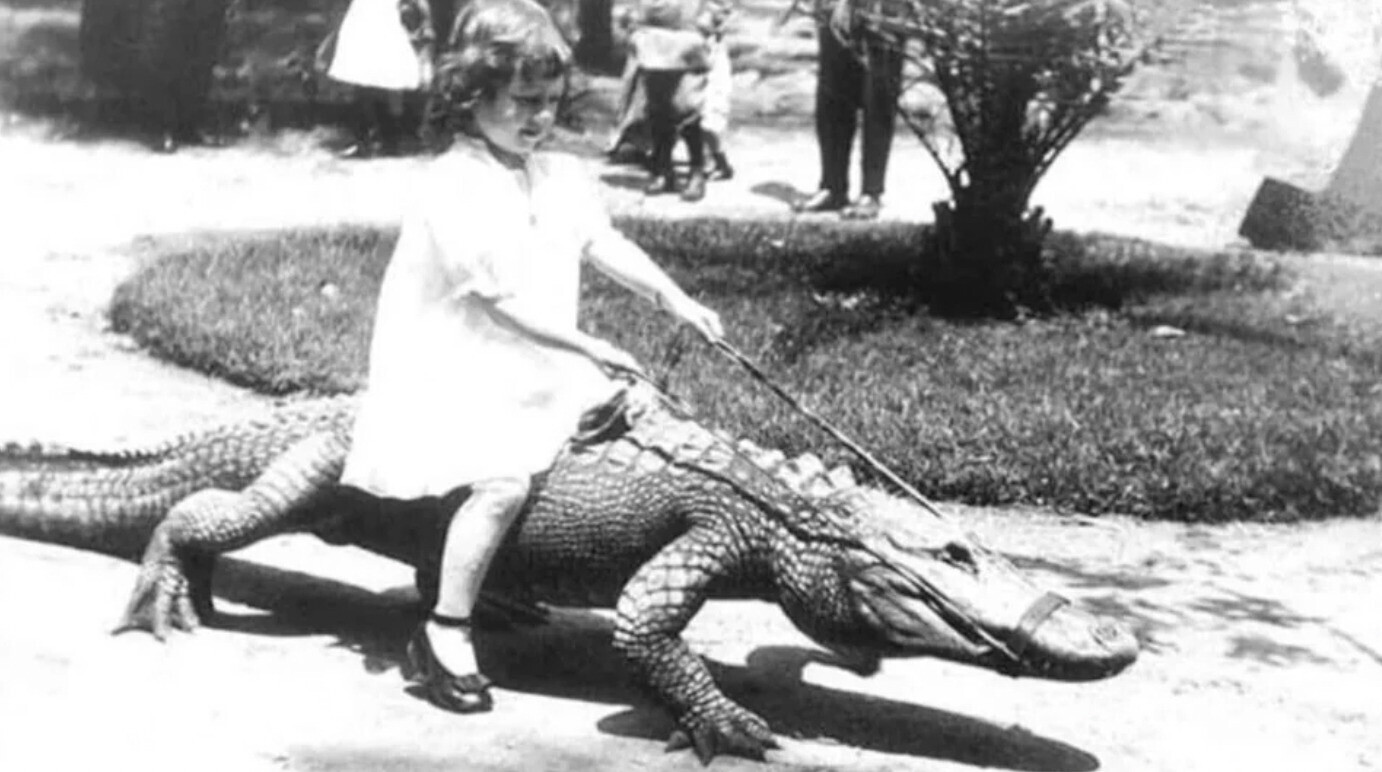
Little girl straddles a restrained alligator while adults ignore basic safety, highlighting fearless absurdity.
Giant Coaster Test, 1915
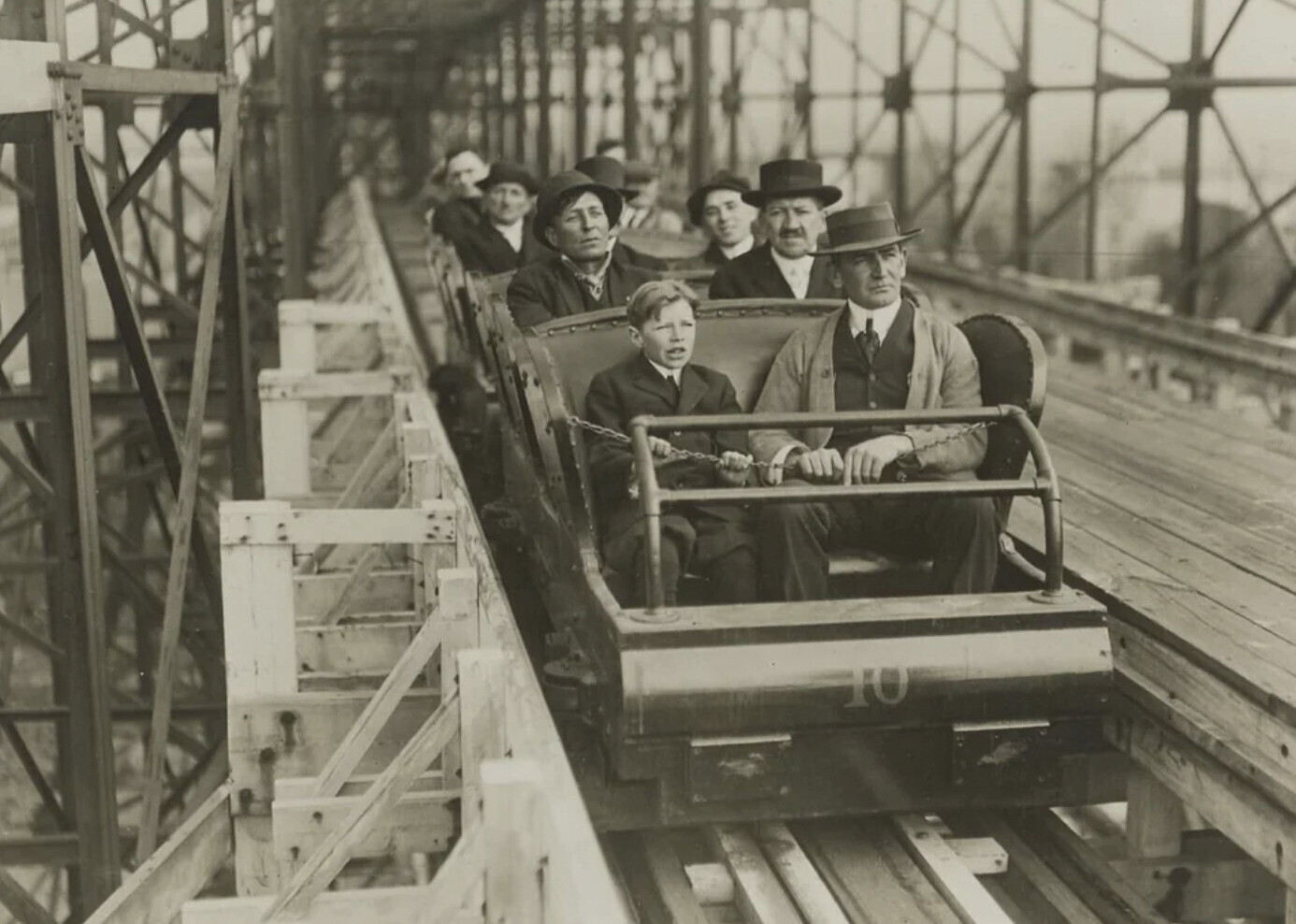
Wooden track towers over trial riders in formal suits, daring human bodies to meet raw engineering.
The Spider, 1968
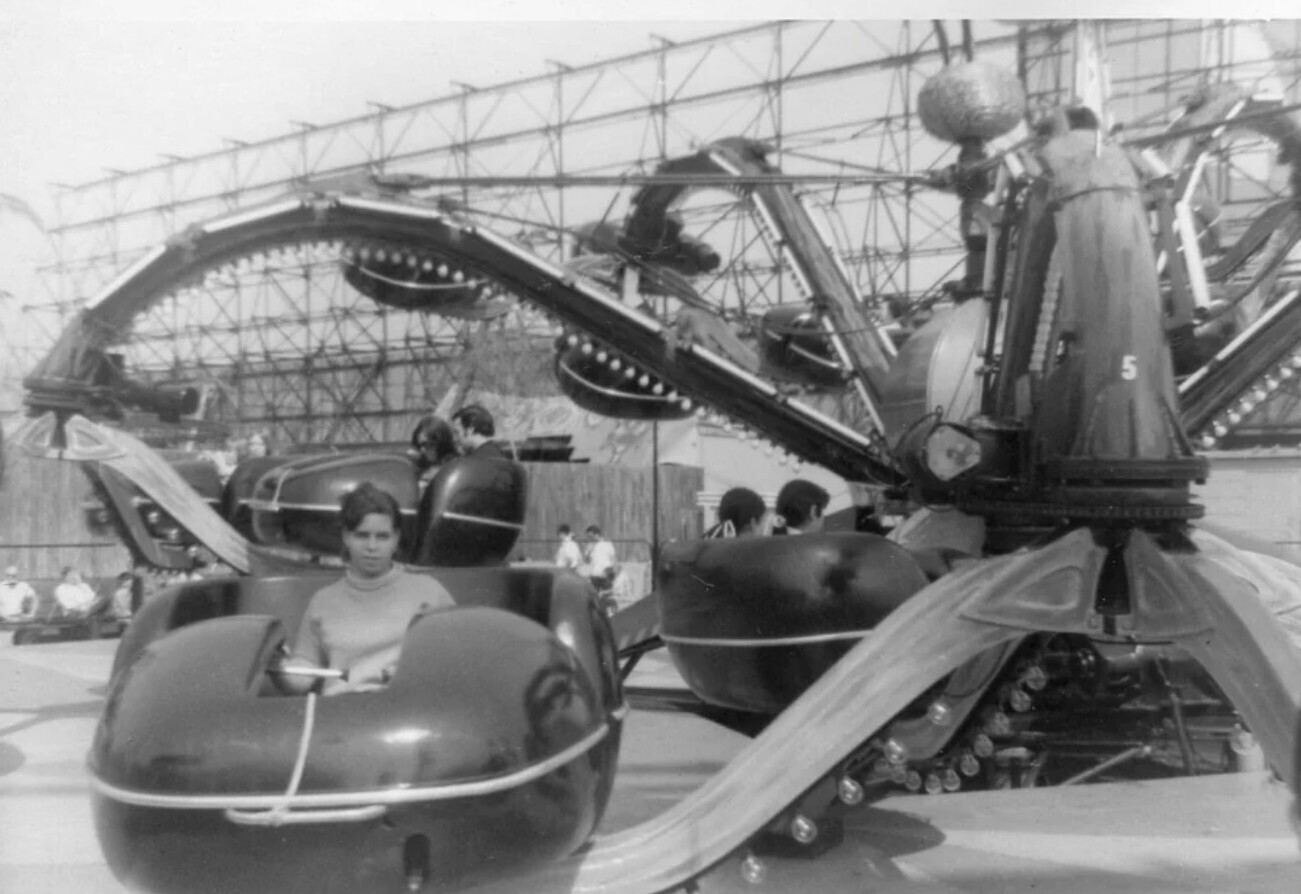
Eight mechanical arms twist above, each holding spinning cabins that disorient riders and defy balance.
Desert Carousel, 1960s
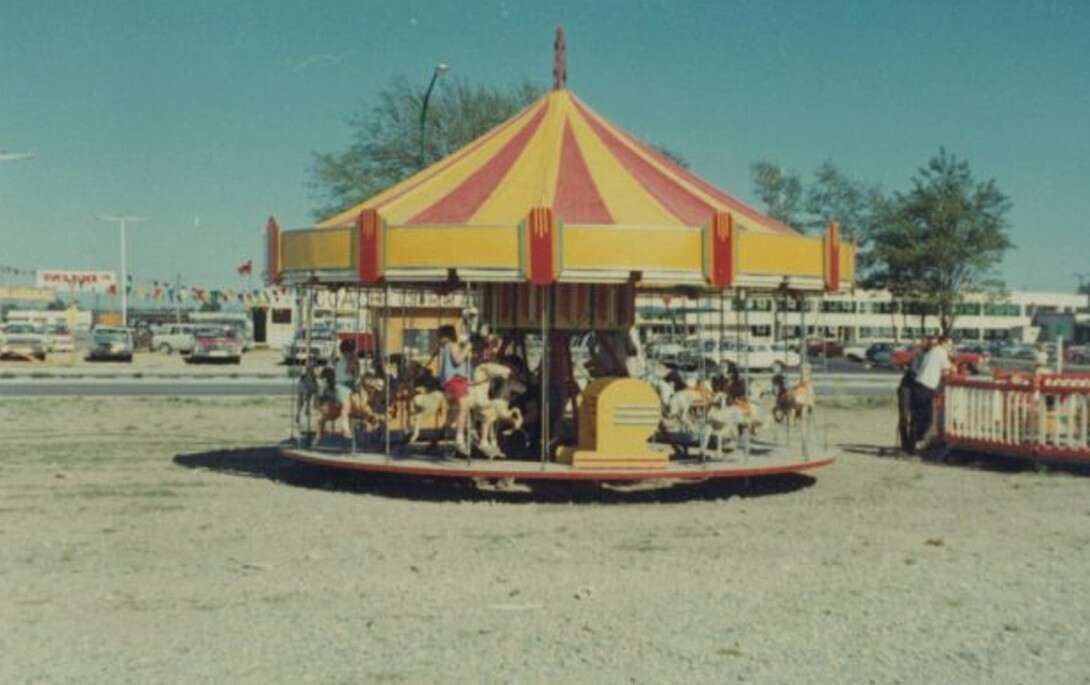
Children mount wooden horses under a striped canopy while the dusty ground sprawls like forgotten land.
Wild Mouse, 1950s
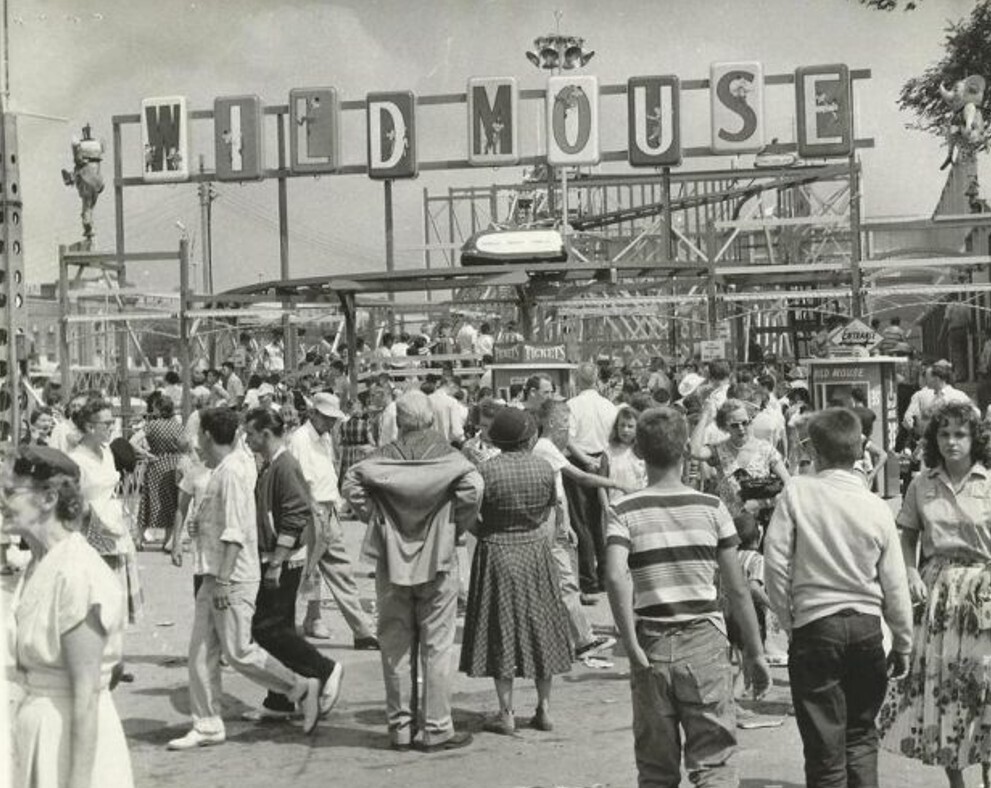
Sharp curves and wooden tracks trap screaming riders in a dizzying dance with imminent collision.
Human-Fly Cylinder, 1950s
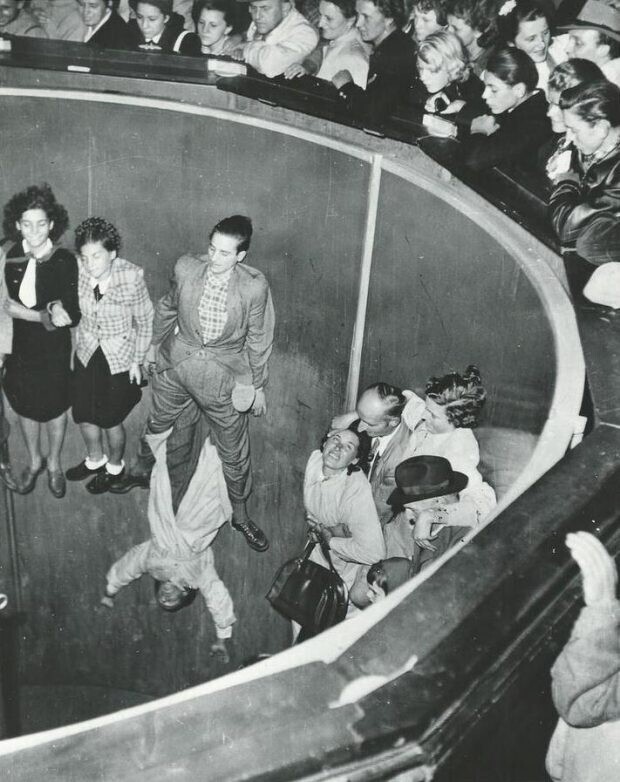
Spinning vertical drum flings riders against walls as gravity claims the careless and rewards the reckless.
The Swooper, 1929
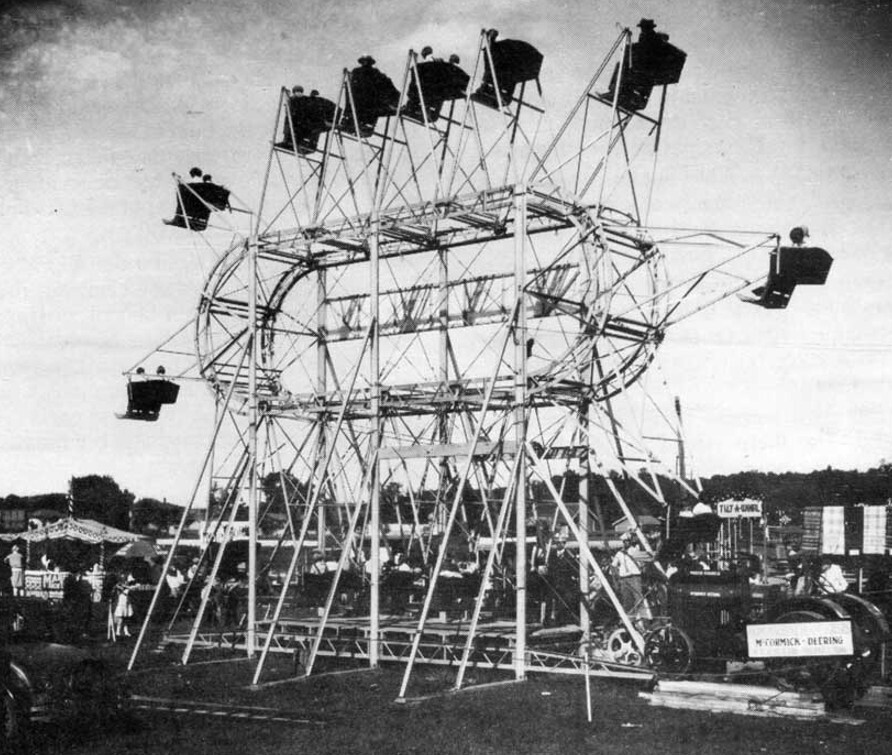
Thin metal skeleton spins passengers high above Sunnyside Amusement Beach, leaving them precariously exposed to gravity and wind.
Flying Scooters, 1930s
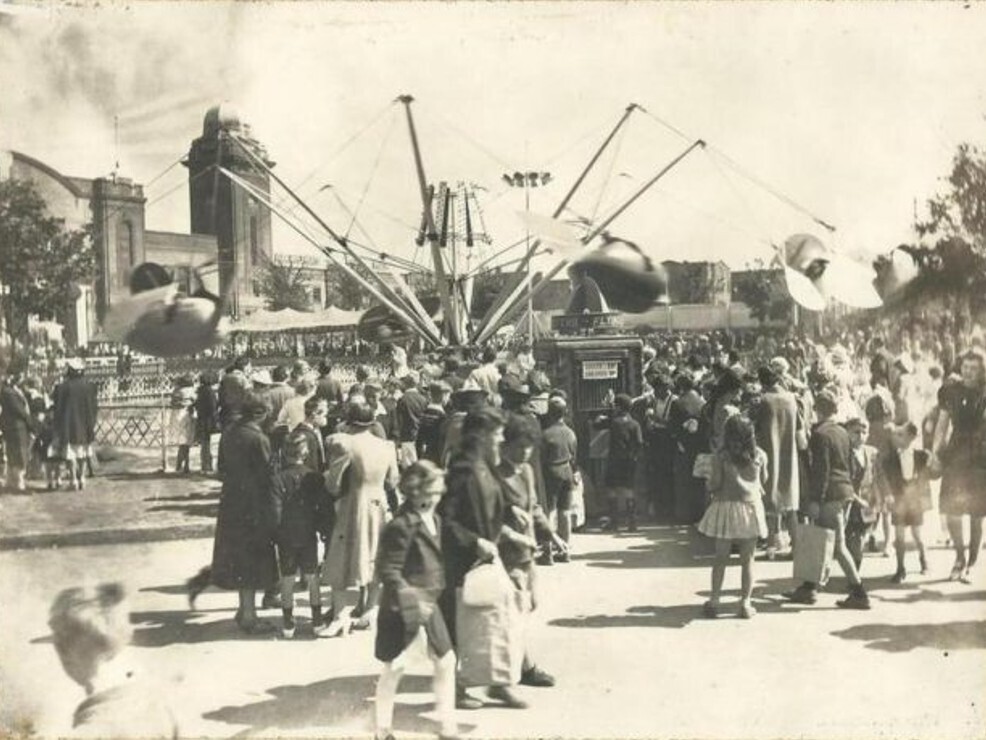
Scooters whirl above a sunny crowd, arms extended, threatening chaotic collisions while the church looms in the background.
Wall of Death, 1929
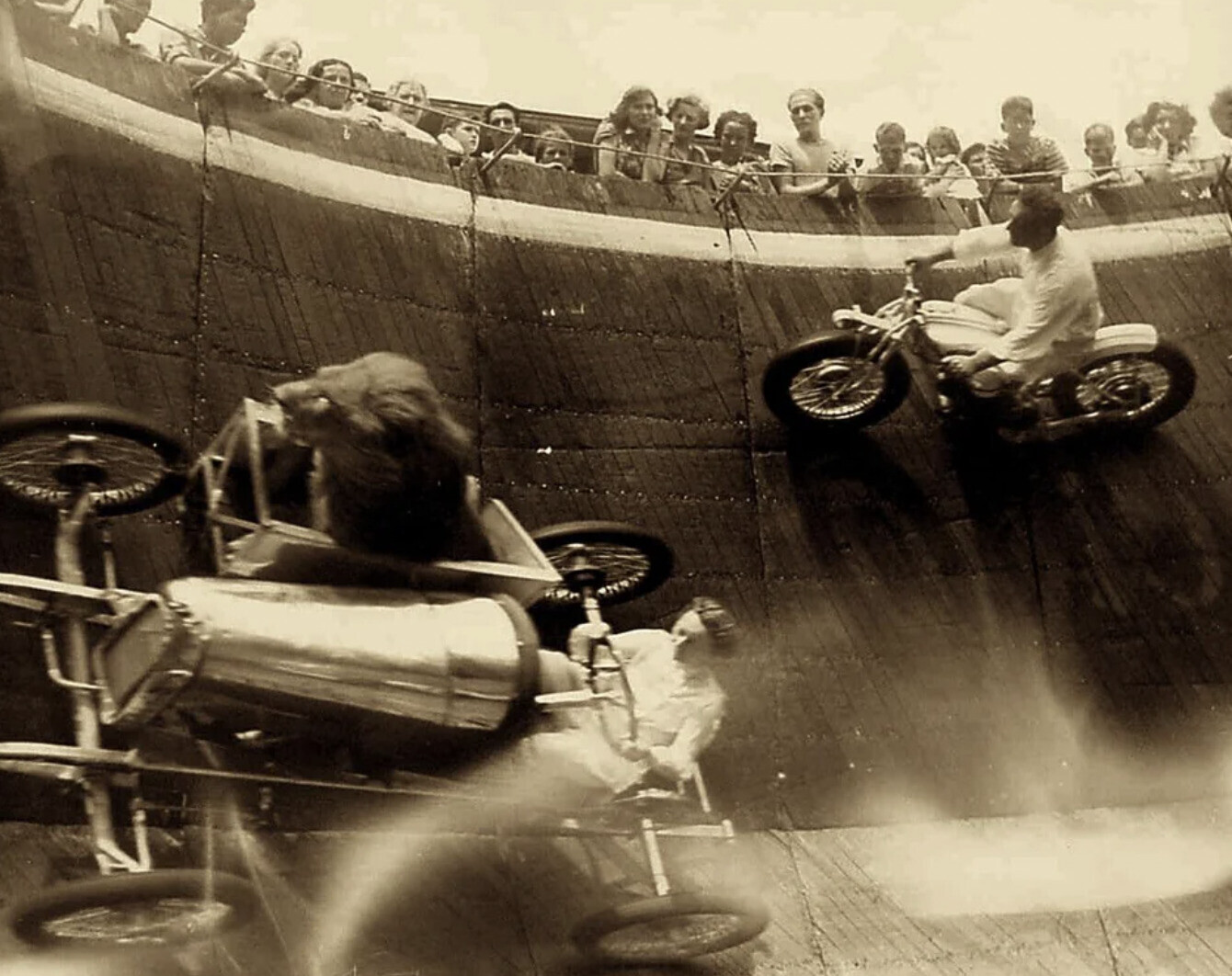
Motorcyclist rides vertical wall while a lion and a go-kart collide below in a chaotic spectacle.
