5 Advanced Technologies Still Catching Up to Invertebrates
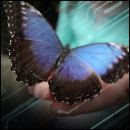
There's a scientific field called biomimetics that is all about studying nature and stealing its technology. That makes sense -- if you want to build a flying machine, you start by looking at birds. But the more we study, the more we find that biomimetics isn't just about building a more fishlike boat. Even the smallest, slimiest creatures employ tech that will some day revolutionize everything from solar panels to TV screens.
Just consider the fact that ...
The Bombardier Beetle's Fuel-Injection System Beats Any Car's

The bombardier beetle is one badass motherfucker. If you mess with one of these beetles, you can expect to get sprayed with a 212-degree blast of burning, noxious chemicals from a turret on the end of its abdomen. It's like a little chemical warfare tank that will go off with just the slightest bit of provocation.

"Oh, shit. Honey, I swear this never happens."
If you think it's amazing that a lowly bug evolved to do that, it's even more remarkable when you consider the complexity of the mechanism that makes it happen. Inside, it has two different chemicals and a mixing chamber. The chemicals react and get so hot that pressure builds in the chamber, which is then released through the openings on the beetle's abdomen. It can squirt the burning jet up to 20 centimeters.

"Shit! Did I get it in your hair? I promise I wasn't trying to do that."
Lots of animals squirt poison. The bombardier beetle, however, shoots quick-fire pulses like a machine gun -- one that can fire up to 500 times a second. For the sake of context, a top-of-the-line minigun on its fastest setting will fire about 100 times a second. The beetle is able to do all of this thanks to a remarkable system of internal valves that are way more efficient than what us humans have been able to build.
How We Can Steal It:
Keep in mind, all sorts of technology requires the misting and mixing of chemicals -- everything from car fuel-injection systems to the nebulizers that asthma sufferers use. Come up with a better misting system and you can change the world.
That's why researchers took the bombardier beetle's design and used it as the model for uMist. It's here that we should point out that, in order to mimic what the beetle is born with, it takes a machine that freaking looks like this:

As you can see, mimicking the beetle's tech isn't easy. But it'll be worth it -- the beetle design allows us to control the temperature, velocity and size of the droplets being sprayed, which means the potential applications are nearly endless. We're talking about better fuel efficiency and lower emissions in vehicles and a new type of gas-turbine aircraft engine that can reignite in mid-flight if it loses power. Oh, and get this: the technology could even create needle-free injections, or as all the Trekkies out there would call them, hyposprays.
That's right. The bombardier beetle doesn't just hold the key to advanced aeronautic systems; it could also give us Star Trek medical technology.

"Of course I still respect you. Yes, I'll call you tomorrow."
The Sea Mouse's Fur Is Made of Super-Efficient Fiber-Optic Cables

The sea mouse's scientific name is Aphrodita aculeata, after the Greek goddess of love, Aphrodite. Not because it's a lovable creature, but because if you look at it from the underside it supposedly looks like a vagina.

The scientist that named this animal has obviously NEVER seen an actual vagina.
No, we don't know why they call it a mouse when it's clearly a worm. That's not important. What is important is that the sides of the sea mouse are covered in thin hairs, called setae, that will glow red, blue or green depending on how the light hits them.

That's cool and all, but it's not until you get them under a microscope that you realize what a mind-blowing job evolution does of beating even our most state-of-the-art technology.
How We Can Steal It:
You probably know that the fastest communication cables are the fiber-optic lines that zip light along a series of thin, perfectly clear glass hairs. The tech took 170 years to perfect, and manufacturing fiber-optic cables is so complicated it would take the rest of this article to explain it.

Well, yeah, of course we make it like that.
But the little clear hairs that grow on the back of that tiny sea worm thing? They're much, much more efficient than the cables we're using. All fiber-optic cables (and in fact, all cables of any kind) lose some of their signal over a distance. Fiber optics work by controlling the reflection of the light so that it bounces perfectly along the length of the cable, but the world is an imperfect place, and no medium we've come up with doesn't lose at least a little bit of the light over distances. No surface is perfectly reflective, after all.
But the sea mouse comes pretty freaking close. Its survival depends on its ability to light up its coat -- that's how it wards off predators. And its coat won't light up without exterior light hitting it. And it lives thousands of feet under the surface of the ocean, where virtually no light can reach. Therefore, millions of years of not wanting to die has allowed it to evolve spines that are nearly 100 percent efficient in their ability to reflect light.

Scientists are examining the mouse, not just so that we can steal the design of its super-efficient photonic fur, but so we can learn to actually "grow" the stuff the same way the mouse does. We're not sure why they can't just shave a bunch of the mice and glue the hairs together end to end, but they probably know what they're doing.
The Blue Morpho Butterfly Does Color Better Than Your LED TV

When you hear the word "butterfly," most of you probably think of words like "graceful," "beautiful" or, if you're a fan of chaos theory, "hurricane." But if you happen to work for Qualcomm, then you're probably thinking about energy-efficient display screens right now.

"Turn it to the right and see if it gets the Bears game."
The first thing you notice about the Blue Morpho is that it seems to have given itself the gaudy iridescent paint job of a customized Honda Civic.

How it achieves that color is kind of amazing. Normally, color works like this: The surface of whatever you're looking at reflects light of a certain color and absorbs all of the other colors. For instance, plants are green because the pigment absorbs all of the colors of the spectrum except green. Green is reflected back, so the plant looks green to you.
The butterfly, however, achieves its holy-shit-what-is-going-on-am-I-on-LSD-question-mark iridescent color because its wings are covered in layers of semireflective scales. Their "color" is determined by the wavelengths of light interfering with each other. So, the brilliant blue is actually every color in the spectrum being reflected in a particular way so that blue is amplified. The result is a blue that makes all of the other blues you've seen in your life look like bullshit.

Of course, you're seeing this on a monitor, so there's that catch-22.
How We Can Steal It:
Qualcomm studied the butterflies and came up with the mirasol display for televisions, which are so energy efficient that you can't help but suspect witchcraft. They mimic the butterfly with two reflective layers with a very small space in between. The top layer reflects some light and lets the rest through to be reflected by the bottom layer. Adjust the distance between layers by microscopic amounts and you can produce mind-blowing colors using just the ambient light in the room.

Obviously, since they don't have to produce their own light, the displays are massively more efficient than the screen you're looking at now (in fact, if the image on the screen is static, almost zero energy is used). And, by the way, it gives you a much more vivid image to boot.
The Namib Desert Beetle Is a State-of-the-Art Water Collection System

The Namib Desert in Africa is one of the driest places on earth -- it gets less than an inch of rainfall every year. Yet the Namib Desert beetle thrives there.

Put some spinners on this one and it's ready to cruise.
That's because a fog rolls in off of the Atlantic Ocean on most mornings. The beetle will stand facing the wind, using its hind legs to prop itself up to a 45-degree angle, and then let the tiny water droplets collect on its back. The condensation builds until it rolls down to its mouth for a nice morning drink. It seems like a simple but elegant solution to drought, the sort of thing a bug would come up with.
Only, it's not so simple.
How We Can Steal It:
Worldwide, 884 million people lack access to a safe water source. It would sure be nice to harvest fog and turn it into drinking water for them, but our attempts to do so thus far have kind of sucked. One fog harvester near Chungungo, Chile, gathers 4,000 gallons of water a day by using nets to collect condensation, but there's nothing stopping the wind from evaporating the water or blowing it clean off the nets before it can be collected.

Plus, people keep getting too close to the net when they spike the ball.
So researchers have come up with a better idea using the same technology that the Namib Desert beetle uses. It turns out there are tiny bumps on the beetle's back that are a naturally hydrophilic surface. Much like a necrophiliac is attracted to dead people, a hydrophilic substance attracts water. But then the rest of the beetle's back is hydrophobic -- meaning it repels water. So once the droplets get too big to hang onto the water-collecting bumps, they detach and roll down the beetle's back before the heat and wind can steal the water away.

To replicate this, researchers took small beads of glass that attract water and covered their bases in a layer of water-repellant wax. As a result, they were able to capture water out of the air just like the Namib Desert beetle. They hope that this discovery will lead to more permanent and stable panels in order to not just help gather water, but also for dissipating fog. This would be extremely helpful at places like the airports in, say, San Francisco, where flights are commonly delayed because of weather.
Moths Have Built-In Night Vision Goggles

If you've ever watched a moth stupidly slamming into a light bulb over and over again, you probably thought that this was one species that really didn't have much to teach us.
But because moths are so shitty in so many ways, their eyes really have to be something special. Being both fragile and stupid, moths' only hope of avoiding the many predators who eat them at night is to be able to see better than they do. They accomplish this by having extremely antireflective eyes.

So that you can't see their equally black souls.
Light that is reflected off the eye is lost information, and even the smallest piece of information can mean the difference between survival and death. Moth eyes are designed to take in as much light as possible and, as such, are one of the least reflective surfaces found in nature.
There is nothing simple about how the moth accomplishes this -- their eyes are coated with nanoscopic structures (that is, smaller than microscopic) that are perfectly designed to keep light waves from bouncing off.

Nothing can escape their horrific gravity-crushing gaze.
How We Can Steal It:
Two words: solar panels.
The problem with solar panels now is that they are expensive and aren't very efficient. The panels are highly reflective, which is the exact opposite of what you want in a device designed to absorb light. Just like light reflected off the eye is lost information, any glare or reflection on a solar panel is lost energy.
In order to reduce this glare, researchers were able to "... nanoimprint the microstructure of moth's eyes into acrylic resin ... using anodic porous alumina molds." Which is just technical speak meaning they made a film that duplicates the antireflective properties of moth eyes. The result is an inexpensive roll of film you can stick over any solar panel and immediately boost its efficiency by 5 or 6 percent. That doesn't sound like much, but you have to keep in mind that modern solar panels only operate at 5 to 18 percent efficiency, and the moth's eye film is an easy upgrade.

That's why the Cracked offices run on diesel.
Meanwhile, other researchers are finding ways to use the tech on everything from antireflective coatings for monitors and eyeglasses to fiber optics, semiconductors and more.
Keep this in mind: To mimic the surface, scientists had to use a focused ion beam to etch the tiny details at a nanoscopic level. Or, to quote one researcher, "... the nanoscopic structures on the lens surfaces had to be smaller than the wavelength of light so as to smooth out the sharp refractive index change as the light strikes the surface ..." That's what it took to imitate what can be found on every moth you've ever crushed under a rolled-up magazine.
Brian Thompson is a freelance writer. He enjoys making new friends on Facebook and being stalked by crazy people on Twitter.
For more things you didn't know about animals, check out 6 Creepy Animal Behaviors That Science Can't Explain. And find out what you were wrong about in The 6 Most Frequently Quoted Bullshit Animal Facts.
And stop by Linkstorm because it's Friday and you gotta get down on Friday.
And don't forget to follow us on Facebook and Twitter to get sexy, sexy jokes sent straight to your news feed.
Do you have an idea in mind that would make a great article? Then sign up for our writers workshop! Do you possess expert skills in image creation and manipulation? Mediocre? Even rudimentary? Are you frightened by MS Paint and simply have a funny idea? You can create an infograpic and you could be on the front page of Cracked.com tomorrow!
