6 Tricks Movies Use to Make Sure You Root for the Right Guy
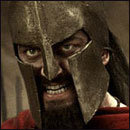
Writing is hard. Believe us, we know. In movies, it's not always easy to do even the part you think would be a no-brainer: getting the audience to side with the good guys.
After all, in one film we're meant to cheer the vampires -- in the next we're supposed to go for the guy who's setting them on fire. In one movie we're cheering for the rag-tag rebels -- in the next, they're terrorists and we're supposed to cheer when they get beheaded.
Fortunately, Hollywood knows a few tricks to make you like, well, whoever they want you to like.
Give Them a Dog
As Seen In:
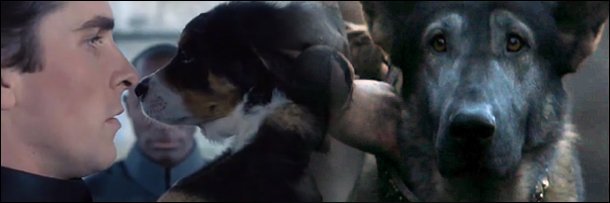
For whatever reason, people just care more about animals in movies than humans, which is why they almost never die -- even when human corpses are stacking up like kindling. Who didn't cheer when Will Smith's dog outran an explosion in slow motion in Independence Day? You know, while an entire city full of men, women and children were incinerated behind him?
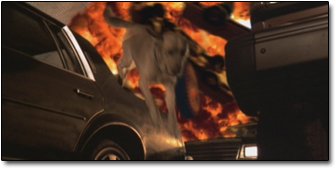
Hope they have food in there until the dust settles, or someone's going to have to eat that dog.
So when a film wants to inject some quick sympathy for a human character, it will give him a pet, or have him show kindness to an animal.
Even When it Doesn't Make Sense ...
Gladiator opens with a rag-tag bunch of Germanic peasants preparing to fight the Romans, who are trying to invade their ancestral land. It's like a scene out of Braveheart: The plucky locals are powered only by their axes and patriotism, while their imperialistic enemy uses armor, phalanxes, disciplined formations and a whole bunch of shit that's on fire. Go underdogs!
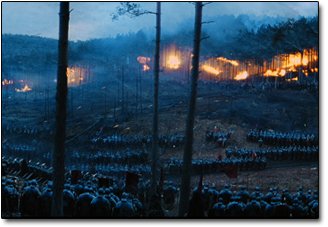
The Cubs playing the Yankees, except the Yankees have heavy shields and the Cubs have been set on fire.
Problem is, the viewers in this scene are supposed to be rooting for the Romans, led by Russell Crowe. The Roman emperor watching the battle is also meant to be a good guy. What's a movie to do?
Quick, give them a dog!
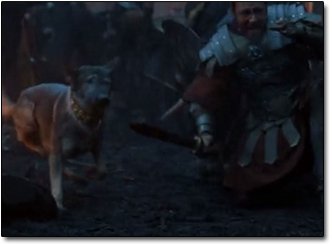
It doesn't matter in Gladiator that Romans didn't use dogs on the battlefield, or that the dog disappears from the movie immediately afterward. It's a very simple equation: The good guys are whichever team the dog shows allegiance to, because the dog would never make that kind of mistake, especially if it's an adorable dog.
You can see it in Hellboy, where we're introduced to the giant, demonic, bad-tempered hero as he picks up and hugs a kitten. In fact, at one point, Hellboy actually causes an almost-certainly-fatal multi-car pile-up in order to save some kittens, and that only makes us root for him harder. In Equilibrium, the exact point at which Christian Bale turns from cold, merciless murderbot into sympathetic hero is the moment he rescues a small puppy, and the audience happily forgets that he'd earlier allowed his wife to burn to death. Clint Eastwood's classification as the "good" in The Good the Bad and the Ugly seems to come almost entirely from a 10 second scene in which he pets a tiny kitten that's sitting adorably in his hat.
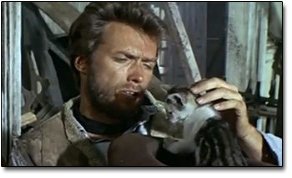
"Tell me where Tuco is and then get off my ranch."
Note, however, that this rule only applies to some animals. Dogs and kittens almost always work, but fully-grown cats can be ambivalent. A tiny monkey dressed in a Nazi uniform probably won't do the trick either.
Make Them Technologically Inferior
As Seen In:
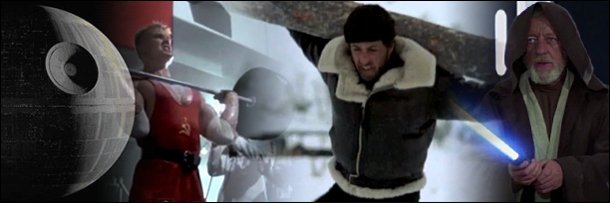
If there's one thing moviegoers love, it's underdogs. It's even been scientifically proven: In one experiment, students switched their allegiance away from an imaginary sports team the moment they were told that it was "highly favored" to win. We naturally get uneasy going for the obviously superior force, even if they're the ones fighting to defend the besieged giant panda enclosure. No matter the motivation, the stronger and better-equipped team is automatically evil.

Look at this superior-looking bastard.
Even When it Doesn't Make Sense ...
Back in 1988, Rambo 3 told the story of traumatized veteran John Rambo fighting Russians alongside the locals in Afghanistan. Back in those innocent days, the average American could not find Afghanistan on a map even if it was marked with pop-up boobs, like in one of those pornographic children's books. How was the audience meant to know that Rambo was doing the right thing? How were they to know the Taliban were the good guys? Sure, we hated the Soviets, but that didn't necessarily make the Taliban heroes.
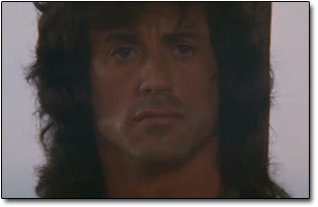
"They all have funny accents, I can't possibly choose between them!"
The answer: show us a battle scene in which Rambo and the Afghan fighters go up against Russian tanks and helicopters on horseback. Rambo uses Molotov cocktails and a bow and arrow to fight his technologically superior but outwitted enemies. Even a plucky young boy helps fire a rocket launcher. Go Afghanistan! They stand for everything America stands for!
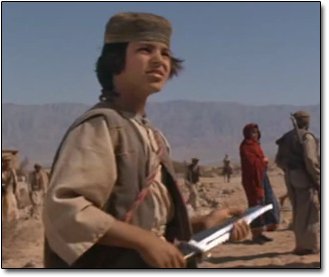
Stab your way to freedom, small child!
Stallone also did it in Rocky IV, when our hero (an incredibly wealthy boxer) leaves his mansion and terrifying maid robot for Russia where he uses primitive training methods such as hauling wood and running through the snow. Meanwhile, his nemesis trains indoors surrounded by computers and white-coated scientists. Never mind that Rocky and his Soviet nemesis Ivan Drago actually have the same unlimited training budget available to them. When its on the big screen, the guy who chooses to rough it scans as our hero, even if what he's doing is the athletic equivalent of the thought process that would give us hipsters.
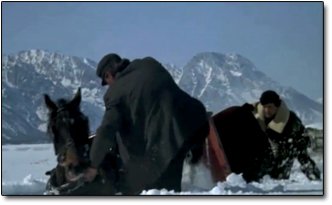
"Punching the snow is just my way of keeping it real."
It even translates to Middle-earth. The primary sin of the orcs in Lord of the Rings was building advanced, mass-production facilities. The entire premise of Star Wars is that of the galaxy-spanning evil Empire butting heads against a bunch of monks, a farm boy and a gay robot couple. The audience would have never put up with Luke Skywalker's incessant whining if it looked like he had any chance of success.
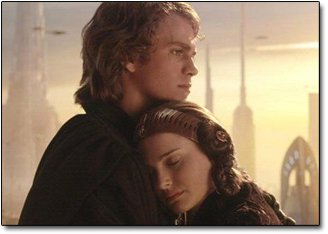
Incessant whining was presumably a family trait, and look where it got him.
And don't forget Obi-Wan repeatedly acting disgusted at the thought of using a blaster instead of more old-fashioned and "elegant" lightsaber, as if slicing people with white-hot plasma is somehow more humane.
Make Them Look and Sound Like the Audience, Against All Logic
As Seen In:
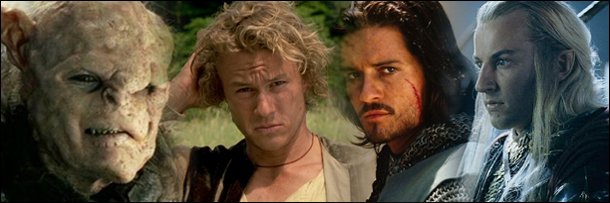
Titanic, Transformers, Star Trek: Insurrection, Avatar, I Am Number Four, A Knight's Tale, Little Women, Australia, Shakespeare In Love, The Messenger, Sleepy Hollow, The PatriotObviously, the easiest way to get audiences to like a character is to make that character remind them of themselves. We don't need to be told that elves are good guys and orcs are bad. The former look like prettier versions of us. The latter look like their mothers fucked a lizard. It's a primal reaction.
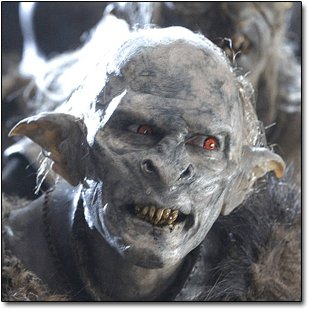
This is what happens if you feed a Furby after midnight, kids!
Likewise, the Autobots in Transformers, despite being aliens and robots, are still somehow more human-looking than the spiky, insect-like Decepticons. Star Trek: Insurrection also features two sets of aliens. One set look like attractive human beings, the others look like this:
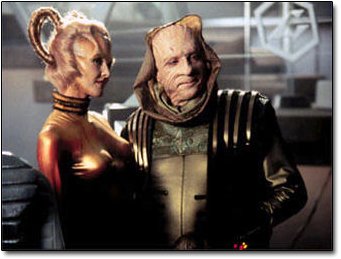
Star Trek's "Melty Face" period
Guess which ones we're meant to side with?
But it goes beyond looks. If you have a character with no other redeeming qualities, you can take a shortcut right to the audience's sympathies by giving the characters a worldview that matches that of the people who bought the ticket.
Even When it Doesn't Make Sense ...
For instance, what if the movie is set in a time or place that's radically different from what the audience is familiar with? Worse, what if that time or place had attitudes that modern audiences might consider sexist, racist or otherwise repugnant? Easy: Just transfer an entirely modern person into a historical setting, slap some funny clothes on them and, hey, you've got your protagonist.
In Kingdom of Heaven, which is set during the Crusades, Orlando Bloom takes time to repeatedly preach peace and religious tolerance, despite the fact that he's, you know, in the goddamned Crusades. The Patriot (set in South Carolina in 1776) and Australia (Australia in the 1930s) go out of their way to show their main characters' oddly enlightened views on race relations -- i.e., Mel Gibson plays a South Carolina plantation owner ... who is anti-slavery.
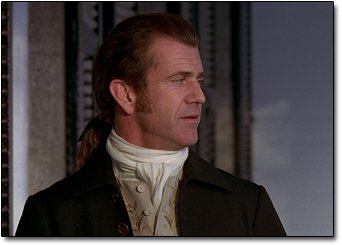
The kind of liberal, socially progressive character Gibson was born to play.
Any females, of course, must be portrayed as forward-thinking feminists, regardless of the time period or their cultural background. Little Women, set in the 1800s, has female characters complaining about having to wear skirts and corsets. Early in Titanic, set in 1912, we see Rose talking to two men who are discussing the awesomeness of the name "Titanic," and she says they might be interested in Sigmund Freud's new thoughts on the "male preoccupations with size." Confused, one of the men asks if "Freud" is a passenger.
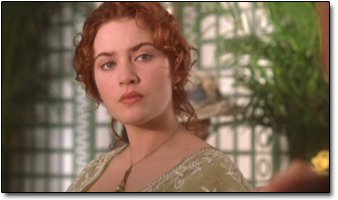
Soon after this scene, the phallic metaphor crashes into the-you-secretly-want-to-have-sex-with-your-Mother metaphor.
This is important to the movie because we have no reason at all to sympathize with Rose at that point -- she's a spoiled, rich teenager. So she has to (for no reason at all) somehow hold opinions that are 50 years ahead of her time. Just to make sure we get the point, she's shown in her cabin unpacking her Picasso and Monet paintings. Her snooty husband-to-be is not impressed. "Picasso!" he spits, "he'll never amount to a thing!" Rose knows better: Picasso will be a great artist some day. Scenes of Rose telling Leonardo DiCaprio to "watch out for that young Hitler fellow in Germany, he'll come to no good" and inventing the silicon microchip out of spare parts in the boiler room were left on the cutting room floor.
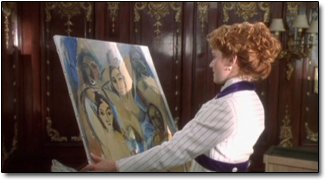
"Looking at this painting reminds me of all the energy that can be harvested from the nuclei of atoms."
Of course, an even better version of this technique is ...
Make Them American, Even if They're Not
As Seen In:
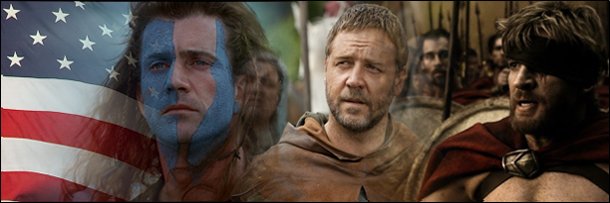
Sometimes, being anachronistically modern just isn't enough. How do you make sure your audience is rooting for Historical Tribe A over Historical Tribe B, when frankly they have no reason to care either way? The answer is easy: just change one side into America! It doesn't matter if the movie takes place in 3,000 B.C., you always make the good guys sound like they're quoting the Declaration of Independence.
Even When it Doesn't Make Sense ...
The Spartan war-masturbation film 300 doesn't just add in monsters and leave out the unpopular stuff about Spartan pederasty. No, the Spartans also declare themselves to be "rescuing the world from mysticism and tyranny." Never mind that Sparta's population was made up mostly of serfs, and that in reality the famous "boy vs. giant wolf" scene at the beginning of the film would have involved a young warrior killing not a animal but, uh, those same serfs. There's even a crack about the rival Athenians being "boy-lovers" just so you know that the United States of Sparta frowns on such behavior.
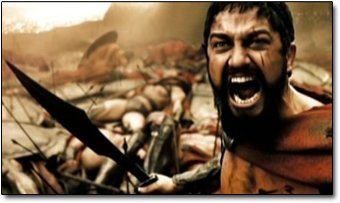
"We fight for heterosexuality, apple pie and the future right to shoot guns at clouds whenever we get too excited!"
Likewise, in Braveheart, Mel Gibson tells the local aristocracy: "You think the people of this country exist to provide you with position. I think your position exists to provide those people with freedom!" 2010's Robin Hood featured a Robin fighting for an imaginary version of Magna Carta that guaranteed democracy and equal rights.
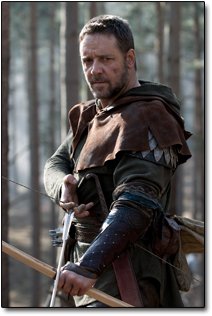
Which is why the English are allowed to rob the Queen and shoot at the Welsh.
In 2004's King Arthur, set in fifth-century Britain, Clive Owen leads native Woads in their fight against invading Saxon hordes. But for Clive, this isn't just about warring tribes, it's about an idea: freedom. "All men are free, equal, and each man has a right to choose his own destiny!" he says. Throughout the film, he tells serfs, Roman conscripts and anyone who will listen that they are all free and equal by virtue of birth.
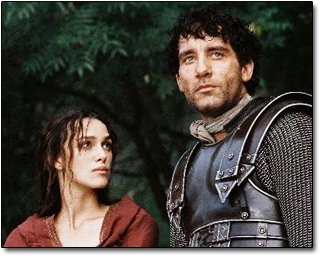
"Apart from me, because I'm the Goddamned King."
Goddammit, this guy didn't just invent the round table. He wrote the U.S. Constitution!
Excuse Violent Behavior With a Tragic Death of a Loved One
As Seen In:
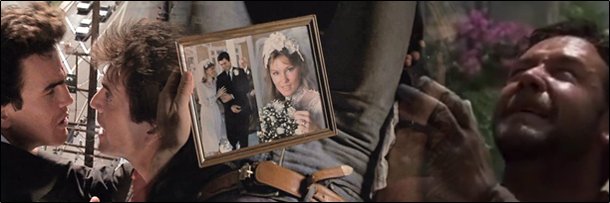
Lethal Weapon, Terminator 2, Kick-Ass, End of Days, Death Wish, Mad Max, The Patriot, Gladiator, Collateral Damage, Law Abiding Citizen, The Punisher, The Brave OneHumans tend to see the world through something called the actor/observer bias: The more we know a person, the less we blame their actions on their personality and the more we blame outside circumstances. So for the stranger, it's, "He just shot the TV, what a psycho!" But for a friend, it's, "He just shot the TV. It must have been Cake Boss."

"He was trying to replicate that adorable cake they had last episode but couldn't quite get the icing right, poor thing."
This is important when it comes to movies, because it means that a film can show two people doing the exact same thing, and still have one of them come off as the good guy and the other as the villain. The difference is that the audience is given reasons for the good guy's actions. And there's one trope Hollywood uses again and again as a get-out-of-psychopathy-free card: dead loved ones. How dare you criticize anything he does? Your loved ones are still alive, you insensitive bastard!

Now get out there and start tolerating them!
Even When it Doesn't Make Sense ...
In Lethal Weapon, a suicidal man stands on the ledge of a tall building, ready to jump. Suddenly, a mulleted cop approaches, his eyes as wild as his half-Australian accent. It's Mel Gibson! This cop isn't exactly following procedure, though: He handcuffs the would-be jumper to himself, and then pulls them both off the building together, luckily landing on an air cushion.
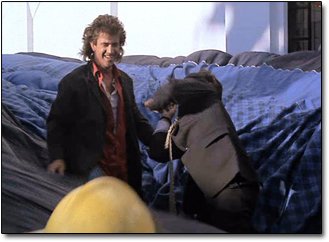
"Wheee, wasn't that great? Now let's go for a beer and I'll tell you about my suicidal depression!"
It's OK that this police officer just exposed this man to potential death or a lifetime in a wheelchair, though. After all, Mel Gibson's character just lost his wife. Never mind that most people manage to grieve without going crazy or, say, constructing an elaborate bat-themed costume and waging a one-man war against crime.
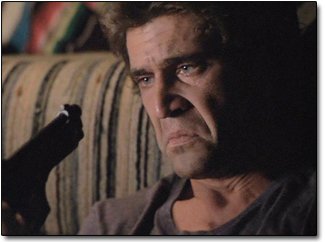
"Screw you, gun barrel, I'm the goddamned Batman."
It's the same for the whole revenge movie genre; like the Death Wish series, in which an attack on his family causes Charles Bronson to singlehandedly solve New York's crime problem using only mass murder. And Mel Gibson, in addition to being crazy for the Lethal Weapon series, used a dead wife and child as an excuse to commit grotesque war crimes against the British in two separate films. Man, we should have seen the whole Mel Gibson thing coming years ago, shouldn't have we?
If He's the Villain, Give Him a Classy Hobby
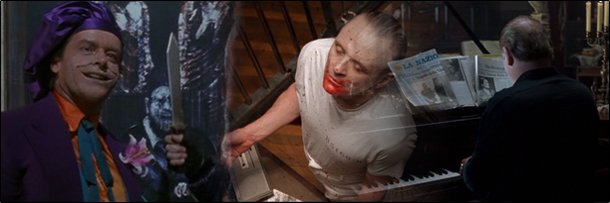
As Seen In:
Yes, you need to build audience sympathy for the villain, too. That is, if you're looking to make a movie with any kind of character depth. It's the difference between a really good villain the audience loves to watch, and a sneering cartoon character. You need the audience to not just fear the villain, but respect him.

Not just anyone can get one of those hair things.
But for some reason, this is usually done by giving them some kind of quaint, aristocratic hobby that shows they have sophisticated tastes. So he'll probably be watching opera, like the bad guys in The Untouchables or Quantum of Solace. Or he'll just mention his taste for the finer things in life, like Alan Rickman in Die Hard. It differentiates movie villains from most of the bad guys we'll probably run into in real life, whose finer tastes will mostly extend to which sort of iPhone will get them the most meth money.
Even When it Doesn't Make Sense ...
On one hand, the "evil genius" is clearly a villain archetype that goes way back (before even Sherlock Holmes dueled with the evil Professor Moriarity). We know why a high IQ and education makes Hannibal Lecter scary -- he's smart, and therefore formidable.
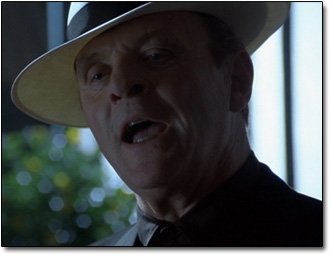
He also has a considerably better hat than you.
But then they cram this trait into the most nonsensical places. In Tim Burton's Batman, we get a scene where Jack Nicholson's Joker is on a rampage through a museum, destroying priceless works of art. One of his henchmen goes to slash a painting and the Joker stops him with, "No, I like that one." So even there, with that character, in that scene, they stop everything to show he appreciates what is being destroyed more so than his henchmen. But why would he? Before he was the Joker he was just a mob enforcer.
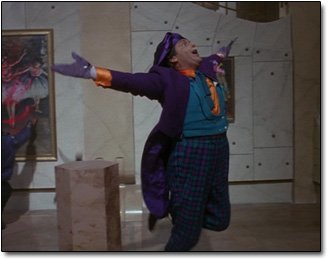
A fabulous mob enforcer.
Likewise, in The Professional (or Leon if you prefer to watch deleted scenes that were voted out by test audiences), the villain played by Gary Oldman murders women and children with a shotgun, and spends most of the film trying to kill a 12-year-old girl. Oh, and he has a classical music obsession. He listens to Beethoven on headphones while conducting drug business, and even monologues about music with his victims. What a classy, sophisticated guy! You know, for a corrupt DEA agent.
Of course it's not that there's no such thing as a DEA agent who listens to classical music in the real world, it's just weird that it's considered a sign of sociopathy in the world of film. The good guy is always a down-to-earth everyman. A John McClane type, or some other down-on-his-luck cop -- even Bruce Wayne, a billionaire, is shown to shun his fancy things in favor of his dank cave. He only flashes his wealth as part of his cover.
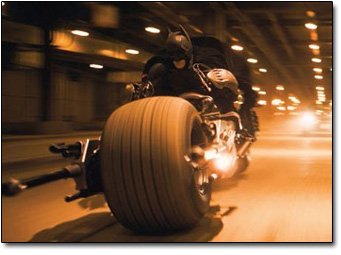
Being Batman is hard.
So is the idea that the people who enjoy stuffy, intelligent, ivory tower entertainment like operas and classical music are the enemy? Because that means they're not like us, the Joe Sixpack movie-goer? And that to be a hero, you need to enjoy down-to-earth entertainment, like ...
Well, like movies. Ah, OK. We get it now.
Read more by C. Coville here.
Be sure to pick up our book because rich assholes hate it.
For more behind-the-scenes looks at Hollywood, check out 5 Hollywood Secrets That Explain Why So Many Movies Suck and The 10 Most Awesome Movies Hollywood Ever Killed.
And stop by Linkstorm to see how Lolcats tricks you into enjoying it.
And don't forget to follow us on Facebook and Twitter to get sexy, sexy jokes sent straight to your news feed.
Do you have an idea in mind that would make a great article? Then sign up for our writers workshop! Do you possess expert skills in image creation and manipulation? Mediocre? Even rudimentary? Are you frightened by MS Paint and simply have a funny idea? You can create an infograpic and you could be on the front page of Cracked.com tomorrow!
