5 Famous Scientists Dismissed as Morons in Their Time
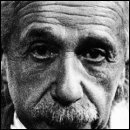
Every nutjob in the world with some out-there theory thinks he's Galileo, rejected for daring to think different. Virtually all of them are, in fact, simply insane.
Yet, there have been brilliant rebels who put their own world-changing ideas on the line, only to end up like Doc Brown in his alternate timeline: humiliated, ridiculed, ignored and/or straight driven to insanity.
Gregor Mendel

You probably know Mendel as the guy who pioneered the science of genetics, and for keeping eighth-graders busy while science teachers watch porn at their desks. Anybody with a high school diploma has filled out those dominant/recessive trait Punnett squares ...

Be honest. How many of you had this explained by a PE coach?
... though astute readers are probably wondering why that technique is called a Punnett square if it predicts patterns Mendel discovered.
What you probably didn't know was that before making his revolutionary discovery, Gregor Mendel flunked his ass out of school and resigned himself to a quiet life as the abbot of a monastery. It had an extensive experimental garden and there Mendel patiently spent the next seven years of his life breeding and cross-breeding peas.

He also hosted a ton of cocaine orgies, but who wants to hear about that?
He carefully documented his work and developed what would eventually be known as Mendel's Laws of Inheritance. Then he wrote it up and got it published in an lesser-known journal, the Journal of the Brno Natural History Society in 1866.
His Genius Was Rewarded By ...
A quiet life of complete anonymity. Mendel's work was read by about zero people, even after he took it upon himself to contact the highest minds of his time by personally sending them copies of his theory. It turns out he would have been better off writing it on a paper bag filled with dog shit and leaving the whole flaming mess on porches.

"GODDAMN GENETICISTS!"
Why did they ignore him? Because the greatest minds of his time couldn't understand him. It wasn't until 16 years after his death that three independent botanists rediscover Mendel's work and started the genetics ball rolling.
Ignaz Semmelweis

We've brought up poor old Semmelweis once before, but just in case you don't have a running loop of Cracked articles going through your head, here's the recap: Back in 1847, Semmelweis found himself in charge of two maternity clinics. The first clinic was a teaching school, with medical students learning birthing, autopsying and everything in between. The second clinic was intended for women who couldn't afford health care and was serviced by midwives, not actual doctors or students.

His ear-hair acted as attending physician.
Yet it was the second clinic that women of all social statuses begged to get into. Why? Because if they went to the first clinic they'd have a 10 percent chance of dying of puerperal fever, a six percent greater rate of death than in the midwife-run hospital. Women literally had a better chance of surviving a birth on the street than in the first clinic. After an exhaustive study, Semmelweis figured out that medical students were smothered in disease cooties from cadavers, and that maybe, just maybe, they should wash their hands in between the autopsy room and the birthing rooms.

Not pictured: Sterility.
He insisted students perform a simple chlorine wash after handling dead guys and immediately got the death rate down to one to two percent. With numbers like that, you'd think the whole continent of Europe, much less the medical community, would have crowned him "king of live babies" or something.
His Genius Was Rewarded By ...
First dementia, then a beatdown at an insane asylum, then death, by virtually the same disease he had eradicated in his own hospital.

Semmelweis didn't just have the disregard of his contemporaries, he had their flat-out scorn. Maybe it was because he didn't get around to explaining himself on paper right away, so no one understood what hand-washing had to do with keeping people alive. Some doctors were actually insulted that he was accusing Viennese medical students being dirty enough to kill people.
Within 14 years of his groundbreaking discovery, Semmelweis just stopped giving a fuck. He got drunk all the time and called all his detractors "ignoramuses" and "murderers." He started chilling with prostitutes and lashing out at family. That last part proved to be a bad move, because in 1865 they had him committed to an insane asylum, where he was promptly beat up and stuck in a dark cellar.

Pictured: Mental Health Care, 1865-style.
He died two weeks later. It took another 20 years and Louis Pasteur's germ theory for the rest of the world to come around to the concept of washing your hands to keep from getting sick.
George Zweig

The year 1964 was a watershed year by any measure. The Beatles arrived, the Civil Rights Act was passed, Nicolas Cage was born and in two separate parts of the world, two separate scientists proposed the existence of quarks, the teeny-tiny subatomic particles that combine to form matter. If you've been paying attention, you know one of these guys is about to get screwed. (Hint: It's George Zweig.)

Zweig had three things going against him in 1964. One, he was a young graduate student, unpublished and unproven. Two, he was working at a particle research center in Geneva. You'd think that would be an advantage, but it turns out his institute had a stringent model for publication, and his paper on quarks, which he called "aces," didn't meet its standards (even though he had come up with a much cooler name for the particle). And three, an older scientist from his grad school proposed the exact same theory at the exact same time and because of his stature was able to publish that exact same theory with the exact same publication that rejected Zweig's.

Just seeing if you're paying attention.
At first, both men were called crazy for their insane notions of invisible particles. They had no model of behavior for the buggers and no methods of ever actually looking at them. But eventually the science world came around, and by 1969, Zweig's rival was awarded the Nobel Prize in Physics for his work. As for Zweig ...
His Genius Was Rewarded By ...
Being blackballed by a major university and accusations of being a "charlatan."

According to Wikipedia, that table-standing midget in blue is a charlatan.
It wasn't until the 1970s that anyone could actually prove the existence of quarks, and by that time, the Nobel Prize committee felt it had already given the little particles enough attention, so it was reluctant to revisit the subject. Nevertheless, in 1977, Zweig and his rival were both nominated, but neither won. Zweig ended up changing his field of study to neurobiology, presumably believing that if he made a seminal contribution to every area of science, he'd eventually get credit for something.

Sadly, they don't give a Nobel Prize for smoldering looks.
Albert Einstein

Trying to convince you that Albert Einstein was rejected in any way during his lifetime let alone a moron is a hard sell, considering that he was one of the most famous men on the planet at the time. But buried deep in a lifetime of utter brilliance, Einstein was saddled with one big mistake. One that it turned out wasn't a mistake at all.

Einstein, seen here chilling out and sparking a doob with Niels Bohr
To understand, you have to know a little bit about Einstein's General Theory of Relativity. Not a whole lot, just the fact that it didn't allow for a static universe. Einstein believed the universe had to be static, or else the forces of gravity would cause the whole universe to contract onto itself, which it apparently wasn't doing. So, to make up for this weird conundrum, he invented something called the cosmological constant, an unknown, unchanging force that allowed him to have his cake (General Theory of Relativity) and eat it, too (stand by a static-universe model).

"Yeah, just throw an X in there, then integrate how little I give a shit."
But not too long after Einstein came up with the cosmological constant, Edwin Hubble burst his little unmoving universe bubble by finding evidence that the whole shebang was expanding. Einstein called the cosmological constant his "biggest blunder" and went to his grave thinking he was an idiot for having proposed it. And so did everyone else. For a while.

"Way to go, Einstein."
His Genius Was Rewarded By ...
Einstein didn't get heaped with scorn like some of the other geniuses on this list, so he got off with a little self-deprecation with a side of regret. And he also dropped the whole idea of the cosmological constant. But here's the thing -- it turns out he may have been right all along. Not about the universe being static, of course, but that this mysterious, unknown entity existed in the first place.
In the 1990s, scientists discovered that the universe was expanding faster than they had previously thought and that the rate of expansion was being fueled by a mysterious, unknown entity. There are several contenders up for consideration as the cause, but everyone's favorite? You guessed it: Einstein's cosmological constant. His math of the constant magically fit the bill. Also because you never go wrong when you bet on Einstein.

Future super-geniuses reading this article: Please make an effort to be photographed with your tongue out, flipping the bird, gesturing to your genitals or something similar. Cracked's 2089 PR department thanks you.
Ludwig Boltzmann

Ludwig Boltzmann had the unfortunate luck of being born with a genius brain at the wrong time. Back in the 19th century, there was a huge debate over the nature of matter. Boltzmann not only had the audacity to presuppose the existence of atoms at a time when the atomic model was still controversial among scientists, but also built every one of his brilliant theories as if there was no debate at all. How brilliant? Hang on to your test tubes, because thing are about to get sciencey.

With a beard like that, how could the man not be a genius?
For one, he pioneered the study of statistical thermodynamics, which is a field of physics that provides a framework for predicting how a large number of particles will behave in a system. So, let's say you're camping and you start a fire. Boltzmann was the guy who tried to figure out what the crap was going on in those logs on a molecular level that allowed the fire to kindle, and he used fancy math formulas to figure it out. His work ultimately paved the way for the field of quantum mechanics, which eventually paved the way for the greatest time travel show ever.

Suck it, Dr. Who.
His Genius Was Rewarded By ...
Death. He got death.

And a $5 Subway gift card.
Back then, defending the existence of atoms was akin to defending creationist version of the origins of man today. Boltzmann wasn't just forced to defend something that would be accepted as fact within a few years, he was shamed for his stubborn refusal to yield and for his so-called materialist beliefs.
Nobody ever told scientists that nonmaterial science is already called philosophy. A long series of uneven debates left nearly every other supporter of atoms silent, leaving Boltzmann as their chief defender. Even colleagues who originally agreed with him began to question atoms' existence when his work seemingly undermined previously understood laws of physics.

A Helium atom, seen here being a total dick to Physics.
The emotional burden of being the only right guy in the world, coupled with what was probably undiagnosed bipolar disorder, proved too much for Boltzmann to handle, and he hung himself in 1906, only three years before another scientist proved the undeniable existence of atoms. Nice job, science.
For more from the world of science, check out 7 Incredible Scientific Innovations Held Back by Petty Feuds and 5 Famous Inventors (Who Stole Their Big Idea).
And stop by Linkstorm instead spending time with your family.
And don't forget to follow us on Facebook and Twitter to get sexy, sexy jokes sent straight to your news feed.
Do you have an idea in mind that would make a great article? Then sign up for our writers workshop! Do you possess expert skills in image creation and manipulation? Mediocre? Even rudimentary? Are you frightened by MS Paint and simply have a funny idea? You can create an infograpic and you could be on the front page of Cracked.com tomorrow!
