How Xerox Invented the Information Age (and Gave it Away)

Imagine that somewhere Ford Motor Corp has a building full of engineers, right now, who have built a flying car that can go 300 miles an hour, runs on water, and has a device that gently massages your groin while you fly it. And Ford doesn't care. Imagine they're just sitting on the future of transportation, while the bulk of the company figures out how to squeeze another decade out of gasoline powered cars. Then, one day, they give a tour to Toyota and GM and happily show them their flying prototype because, why not?

"It is also capable of mixing a perfect Mimosa."
This happened.
Only, instead of a flying car, the device was a personal computer. The company that let the most world-changing invention since aviation get away wasn't IBM, or Intel, or Texas Instruments. Here's a hint: it's the people who probably made your photocopier at work.

We think we speak for millions of office drones when we say, "Fuck these guys in the neck".
If you get an Apple fanboy and a Windows loyalist in the same room they'll eventually get into a heated debate about who really invented the PC, and who was really responsible for each little innovation that came along to make it the device that most of us would rather lose a testicle than live without. In reality, both of them stole the idea from the company you probably associate with infuriating paper jams, empty toner cartridges and photocopied dongs at the office Christmas party.
It all started with a machine they slapped together almost 40 years ago, called the Xerox Alto.

Portrait-style? What the fuck?
It was the birth of what we know as the personal computer now: It had a screen, a keyboard, a mouse, and a graphical interface -- the very first time all four of these came together in the same machine. Honestly, if the thing had been capable of rendering full color boobs PC evolution could have just stopped right then. And this happened in freaking 1973. Almost a decade before the first Mac would hit store shelves.
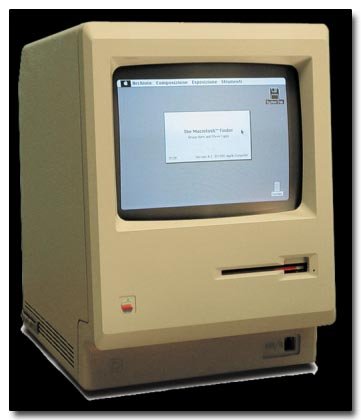
Way sexier.
But that's just the tip of the iceberg.
Basically everything you're using to read this article, and the devices that most of your lives revolve around, can be credited to a building full of geniuses in Palo Alto, California. It was the Xerox PARC (Palo Alto Research Center), which was set up four decades ago to think up ways to make computers actually useful to the average person, rather than being huge, bulky machines that ran on diesel fuel.
Here's a short but fucking startling list of things that PARC invented:
1. Graphical user interfaces, so you could finally look at something other than letters on your computer screen;
2. Laser printers, for printing things that weren't blocky pieces of shit;
3. Computer-generated bitmap images, which eventually led to video animation, the precursor to GIFs of skateboarders crushing their nuts on handrails;
4. WYSIWYG (What You See Is What You Get) text editors, which let you see what your text documents actually looked like as you typed them. Before this, you literally could not see what you were typing until you printed it;
5. Object-oriented programming, which meant that you could add features to a program without rewriting the whole thing.

It was the birth of a bold new era in masturbation.
Wait, there's more.
See, all of this leads up to what might be the granddaddy of Xerox's inventions, the one that made Cracked and other vital services possible:
The goddamned Internet.

This.
If you know something about computer history, you probably heard that the modern Internet came from DARPAnet, a Defense Department project experimenting with the ability to transfer files across computers. All of those computers on DARPAnet were Xerox Alto workstations, using Ethernet cables that were one of many technologies invented by Xerox's PARC research division.
They had a similar network at the Xerox offices, which probably transferred a lot more humorous cat pictures, and around there they called it "Inter network routing" or "Internet" for short.
Yep. Xerox invented it all. So why on Earth does Xerox not own the entire planet, sitting on the combined fortunes of Microsoft, Apple, IBM and god knows how many other companies, in a world where everyone owns a Xerox desktop, laptop and an xPad?

Possibly lack of turtlenecks?
Put simply, the Xerox corporate heads just didn't give a shit about computers. According to former PARC researcher Larry Tessler, "the company management at the East Coast of the USA did not [care a straw for] the PARC's research results unless they were directly involved with photocopiers." Apparently the potential of effortlessly creating new programs and sharing data with others around the office were nothing next to the ability to easily replicate pieces of paper. We know that hindsight is 20/20, but come the fuck on.
Instead of utilizing their brilliant technology and making computer-related commercial products (besides the ill-fated and $16,000 Xerox Star), they just opened up the doors to anyone who wanted to see what they were up to, figuring that somebody should profit from the millions of dollars that Xerox was pouring into research if Xerox wasn't going to.
In 1979, some guys in the industry took a tour of Xerox's facility, which to a computer geek had to have looked like Willy freaking Wonka's magical chocolate factory. One of them was a young guy named Bill Gates, who rightly decided that Xerox was stupid for letting this go, and took away as many ideas as he could. Another was a guy named Steve Jobs.

Steve Jobs described the graphical user interface as "the best thing I'd ever seen in my life", and the next day he brought over much of his senior staff and practically demanded to be given a closer look at the Alto's technologies, as well as demos for every one of his programmers. Researcher Adele Goldberg tried to keep this from happening, saying that Xerox was "about to give away the kitchen sink." Apple responded by literally ordering PARC to give their technology to Apple.
It's been surmised that after dealing with these idiots for so long, many of the PARC scientists actually wanted Apple to take this technology for themselves, just so somebody would finally give them some fucking credit for what they did. Five years later, Apple unleashed the first Macintosh computer, and the rest is history.
This raises the important question of the modern age: What the goddamned hell was Xerox thinking?

Other than, "More cocaine, please."
Scientific American decided to ask former PARC researcher David Biegelsen his opinion on the matter, and he responded with a well thought-out "beats the shit outta me." Part of the problem was the difficulty in creating an inexpensive PC, but he openly admitted that "Xerox [had an] inability to realize and profit from the gold mine they were sitting on." One of the smartest men in computers at the time, and he doesn't even know what their major malfunction was.
We may never know why Xerox so willingly threw away the technology that has since revolutionized the entire planet; had they taken the time to properly develop their technologies into successful products, or even learn how to file a fucking patent claim on time, they could be the biggest company on the face of the planet, with some rich bastard owning the combined fortunes of Bill Gates and a pre-iPod Steve Jobs, while getting a cut from every PC and piece of networking equipment sold anywhere. And that's in addition to the billions of dollars worth of copiers they sell every year.

Copiers don't draw in legions of creepy-ass fans.
Eh, the PC thing is probably just a fad anyway.
Jim Avery is a regular contributor to both GamerTVNetwork and NintendoGal.com.


And THIS is why we need time machines. (And go back a bit further and have TESLA WRITE STUFF DOWN!)
Replysooo sad. still work here., sad really
ReplyWhere, I wonder, did all of the money for this PARC come from?
ReplyI think there is more to this story than meets the eye.
I work for Xerox a day does not go by that I don't remind people of this. lol
ReplyIn Xerox there was some naive guys, who thought there is such thing as "honor" and "kindness" in this world. Sad, but true.
ReplySuch people are also known as "poor shitheads".
Bob Taylor, Chuck Thacker, and Butler Lampson should be household names. Gates and Jobs are lucky imposters. Every person in this forum should read "Dealers of Lightning." Bob Taylor headed the effort at DARPA to invent what became the Internet, then was hired by PARC where the PC as we understand it today was invented. A few people earlier in the forum seem to think the ALTO really wasn't a precursor to the modern PC. They are absolutely incorrect. By 1974, every staff member at PARC had an ALTO, networked, with a laser printer, could program them, get email, create WYSIWYG documents, etc, all with a point-and click rasterized GUI interface. It was literally 10 years ahead of its time. And the iPad? The iPad is literally the manifestation of Butler Lampson's original idea of what a personal computing device should be. A powerful, portable, fully interactive, portrait-formatted computing device, networked to the world at large.
ReplyComments like these make it hard for me to click that comment box under the article, somehow.
That's not what object oriented programming means at all. I think you're thinking of FUNCTIONAL programming. The C language isn't object oriented and I change functions in it to do different things all the time. But Xerox did implement the idea of OOP, this much is true.
ReplyI work for xerox and this is sort of a running joke among the technical staff. We have a crew of incredibly intelligent engineers being commanded by monkeys in suits. We have literally said the exact words in this article to each other.
ReplyThis is the way of our specialty.
Every engineer, no matter how brilliant, no matter how deserving, is subservient to a salesman.
That is exactly how it happened. It was stolen from them, not sold. They invented the modern PC that was more or less exactly like a modern one, and not just a glorified file manager.
Reply Hide All See All 3 RepliesXerox invented a few things. They were not even vaguely similar to modern computers. They didn't have windows. They didn't have the modern "desktop" analogy. It was sold, fair and square, not stolen (well, sold to Apple, then stolen by Microsoft).
They created a cool concept that is nowhere near a modern computer. It was inelegant and looks nothing like a modern computer. Learn something about history or technology before trying to write an article like this again.
While its true the Alto was not exactly like modern computers, it did, in fact, have windows, a mouse, networking, and dynamic languages. Are you sure you know your history as well as you claim? See this article:
http://dorophone.blogspot.com/2011/07/duckspeak-vs-smalltalk.html
I wouldn't say stolen, more like "given away due to owner stupidity".
Do you know that Xerox showed their crown jewels to Apple in exchange for the right to invest in their IPO, which they profited handsomely from?
vf
ReplyI worked for these guys (Xerox) in the 1980's. They were stuck on one kind of business model and refused to make a change because for years they had been making lots of money leasing and repairing copy machines. The market for copiers was still growing, and there was no market for desktop computers yet. Xerox could see for themselves that people were perfectly happy typing away to create doc*ments, that would have to be copied on a Xerox copier. Professional typists didn't need word processors because they could already type pretty damn fast. No one would spend tens of thousands of dollars on essentially just a fancier typewriter. You could already go to IBM and get a memory typewriter for a few thousand dollars if you really needed one. And there was no money to be made in repairing small computers because very little could go wrong with them, unlike copiers that needed routine service. When Xerox started to go tits up in the early 1980's it was because of j*panese competition in the copier market and a poor economy. Businesses either kept what they had, used more carbon paper or wanted feature rich copiers while Xerox was trying to sell 20 year old models refurbished from lease. Anyway, personal computers was never a slam dunk. There are dozens of computers that died on the vine because of different reasons. The PC was successful because it became dirt cheap. The Mac had it's day of innovation but is now largely a stylistic exercise, with Win7 very much as good or better than OS10.
Reply Hide All See All 4 RepliesUm, Windows 7 is just a slightly less s**tty Vista.
And the MacOS is just a rebranded version of Windows XP, which was just an updated version of an early Windows that was ripped off from Mac which they just ripped off from Xerox. Your point being?
Get the f**k outta here.
MacOS existed before Windows.
And I have an XP partition on my mac. I'm switching back and forth right now and I'm really not seeing the comparison.
I disagree, I figure macs are goin out of style in a hurry. Once iLife is up and running, SkyNet goes online, and well....
ReplyNow you got me going. Twenty years ago Xerox worked with Stevie Wonder in producing the Kurdzwile Reader. A machine to audibly read text books to blind people. Yea, Amazon got that too!
ReplyReference next post
Let me just say that the 26 years I spent as an engineer at X allowed me to retire with a livable account. It could have been much differen though. I hear where mail clerks at MS and Apple have retired as milionairs. Tuff luck I guess, water under the bridge.
ReplyProblem is: NOTHING HAS CHANGED
you may know that Xerox invened "E" paper. They spun off the technology to a company called Xerocon to develop markets. After field testing it at Macy's in NY, on clothing racks and display tables without success, they folded the company.
Today you can find the technology used on the Amazon Kindle as their display medium. Oh yea they are making
Gazillions!
Sorry about the double post
Let me just say that the 26 years I spent as an engineer at X allowed me to retire with a livable account. It could have been much differen though. I hear where mail clerks at MS and apple have retired as milionairs. Tuff luck I guess, water under the bridge.
ReplyProblem is
I know this is going to be uber geek, but I would like to point out that if Xerox had patented the computer back then, we would not have had the computer revolution. The computer revolution happened so fast because everyone copied everyone else.
Reply Hide All See All 3 RepliesWhich, ironically enough, is the ultimate power of the computer itself.
That's not ironic.
But what about their intellectual property? Why does no one respect our rights to intellectual propertyyyyyyyyyyyyy??
In the mid 20th century, a Brit named Chester Carlson invented photocopying. He tried to sell it to IBM and other big companies, but they all said it was useless 'cause everyone had cheap carbon paper! A small photo film company named Haloid bought the idea, and it took off. Eventually they changed their name to Xerox. So Xerox was born because IBM was too big and slow to "get it"... and Apple and Microsoft were born because Xerox got as fat and happy as IBM was.
ReplyOops! Just double checked... he wasn't a Brit. My memory ain't what it used to be.
Yeah with a name like that he could only be a WMA.
does anyone who the nerdy fat guy with the mustache and cigarette is? I've seen that pic several times before on cracked and elsewhere but have no idea who that is.
ReplyHe is the Ur-Troll.
Ur Troll. google him.
I love this story so much. Pirates of Silicon Valley, man!
ReplyWhat happened to our respect for intellectual propertyyyyyyyyyy??
Imagine how ass backwards our technology would be if Xerox ran things?
Reply